

Gas chromatographers may not have the latest equipment they need. Here, we give a list of tools and consumables that can help make workflows more efficient, detection limits lower, and GC instruments cleaner.
Gas chromatographers may not have the latest equipment they need. Here, we give a list of tools and consumables that can help make workflows more efficient, detection limits lower, and GC instruments cleaner.

The late Harold McNair had a remarkable 60-year career as a chromatographer. He taught us many valuable lessons, three of which we discuss here.

How far can you get on optimizing a GC separation without changing the column? Pretty far, in fact.

At ChromTalks, experienced speakers shared mistakes made during their careers.

The limit of detection (LOD) of an analytical method may be defined as the smallest concentration of analyte that has a signal significantly greater than that of a blank sample signal. We explore the sources of experimental uncertainty and variability in LOD determinations.

We present our annual review of new products in gas chromatography, introduced between spring 2020 and spring 2021.

Capillary GC has been miniaturized, while maintaining some performance aspects of full-size laboratory systems. The benefits and challenges involved with considering these newer, smaller gas chromatographs for typical analytical problems are discussed.
By moving from GC–MS to GC–MS/MS, you can have both universal and selective detection along with low detection limits. Here’s how it works.

For GC, how do data systems both assist and hinder us in obtaining maximum information from chromatograms? We explain how a chromatogram can provide a wealth of information about an individual analyte in a sample, about the sample itself, and about how well a GC instrument is performing.
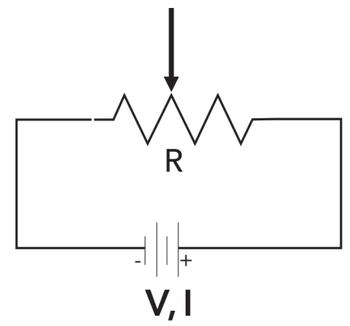
Computers control all aspects of modern GC instrument operation, from temperature to valve actuation. We look under the hood to see how this works.

Using the flame ionization detector (FID) as an example, we explain how the detector in a GC system generates a signal and how it is processed into chromatograms, and explore modern aspects of storing and processing digital data.

LCGC North America
In gas chromatography, heating the sample in the inlet can lead to sample losses and loss of quantitative reproducibility, but these problems can be avoided using cold sample introduction. Here, we explain the various types of cold injection and why you should consider it in your next instrument purchase or upgrade.
LCGC North America
Our annual review of new gas chromatography (GC) products introduced in the past 12 months.

LCGC North America
Successful GC analysis requires careful control of carrier gas. Here, we explain how to measure and control flow rate, use constant pressure vs. constant flow, and more.
LCGC North America
After 32 years as a columnist, John Hinshaw writes his final “GC Connections” article, examining how GC has changed over the years and considering where it might go in the future.
LCGC North America
Multidimensional chromatography combining HPLC and GC, or LC–GC, sounds simple, but several factors complicate this combination, including solvent compatibility, separation time, and sample concentration.
LCGC North America
Although manufacturers ship gas chromatographs with a collection of consumable parts and accessories, a number of other essential items should be on hand in every GC laboratory. What items are needed and how can they be used most effectively?
LCGC North America
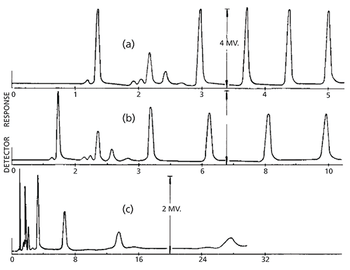
Temperature programming is used in most capillary GC separations, but many analysts lack a good understanding of the principles behind this approach.
LCGC North America
Our annual review of new developments in the field of gas chromatography, as seen at Pittcon and other venues
LCGC North America
Two-dimensional gas chromatography (GCxGC) is becoming the technique of choice for analysis of highly complex samples such as petroleum, pharmaceuticals, biological materials, food, flavors, and fragrances. Here, we explain how GCxGC works and provide examples that illustrate its advantages.
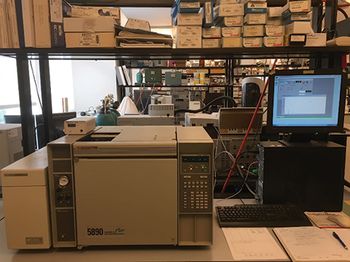
LCGC North America
By taking simple proactive troubleshooting steps, GC users can ensure that instruments will operate correctly over time, thus avoiding workflow disruptions.

LCGC North America
Here, we focus on selectivity: its definition, its importance for generating separations and resolution; and its role in column polarity.
LCGC North America
The recent relocation of a laboratory yielded a number of insights as to how to ensure a quality environment to deliver quality gas separation and detection within a safe working atmosphere.
LCGC North America
We discuss the challenges of split and splitless injections, ideas for mitigating them, and the case for renewed exploration of cool inlets and injection techniques.
LCGC North America
We present our annual review of new developments in the field of gas chromatography, which this year includes eight new GC and GC–MS laboratory benchtop systems as well as numerous new columns and accessories.
LCGC North America
Gas chromatography makes use of a wide variety of detection methods, which really shine when deployed properly. Here’s guidance for how to choose the right one for your analysis.
LCGC North America
Fast gas chromatography (GC) has received new attention recently in the form of available enhanced instrument capabilities. What can fast GC do for separations, and how can laboratories take advantage of enhanced separation speeds?
LCGC North America
When data change over time, you may be able to tease out the causes by conducting a time-series analysis or by looking at various forms of correlation.

LCGC North America
Annual review of new developments in the field of GC
LCGC North America
Gas chromatographers can control several variables that affect their separations: carrier-gas flow, column temperature, column dimensions, and stationary phase chemistry. When faced with less than optimum resolution or separation speed, a strategy of changing just one variable at a time can be more productive than trying to hit the goal in one attempt. This month's GC Connections examines how to use such a plan to obtain better GC results.