
Analytical quality by design (AQbD) lifecycle series tackles risk-based methods
Analytical quality by design (AQbD) lifecycle series tackles risk-based methods
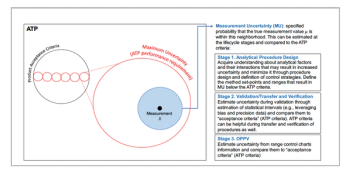
LCGC presents the first in a series of articles exploring the current analytical procedure lifecycle practices with multiple industrial and regulatory experts and consultants in the field, and addresses if this is a great opportunity to develop a greater understanding of method performance to ensure continuous improvement and regulatory flexibility, or if it is just additional challenges, complexity, and headaches.

In this article, we review some key considerations for chromatographic technique selection and method development across the full drug process—from early-stage active pharmaceutical ingredient (API) synthesis to routine commercial release activities.

LCGC Europe
The main objective of this review article is to provide a clear summary of the different methods that can be used to quantify endogenous small molecules. Because of the increased use of mass spectrometry (MS) in the field of bioanalysis, a special focus will be placed on quantification by liquid chromatography (LC)–MS. Practical recommendations to face this bioanalytical challenge, in particular in terms of method validation, will also be provided.
LCGC Asia Pacific
The main objective of this review article is to provide a clear summary of the different methods that can be used to quantify endogenous small molecules. Because of the increased use of mass spectrometry (MS) in the field of bioanalysis, a special focus will be placed on quantification by liquid chromatography (LC)–MS. Practical recommendations to face this bioanalytical challenge, in particular in terms of method validation, will also be provided.

LCGC Europe
This review article will give a general overview of the liquid chromatographic (LC) and gas chromatographic (GC) methods used by analytical laboratories for the detection and characterization of suspected illegal medicines and health products, including lifesaving drugs (antimicrobials and antimalarials), lifestyle drugs (erectile dysfunction drugs), and biotechnology drugs (doping peptides and skin-tanning peptides). Literature published from 2015 until early 2019 will be surveyed.
LCGC Europe
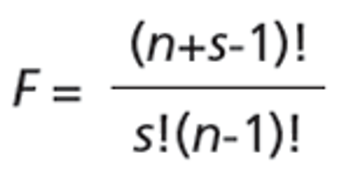
Chromatographic method development for pharmaceutical analysis can benefit from in silico steered serial coupling of column segments containing different stationary phases of varying length. Contrary to column coupling through trial and error, in stationary-phase optimized selectivity (SOS)-based chromatography the retention of all solutes is predicted for all possible column combinations allowing a rational selection of the optimal column combination. The possibilities of the strategy now surpass the initial usage in isocratic high performance liquid chromatography (HPLC) on dedicated commercial column segments, and allow applications in gradient-, green-, preparative-, and in supercritical fluid chromatography (SFC) on conventional column hardware. Current possibilities, pharmaceutical applications, a downloadable algorithm, and weaknesses of the approach are discussed to allow broader implementation of this methodology in separation science.