

The analytical chemistry industry is embracing green practices through miniaturization, automation, and efficiency improvements, challenging old assumptions and reducing energy use, consumables, and laboratory footprint.
The analytical chemistry industry is embracing green practices through miniaturization, automation, and efficiency improvements, challenging old assumptions and reducing energy use, consumables, and laboratory footprint.
Nicholas H. Snow emphasizes the growing need for chromatography training in academia and industry, highlighting short courses, conferences, and hands-on experience as critical tools for preparing the next generation of analytical chemists.
Nicholas H. Snow highlights how AI, miniaturization, and automation are transforming GC workflows while emphasizing the continued importance of foundational analytical principles.
Unlock the potential of gas chromatography with innovative sample preparation techniques, including SPME, automation, and green chemistry for optimized workflows.

Nicholas Snow highlights the latest trends in gas chromatography, from advanced sample preparation and high-speed separations to two-dimensional GC and smarter automated workflows shaping modern analytical labs.
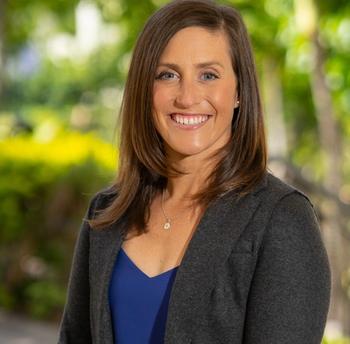
Chemist Katelynn Perrault Uptmor discussed her work using comprehensive two-dimensional gas chromatography (GC×GC) to improve complex chemical analysis, forensic investigations, and laboratory accessibility at the 2025 Eastern Analytical Symposium
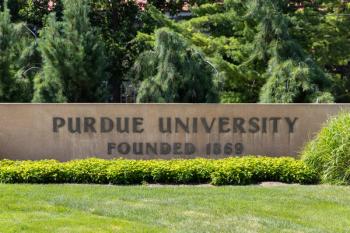
At the Eastern Analytical Symposium (EAS) in Plainsboro, New Jersey, Purdue researchers presented data suggesting that microscopic flaws in drug crystals—rather than just chemical composition or particle size—play a critical role in carcinogenic nitrosamine formation.
David S. Hage discusses how emerging chemists are trained to evaluate data critically, validate methods rigorously, and apply analytical techniques to practical, real-world challenges.
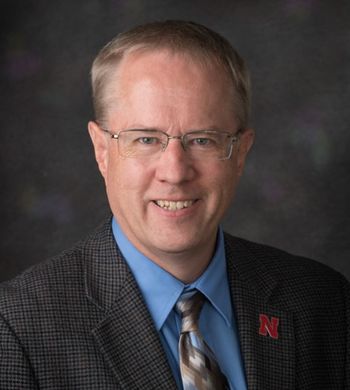
David S. Hage discusses the key trends and emerging topics in separation science and bioanalysis that are driving innovation in analytical chemistry and its applications to complex biological systems.
David S. Hage discusses how recent developments in immobilization chemistry and materials science are enhancing the performance and versatility of affinity-based separations.
David S. Hage shares how his team is applying microfluidics and miniaturized separation systems to improve speed, reproducibility, and real-world applicability in analytical and bioanalytical chemistry.
David S. Hage, James Hewett University Professor at the University of Nebraska–Lincoln, discusses how advances in affinity-based separations are shaping the future of personalized medicine and transforming clinical diagnostics.
In this LCGC International interview, David S. Hage discusses the latest advances in affinity chromatography and next-generation separation techniques for analyzing complex biological and environmental samples.
Ronald Piervincenzi, chief executive officer of the United States Pharmacoepia, focused on how collaboration and component quality can improve worldwide pharmaceutical production standards during a lecture at the Eastern Analytical Symposium (EAS) last month.

Recently, we talked with Mary Ellen McNally about her experiences at EAS 2024 and her expectations for sustainable laboratory practices in 2025.
Recently, we talked with Jim Grinias of Rowan University about his experiences at EAS 2024 and his expectations for analytical chemistry trends in 2025.

During EAS 2024, Jay Sheffer, a Product Specialist at Metrohm USA, discussed how combustion ion chromatography (CIC) can help address PFAS’ impact on the environment.

As part of our EAS 2024 coverage, we recently interviewed Benjamin Garcia of the Washington University in St. Louis about his work and his being awarded the EAS Award for Outstanding Achievements in Mass Spectrometry.

Here is some of the most popular content posted on LCGC International this week.

Scientists from the Massachusetts Institute of Technology, the University of Washington, and other leading institutions took the stage at the Eastern Analytical Symposium to accept awards and share insights into their research.

A Monday session at the Eastern Analytical Symposium, sponsored by the Chinese American Chromatography Association, explored key challenges and solutions for achieving more sensitive oligonucleotide analysis.
Brandy Young, PhD, an analytical chemist with more than 15 years of experience, entered the cannabis industry in response to a recognized need for laboratory testing, aligning her expertise with the emerging demand in New York's active medical and adult-use cannabis programs. Here, she shares some background information on her Eastern Analytical Symposium (EAS) talk, which delves into the characterization of tetrahydrocannabinol (THC) isomers in cannabis products.

At the Eastern Analytical Symposium (EAS) in Plainsboro, NJ, Rabi Musah from the State University of Albany presented a talk titled, "Things WE’ED Like to Avoid - Circumventing Measurement Challenges When Analyzing Complex Cannabis Matrices". This presentation discussed the complexities of cannabis testing and why we need new methods in the industry.

At EAS 2023, Brandy Young, PhD, the CEO and Founder of Certainty Analytical Labs in New York, discussed her work in compliance testing for cannabis products.

At the Eastern Analytical Symposium (EAS) in Plainsboro, NJ, Sam Heckle, an analytical chemist from CEM Corporation, presented “The Importance of Digestion Temperature on Trace Metals Analysis”, where he discussed the do’s and don’ts of heavy metal analysis meant to get optimal digestion.

Much like the members of the Rembrandt Research Project, scientists tackling life’s most complicated problems know the answers are never simple.

At the Eastern Analytical Symposium (EAS) in Plainsboro, New Jersey, LCGC sat down with Robert Kennedy to discuss his research and career in analytical chemistry.

Gionfriddo’s lab focuses on developing advanced analytical separation tools for the analysis of complex biological and environmental samples using green extraction methodologies.

Mary Ellen McNally and Doug Raynie covered green chemistry and sustainable separations, from sample preparation through analysis with chromatographic techniques, at EAS 2023.

At the Eastern Analytical Symposium (EAS) in Princeton, New Jersey, LCGC magazine sat down with John McLean of Vanderbilt University to discuss his research and career in mass spectrometry.