The Column-05-15-2018

shutterstock_1071386384.jpg

The Column

Snezana Agatonovic-Kustrin, a professor in pharmaceutical chemistry at Monash University, in Kuala Lumpur, Malaysia, spoke to The Column about the development of a method to evaluate antidiabetic and antioxidant activity in marine algae using high-performance thin-layer chromatography (HPTLC)-direct bioautography.

shutterstock_1071587357.jpg

The Column

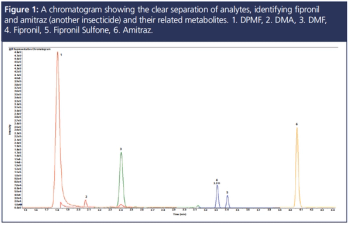
I do not remember the application, but I remember very clearly Professor McNair telling us that soil is one of the most challenging sample matrices, if not the toughest, from which to perform analytical determinations. Sources indicate the composition of soil ideal for growing plants to be 25% air, 25% water, 45% minerals, and 5% organic matter. That does not seem like a daunting makeup, but the reality is that the relative proportion of the constituents can vary dramatically.

figure 1 L1526917343287.png

The Column

Per- and polyfuorinated alkyl substances (PFAS) are a rapidly growing environmental and human health concern. Owing to their broad commercial use, chemical stability, and bioaccumulation potential, these compounds are widely dispersed in the environment and can cause exposure through many potential pathways. To adequately estimate exposure risks, analytical methods are required that can measure low levels of PFAS compounds in many types of matrices. As will be described, recent advances in solid-phase extraction (SPE) and liquid chromatography tandem mass spectrometry (LC–MS/MS) have enabled the identification and quantification of a large number of PFAS compounds at low concentration (

Rivers.jpg

The Column

Researchers from the Université de Pau et des Pays de l’Adour, in France, have developed a large volume injection method using a programmed temperature vaporization (PTV) injector for the simultaneous determination of mercury, tin, and lead at ultra-trace levels in natural waters using GC–ICP-MS.