
The Column
The Column spoke to Evelien Dejaegere from Waters Corporation about the method life cycle management approach and its importance in the pharmaceutical sector.
The Column
The Column spoke to Evelien Dejaegere from Waters Corporation about the method life cycle management approach and its importance in the pharmaceutical sector.

The Column
MilliporeSigma has announced the winners of its Advance Biotech Grant programme in North America.

The Column
The Column spoke to Robert Shaw, Steph Turnbull, and Sophie Bailes from AstraZeneca about their work in quality by design (QbD) in the pharmaceutical industry.
The Column
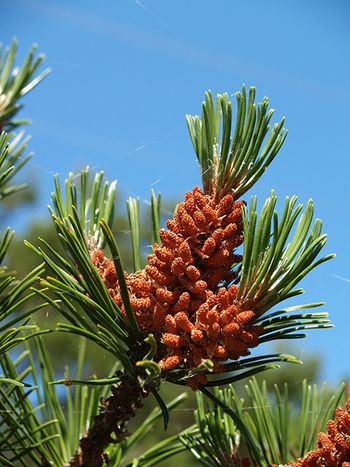
The Column spoke to Linda Schreiner and Andrea Buettner of the Fraunhofer Institute for Process Engineering and Packaging IVV and the Friedrich-Alexander-Universität Erlangen-Nürnberg in Germany, about their work investigating Scots pine for odour-active compounds using two‑dimensional gas chromatography (2D-GC).

The Column
The Column spoke to Katherine Curran, a lecturer in Sustainable Heritage at the UCL Institute for Sustainable Heritage in London, UK, about her work classifying museum artefacts using volatile organic compound (VOC) analysis and solid-phase microextraction–gas chromatography–mass spectrometry (SPME–GC–MS).

The Column
Snezana Agatonovic-Kustrin, a professor in pharmaceutical chemistry at Monash University, in Kuala Lumpur, Malaysia, spoke to The Column about the development of a method to evaluate antidiabetic and antioxidant activity in marine algae using high-performance thin-layer chromatography (HPTLC)-direct bioautography.

LCGC Europe
LCGC Europe spoke to Andrew Turner, Principal Chemist in the Food Safety Group at the Centre for Environment, Fisheries, and Aquaculture Science (Cefas) in Weymouth, UK, about developing a simple ultrahigh-pressure liquid chromatography tandem mass spectrometry (UHPLCÐMS/MS) method for the quantitation of microcystins and nodularin in various sample matrices.

The Column
The Column spoke to Arcadius V. Krivoshein, Assistant Professor of Chemistry at the University of Houston–Clear Lake, USA, about his work developing EPP, an experimental anticonvulsant that can help to stop convulsions during epileptic seizures, and the role of chiral HPLC in this research.
The Column
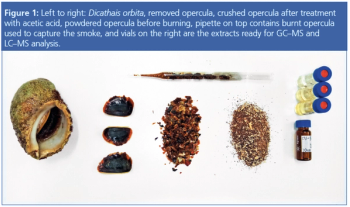
The Column spoke to Kirsten Benkendorff, an Associate Professor in Environment, Science, and Engineering and the Co-Deputy Director of the Marine Ecology Research Centre at Southern Cross University in Australia, about her work investigating Muricidae molluscs, their use in ceremonial incense and traditional medicines, and the role of chromatography in this research.
The Column
The Column spoke to Ricardo Lopez from the University of Zaragoza, in Spain, about his work characterizing the composition of the vapours from wine during consumption using an automated gas chromatography–mass spectrometry (GC–MS) technique.

The Column
Polyphenols are a well-known group of antioxidants widely diffused as secondary metabolites in plants, vegetables, and fruit. The Column spoke to Nicola Marchetti from the Department of Chemistry and Pharmaceutical Sciences at the University of Ferrara in Ferrara, Italy, about his research into the characterization of polyphenols in red chicory using high performance liquid chromatography–tandem mass spectrometry (HPLC–MS/MS).

The Column
There is a growing interest in polyphenols because of their noticeable antioxidant properties and their potential contribution to the defence against oxidative stress and protection against cardiovascular diseases and cancers. Oscar Núñez from the Department of Chemical Engineering and Analytical Chemistry at the University of Barcelona in Barcelona, Spain, has been working since 2010 in the analysis of polyphenols by capillary electrophoresis (CE), liquid chromatography (LC), mass spectrometry (MS), and chemometric techniques to achieve the characterization, classification, and authentication of natural products in the prevention of frauds. He recently spoke to The Column about this research.

Accurate quantification of sugars in saline solution is now possible using a new high performance liquid chromatography (HPLC) method. The Column spoke to Abdelrahman Saleh Zaky from the School of Biosciences at the University of Nottingham (Nottingham, UK) about this method.

The Column
Fresh fruit and vegetables have a limited shelf life and so there is a need to ensure that the products reach the shelf in a timely manner and with as little spoilage as possible. Volatile organic compounds (VOCs) are an easily accessible way of monitoring changes in fresh produce. Hilary J. Rogers and Carsten T. Müller from the School of Biosciences at Cardiff University, Cardiff, Wales, UK, investigate these VOCs in fruit and vegetables using gas chromatography–mass spectrometry (GC–MS). They recently spoke to The Column about this research.

The Column
The Column spoke to Ethel Eljarrat of the Institute of Environmental Assessment and Water Research (IDÆA), Spanish Council of Scientific Research (CSIC), in Barcelona, Spain, about her work in environmental analyses using turbulent flow chromatography (TFC).

The Column spoke to Ashraf El-Sayed from the Plant and Food Research Institute in Lincoln, New Zealand, about his research into caterpillar-induced plant volatiles and the role of gas chromatography–mass spectrometry (GC–MS) in his work.

The Column
Adrian Tordiffe from the Veterinary Faculty of the University of Pretoria in South Africa, is working to establish baseline metabolic profiles for captive and free-ranging cheetahs to investigate the unusual medical conditions that the animals develop in captivity. He spoke to The Column about his work and about the role that chromatography plays.
The Column
The 2017 Pittsburgh Analytical Chemistry Award has been presented to Janusz Pawliszyn of the University of Waterloo, Canada.

The Column
The disposal of food waste can pose serious environmental problems. Food scraps from the kitchen often end up in landfill, where it rots and produces methane, a greenhouse gas.

The Column
Luigi Mondello spoke to The Column about his group’s research into characterizing pigments in bell peppers using offline multidimensional supercritical fluid chromatography (SFC) combined with reversed-phase liquid chromatography (LC).
The Column
Bruker (Bremen, Germany) has announced the acquisition of SCiLS GmbH in Bremen, Germany. Founded as a spin‑off from the University of Bremen, SCiLS develops software tools such as statistical analysis software, sophisticated visualization viewers, and secure cloud-based services for collaborative interpretation of complex mass spectrometry imaging (MSI) data sets. Currently, 95% of all MSI data is acquired by label-free MALDI imaging systems.
The Column
Thermo Fisher Scientific (Sunnyvale, California, USA) and the American Society for Testing and Materials (ASTM) have developed an ion chromatography-based method for the simultaneous determination of nitrogen and phosphorous levels in water.
The Column
Agilent Technologies Inc. (Santa Clara, California, USA) and Multiplicom N.V. (Niel, Belgium) have announced that they have signed a definitive agreement for Agilent to acquire Multiplicom, a European diagnostics company involved in genetic testing. Agilent is acquiring Multiplicom for approximately €68 million in cash.
The Column
Eurofins Scientific (Luxembourg) has acquired ASL Análises Ambientais (“ASL”), an environment testing service provider in Rio Claro, São Paulo, Brazil.

The Column
Evan Palmer-Young of the University of Massachusetts at Amherst, Amherst, Massachusetts, USA, and Philip Stevenson of the Royal Botanic Gardens, Kew, London, UK, spoke to The Column about their work on bumblebee resistance to the trypanosome parasite Crithidia bombi and the role of chromatography in this research.
The Column
Agilent Technologies has announced that Shane Snyder, Ph.D., has received an Agilent Thought Leader Award in recognition of his research in water analysis, and the exploration of new approaches to determine the quality and safety of drinking water.

The Column
Australia’s Great Barrier Reef (GBR) stretches over 2300 km and is composed of over 3000 individual reef systems. The health of the reef therefore often comes under international scrutiny. Hilton Swan from Southern Cross University in Australia has been investigating volatile organic compound (VOC) emissions from the Great Barrier Reef using gas chromatography–mass spectrometry (GC–MS). He recently spoke to The Column about this work.
The Column
Ion chromatography coupled to mass spectrometry (IC-MS) does not follow the same rules as coupling other modes of liquid chromatography to mass spectrometry (LC–MS). Leon Barron from the Analytical & Environmental Science Division, at King’s College London, UK, reveals some of the misconceptions surrounding IC and discusses contemporary trends and novel applications for this inventive technique.
The Column
A group of researchers have characterized carotenoid and chlorophyll in different sweet bell peppers using offline multidimensional supercritical fluid chromatography (SFC) combined with reversed-phase liquid chromatography (LC) for the first time.
The Column
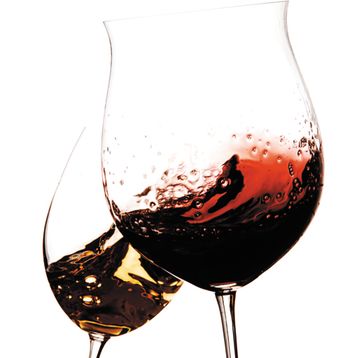
Wine can be a very complex matrix to analyze. The Column spoke to Alexandre Pons from Seguin-Moreau in Cognac, France, about his work analyzing volatile compounds in wine and why gas chromatography coupled to tandem mass spectrometry (GC–MS/MS) is his method of choice.
April 8th 2014
January 21st 2014

October 3rd 2013
August 8th 2013

April 28th 2014
