

A gradient twin-column recycling liquid chromatography (GTCRLC) process has been developed and applied for the isolation of a single polycyclic aromatic hydrocarbon (PAH), chrysene, present in a complex PAH mixture.
A gradient twin-column recycling liquid chromatography (GTCRLC) process has been developed and applied for the isolation of a single polycyclic aromatic hydrocarbon (PAH), chrysene, present in a complex PAH mixture.
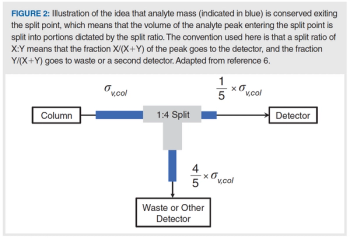
In this instalment, we focus on the impact of elution mode (isocratic or gradient) and postcolumn flow splitting on the total level of extracolumn dispersion (ECD) in a liquid chromatography (LC) system, and demonstrate the use of a free, web-based calculator that can be used to guide decision making aimed at reducing ECD during method development.

How can we make our workflows more efficient, our detection limits lower, and our instruments cleaner?
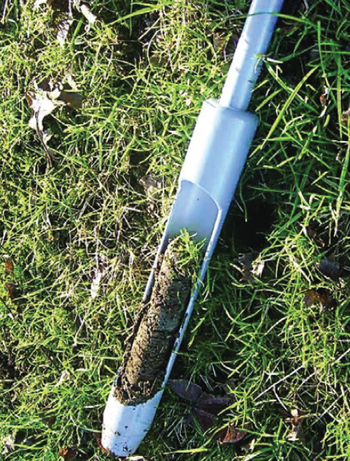
This column has discussed both sample size and homogeneity previously. However, sample collection is just as important. Too often, analysts are dependent on clients bringing the sample to the laboratory. This month, we take a look at devices and processes for obtaining samples outside of the laboratory.

Qualification and calibration of high performance liquid chromatography (HPLC) chromatographs is a regulatory requirement, but how proscriptive should guidance be?