

Researchers from the University of Washington have begun testing a new system to fight antimicrobial resistance by combining liquid chromatography (LC) with ion mobility (IM) separation.

The AES Mid-Career Award recognizes exceptional contributions to the field of electrophoresis, microfluidics, and related areas by an individual who is currently in the middle of their career. This year’s recipient, Robbyn K. Anand, Suresh Faculty Fellow and Carlyle G. Caldwell Endowed Chair in Chemistry at Iowa State University, has, along with her group, developed methods for circulating tumor cell analysis, electrokinetic enrichment and separation of chemical species within water-in-oil droplets, and more sensitive bioanalysis at arrays of wireless bipolar electrodes (1).
Researchers from the University of Washington have begun testing a new system to fight antimicrobial resistance by combining liquid chromatography (LC) with ion mobility (IM) separation.

The phenolic compounds of Chrysanthemum morifolium have recently been separated in a study meant to identify their medical benefits.

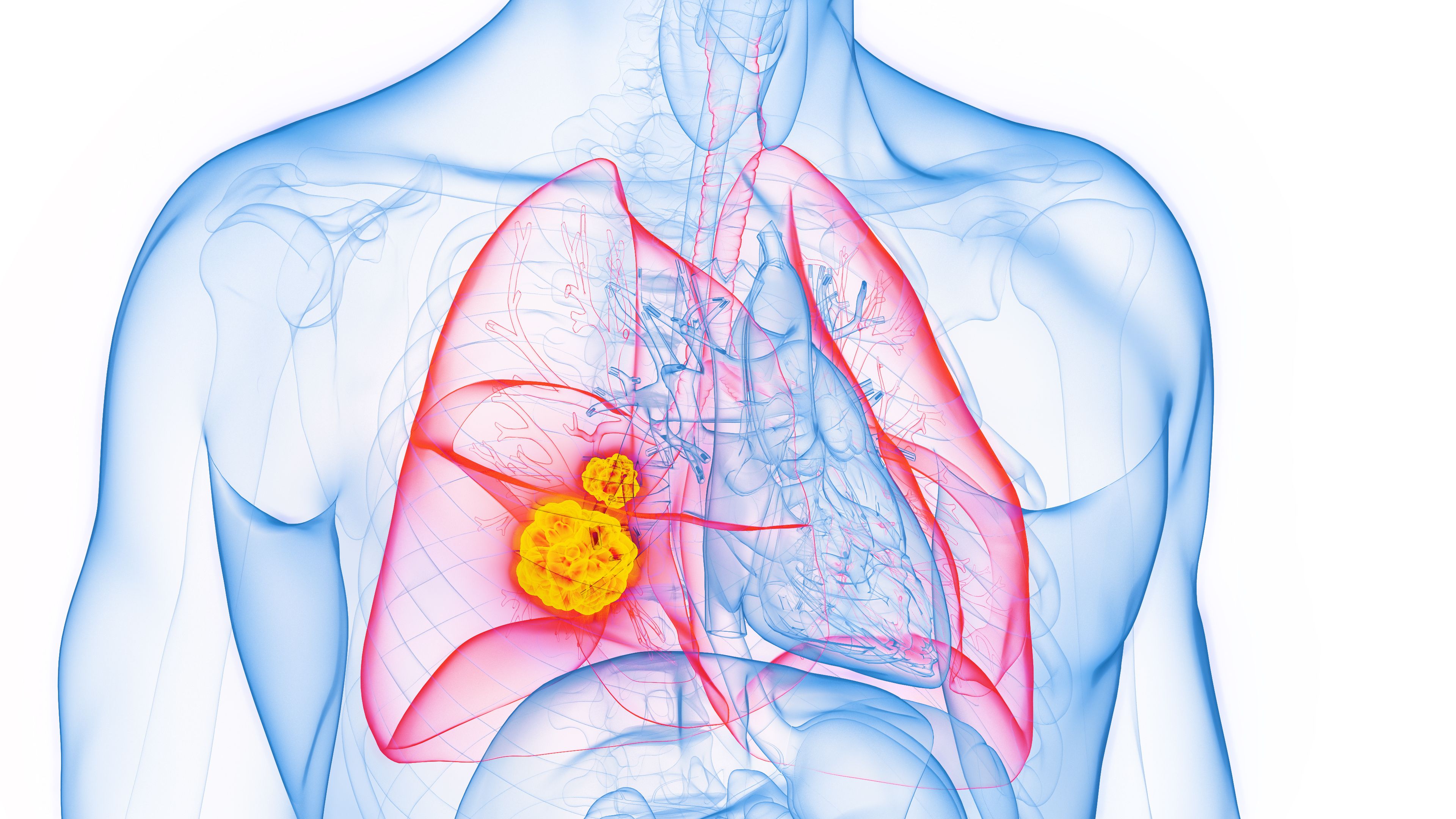
Using mass spectrometry and fingerprint analysis, scientists are investigating a new way to screen for lung cancer.

Researchers in China studied a new process for measuring aberrant metabolites.

To further understand what role ion chromatography (IC) plays in urine analysis, scientists investigated urine pretreatment techniques and how IC systems are designed and developed to measure various chemicals.

HRPs, while vital to creating drugs meant to fight serious diseases, are very difficult to quantify. To streamline the process, a group of scientists used a new approach for analyzing HRPs using MSPE and HPLC-UV.

In his keynote lecture at HPLC 2023, Alejandro Cifuentes from the Laboratory of Foodomics, Institute of Food Science Research, CIAL, CSIC in Madrid, Spain, highlighted the promising application of foodomics in addressing Alzheimer’s disease (AD) (1).

A new study published in the Journal of Chromatography A aims to further characterize different classes of biomolecules through size-exclusion chromatography.

In this interview, we explore the significance of this groundbreaking technology and its impact on mass spectrometry with Aaron Robitaille, Director of Marketing for Mass Spectrometry at Thermo Fisher Scientific in San Jose, California.

Scientists at NACRW discussed using CE–MS to analyze highly polar agrochemicals.

Researchers have developed a polybutylene terephthalate-based stationary phase for ion-pair-free reversed-phase liquid chromatography.

The application of various new methods and instruments for the analysis of multispecifics is discussed as a means of highlighting their ability to facilitate the development of these important new modalities.
A study conducted by researchers at Rowan University explores column selection in compact capillary liquid chromatography (LC) systems.

Scientists have developed a novel sorbent, diphenyl-functionalized nickel foam (NF-2Ph), for the accurate detection of polycyclic aromatic hydrocarbon (PAH) contaminants in Chinese herbal medicines. The method, which combines dispersive solid-phase extraction (DSPE) with gas chromatography-mass spectrometry (GC–MS) analysis, offers high sensitivity and precision, providing a reliable approach for quality control and safety assessment of these medicinal products.

Scientists from the Pacific Northwest National Laboratory are using high-resolution ion mobility spectrometry-mass spectrometry to identify unknown compounds.
New research using matrix-assisted laser desorption ionization-mass spectrometry imaging (MALDI-MSI) has revealed the distinct distributions of acetaminophen and its metabolite in the kidneys at an unprecedented resolution of 10 μm. The study, conducted by Mitsutoshi Setou and his team from Hamamatsu University School of Medicine in Japan, provides valuable insights into drug distribution and metabolism, enhancing our understanding of the pharmacokinetics and potential nephrotoxicity of acetaminophen.

Researchers have discovered that phospholipids form doubly charged lipid-metal ion complexes during electrospray ionization (ESI), providing valuable insights into the analysis of phospholipid structures.

Researchers have introduced MCnebula, a new framework for untargeted LC–MS/MS data analysis. MCnebula focuses on critical chemical classes and utilizes visualization techniques to streamline the analysis process, enabling efficient pathway analysis, biomarker discovery, and classification of unknown compounds beyond the limits of spectral libraries.

A new method has been developed for detecting and quantifying polycyclic aromatic hydrocarbons (PAHs) in intermediates used in plastics production. The method, based on liquid chromatography column switching, allows for the analysis of 18 PAHs and addresses the lack of regulatory oversight for PAH concentrations in plastic intermediates.

In Alejandro Cifuentes's keynote lecture at HPLC 2023, he discussed the research he and his team have done to explore how foodomics can be effective in combating Alzheimer's disease.
At HPLC 2023, Erin Baker held a lecture on how using liquid chromatography and mass spectrometry together can help scientists further understand diseases that can arise from chemical exposure.

In his plenary lecture at HPLC 2023, Michal Holčapek presented his team's findings on how chromatography can help scientists record the human lipodome and better our understanding of diseases.

Gunda Köllensperger spoke at HPLC 2023 about how using U13C-isotopically labelled biomass extracts can change how scientists approach metabolomics.

In this HPLC 2023 keynote lecture, Mario Thevis discusses how chromatographic–mass spectrometric approaches have led to important advancements in sports drug testing programmes.

A new study reveals that real-time library searching significantly improves the structural characterization of glycerophospholipids and sphingomyelins, offering enhanced selectivity and comprehensive analysis. By utilizing real-time identifications to trigger targeted MSn analyses, researchers gain deeper insights into these crucial lipid species.