


Researchers have now used mass spectrometry imaging to study induced pluripotent stem cells (iPSCs) during the early stages of differentiation.
Researchers have now used mass spectrometry imaging to study induced pluripotent stem cells (iPSCs) during the early stages of differentiation.

By modifying polyniobate on a metal-organic framework, scientists have managed to purify Cytochrome C for proteomic analysis using LC–MS/MS.

A recent study analyzed individual hippocampal cells at ultrahigh mass resolution using a FT-ICR mass spectrometer.
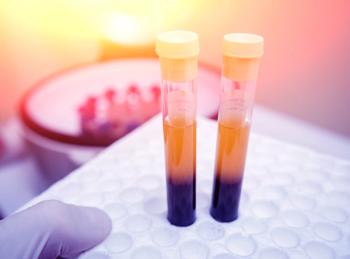
A new study tested different solvents and buffer additives for ion mobility spectrometry to test their impact on results.

Scientists have discovered that combining imaging mass spectrometry and microscopy can enhance molecular visualization.

Glyphosate and AMPA are two potentially dangerous chemicals within herbicides. Using LC–MS to detect these chemicals is important to human and environmental health.

Using LC–MS, scientists have developed a new method for testing doping steroids in blood.

Combining liquid chromatography (LC) with high resolution mass spectrometry (HRMS) has led to incredibly detailed results in forensic drug screenings, though not without challenges.

Chemical isotope labeling (CIL) can lead to excellent biological sample analysis when combined with mass spectrometry (MS).

Direct-infusion tandem mass spectrometry (DI-MS/MS) enables researchers to quantify citrate isomers and isobars in biological samples with high accuracy and reliability.

Scientists recently used continuous electrospray ionization mass spectrometry to study what makes the inland taipei snake venom so dangerous.

Using liquid chromatography-tandem mass spectrometry, scientists have found a similarity between the protective functions of the oral permeability barrier and the skin barrier.

A new way to automate buffer management systems with greater precision and accuracy may revolutionize biopharmaceutical purification processes.

Dipeptide profiles have an important role in detecting disease, and a recent study has made it much more accessible to study them.
Researchers have produced new frameworks that may lead to significant advancements in chiral analysis.

A new buffer management system that automates most processes will further how biopharmaceuticals are produced, helping save more lives in the process.

Solid-phase extraction holds an important role in identifying and improving the effectiveness of antibiotics.

By improving fluorescent labeling, scientists can find new ways to help treat and prevent influenza.

The "Deep Proteome" project is helping to advance our understanding of the vast world of human proteomics.

A recent study has shown that PFAS "forever chemicals" are present in some fast food packaging to a potentially alarming degree.

With Shimadzu Corporation's new location, the company hopes to innovate their research and technological efforts.

The current challenges and future perspectives of the purification of cannabinoids from cannabis extracts are presented in this review article.

Emanuela Gionfriddo received the Satinder Ahuja Award for Young Investigators in Separation Science, which recognizes the next generation of scientists making advances in analytical chemistry. The ceremony took place at Pittcon 2023, which was held from March 18–22.

In this study, a reversed-phase HPLC method was developed for separation of five steroid hormones with partition coefficients ranging from 1.47 (cortisone) to 4.5 (pregnenolone) on a Hamilton PRP-C18 HPLC column.
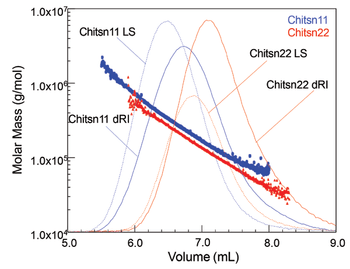
Chitosans are analyzed by SEC-MALS to determine molar mass moments and distributions.