Ed Ahearne combined automation, machine learning, and Bayesian optimization to speed up method development for siRNA medicines.
Ed Ahearne highlights the benefits of ML-driven chromatography for the development of biopharmaceutical products
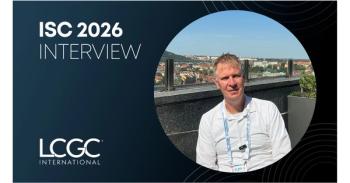
At ISC 2016, Edward Ahearne, a Senior Analytical Scientist in AstraZeneca's Early Chemical Development New Modalities group, was interviewed by LCGC International on why his team combined automated chromatography with Bayesian optimization to speed up method development for small interfering RNA (siRNA) medicines based on a presentation he gave at the event.1 The focus of their research was on separating phosphorothioate (PS) diastereomers. A PS link is a backbone modification in which a non-bridging oxygen atom is replaced with sulfur, making the drug more resistant to breakdown by nucleases. Each PS link creates a chiral center at phosphorus, which can take one of two mirror-image arrangements, so a single siRNA strand can exist as several diastereomers: versions of the molecule that share the same atoms but differ in their 3D arrangement.
The team had already streamlined their manual method development, cutting it from a couple of weeks to about three days. Even so, it still took a lot of analyst time, and each strand and sequence needed its own bespoke method. Published examples of Bayesian method optimization suggested a way to automate the work.2 Diastereomer mixtures suited the approach well because they are close to “perfect” mixtures: each chiral center is split roughly 50:50 between its two mirror-image arrangements (S and R), so the peaks are of similar size.
In part two of the interview, Ahearne answered the following questions:
Watch the full video here:
References