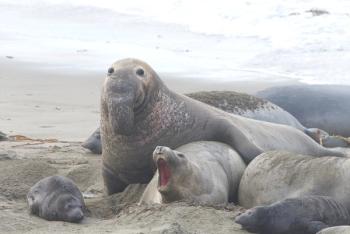
Liquid chromatography–ion mobility spectrometry–high-resolution mass spectrometry (LC–IMS–HRMS) shows elephant seal pups carry more PFAS than their mothers do.
A session exploring the latest analytical and computational strategies in metabolomics/lipidomics is scheduled at analytica 2026 on Thursday, March 26, from 15:00–17:00 in ICM Saal 2. Four speakers from academia and industry will address the growing challenges of large, complex metabolomic data sets, from multivariate data analysis to single-cell multi-omics.
Analytica 2026 will present a session bringing together leading researchers to discuss cutting-edge developments in metabolomics and lipidomics. As modern analytical platforms generate increasingly large and structurally complex data sets, the field faces mounting pressure to develop smarter data analysis strategies, more comprehensive lipid annotation tools, and finer-resolution techniques capable of profiling individual cells. The four lectures span chemometric approaches for handling multidimensional data, translational lipidomics, gut health biomarker discovery, and single-cell multi-omics workflows.
The session opens at 15:00 with Addressing Data Dimensionality and Structure in Metabolomics: Issues and Solutions. Serge Rudaz from the University of Geneva (Geneva, Switzerland) will examine how the rise of hyphenated techniques—including gas chromatography–mass spectrometry (GC–MS), liquid chromatography (LC)–MS, and capillary electrophoresis (CE)–MS—has transformed metabolomics data sets from simple tables into intricate, multifactorial structures that classical hypothesis-driven approaches struggle to accommodate. The talk will make the case for dedicated multivariate and chemometric methods, including principal component analysis (PCA) and partial least squares (PLS) regression, as essential tools for dimensionality reduction and the extraction of relevant biological signals. Particular attention will be given to three challenging data architectures — multifactorial, longitudinal, and multiblock setups—and the bespoke strategies needed to handle them effectively.
At 15:30, Coral Barbas of the Universidad San Pablo CEU (Madrid, Spain) will present From Advanced Lipidomics to Diagnostic Biomarkers: Analytical Strategies with Translational Impact. Barbas will describe how advances in high-resolution mass spectrometry, expert curation, and computational workflows have substantially improved the depth and confidence of lipid annotation. Highlights include a highly curated LC–MS lipidomics database for human plasma built on the NIST SRM 1950 reference material, and the application of electron-impact excitation of ions from organics (EIEIO) MS/MS for unambiguous identification of carbon–carbon double-bond positions in unsaturated lipids. The talk will also cover atlas-based approaches extended to disease applications—including a lipid lung atlas for respiratory diseases—and lipidomics applied to malignant hyperthermia, a life-threatening pharmacogenetic condition, to identify lipid biomarkers to support diagnosis and risk stratification.
Jia Li of Imperial College London (UK) will then present Metabolomics in Gut Health: From Exploratory Profiling to Mechanistic Insight at 16:00. Li will demonstrate how metabolomics, integrated with gut microbial profiling, can characterize the metabolic alterations associated with inflammatory bowel disease (IBD) and shed light on the systemic changes induced by gut-based therapeutic interventions such as bariatric surgery. The talk will place particular emphasis on host–microbial co-metabolism, highlighting key pathways and microbially derived metabolites that reflect or mediate gut health—a rapidly evolving area with significant implications for digestive disease research.
Closing the session at 16:30, David Heywood of Waters Corporation (Wilmslow, UK) will present Multi-Omics at the Single Cell Level Using Analytical Scale Chromatography with a Multi-Reflecting ToF MS. Heywood will describe a single-cell lipidomics and metabolomics workflow developed using ultrahigh-pressure liquid chromatography (UHPLC) coupled to a multi-reflecting time-of-flight mass spectrometer (TOF-MS), operated in data-independent acquisition mode. The workflow, tested across multiple human cell lines including HT-29, Caco-2, and T47-D, yielded approximately 200 lipid identifications and over 100 polar metabolite identifications per single cell within a 6.5-min run, with precursor and fragment ion mass accuracies below 500 ppb. Biological findings included elevated triglyceride levels in Caco-2 cells relative to HT-29, interpreted as evidence of free fatty acid consumption for triglyceride resynthesis, alongside higher phosphocholine levels in HT-29 cells consistent with their mucus-secreting phenotype.