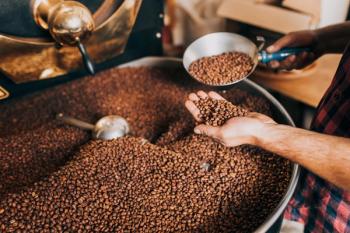
Liquid chromatography–tandem mass spectrometry (LC–MS/MS) finds low glyphosate residues of the weedkiller glyphosate in coffee beans.
Discover the latest advances in metabolomics, LC–MS workflows, spectral libraries, and untargeted analysis during this morning session featuring researchers from academia, government, healthcare, and industry.
TOB am: Metabolomics: New Technologies and Applications
Tuesday, June 2, beginning at 8:30 am in Ballroom 20A
Discover the latest advances in metabolomics, liquid chromatography–mass spectrometry (LC–MS) workflows, spectral libraries, and untargeted analysis during this morning session featuring researchers from academia, government, healthcare, and industry.
This session will highlight cutting-edge research including:
Presentations from scientists at leading international research institutions will showcase emerging analytical technologies and workflows advancing metabolomics research.
The session begins at 8:30 am, with Metabolomic Responses Linked to Chemical Exposures and Breast Cancer Phenotypes, presented by Julia Füreder of the University of Vienna’s Department of Food Chemistry and Toxicology (Vienna, Austria).
Next, at 8:50 am, Yifan Liu of Northeastern University (Boston, MA) presents Low-Temperature HILIC Provides Enhanced Separations and Stability for LC–MS-Based Metabolomics.
Bala Subrahanyam Seetha of the University of California-Davis (Davis, CA) discusses Annotating Compounds by Helical Resonator Plasma Accurate Mass GC–MS (ecTOF) by Predicting Formulas, Mass Spectra and Retention Indices at 9:10 am.
Xiaoyu Yang of the National Institute of Standards and Technology follows at 9:30 am with Metabolite Identification Using Combined-Spectrum Searching of the NIST26 Tandem Mass Spectral Library.
At 9:50 am, Katja Benedikte Prestø Elgstøen of the Section for Metabolomics and Lipidomics at Oslo University Hospital (Oslo, Norway) will present Hospital-Derived Pooled Plasma Reference Material for Clinical Metabolomics: Expanded Metabolite and Xenobiotic Coverage by Applying Enhanced Dynamic Range Scan Mode.
The session concludes at 10:10 am with Untargeted Multiple Reaction Monitoring (uMRM), presented by Gary Siuzdak of Scripps Research (La Jolla, CA).