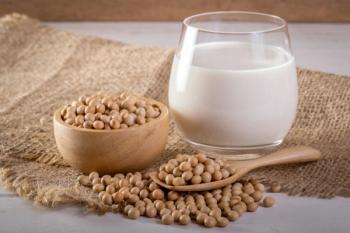
Recent EU legislation on PFAS shifts from monitoring individual compounds toward managing them as a chemical class.
This week, Chromatography Online explored how the technique is advancing wastewater drug monitoring, siRNA method development, and food safety testing, with previews of RAFA 2026 and a return to HPLC fundamentals with Michael Dong.
Welcome to this week’s recap of additions to the Chromatography Online website, where chromatographical techniques are tracking everything from illicit drugs in sewage to toxins in the food supply. We start in Australia, where Richard Bade and Malcolm McLeod explain how LC–MS/MS analysis of wastewater reveals shifts in community drug use. Next, in a two-part interview, Ed Ahearne of AstraZeneca describes how automation, machine learning, and Bayesian optimization are speeding up chromatographic method development for siRNA medicines. Ahead of RAFA 2026, held in Prague from November 3 to 6, we also speak with several invited speakers. Laura Righetti of Wageningen University & Research explains why quantification remains the main barrier to routine use of mass spectrometry imaging in food safety. Franz Berthiller of BOKU University discusses how retention index markers can align mycotoxin LC–MS data across laboratories. Michele Suman of Barilla SpA introduces a QuEChERS/UHPLC-HRMS method that screens for 23 plant toxins in cereals and spices. Finally, our "Conversations with Michael Dong" series returns to HPLC fundamentals, comparing the chromatographic properties of acetonitrile and methanol and explaining why 2.1-mm i.d. columns are less favored for pharmaceutical quality control.
This is the Best of the Week.
Richard Bade and Malcolm McLeod explain to LCGC International how liquid chromatography-tandem mass spectrometry (LC-MS/MS) detects drug trends in wastewater.1
AI/ML Now: Bayesian Optimization and Automation for siRNA Method Development
In this two-part interview, Ed Ahearne of AstraZeneca discusses how he combined automation, machine learning, and Bayesian optimization to speed up method development for siRNA medicines,2 and highlights the benefits of machine learning (M)L-driven chromatography for the development of biopharmaceutical products.3
RAFA 2026: Recent Advances in Food Analysis
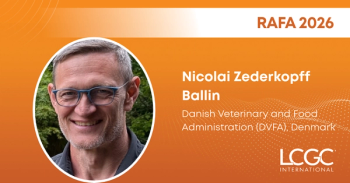
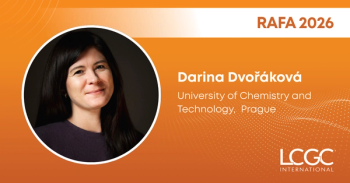
The 12th International Symposium on Recent Advances in Food Analysis (RAFA 2026), to be held in Prague from November 3 through November 6, includes researchers from universities and industry, as well as people from national and international agencies, food safety authorities, and government and commercial testing laboratories. LCGC International spoke to a few of the invited speakers prior to the event.
Laura Righetti of Wageningen University & Research and Wageningen Food Safety Research explains why quantification, not instrumentation, still keeps mass spectrometry imaging (MSI) out of routine food safety testing.4
Franz Berthiller (BOKU University, Austria) discusses a multilaboratory study that used retention index markers to align mycotoxin liquid chromatography–mass spectrometry (LC–MS) data.5
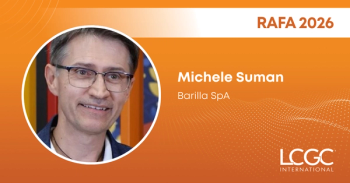
A QuEChERS/ultrahigh-performance liquid chromatography and high-resolution mass spectrometry (UHPLC-HRMS) method tracks 23 plant toxins in cereals and spices. Michele Suman from Barilla SpA discusses the method.6
Conversations with Michael Dong
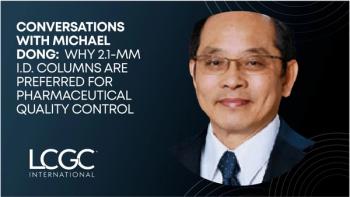
Our series on fundamentals of HPLC in pharmaceutical analysis with LCGC International’s "Perspectives in HPLC" column editor continues with a comparison of the chromatographic properties of acetonitrile and methanol,7 and an explanation of why 2.1-mm i.d. columns are less preferred for pharmaceutical quality control.8
References