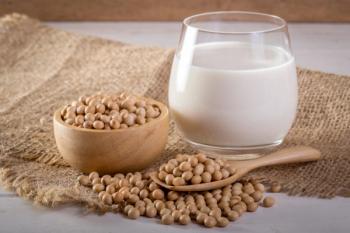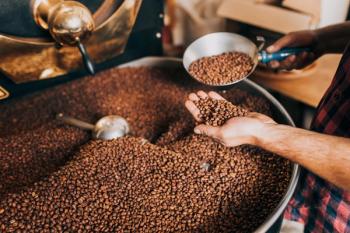
Liquid chromatography–tandem mass spectrometry (LC–MS/MS) finds low glyphosate residues of the weedkiller glyphosate in coffee beans.
This week, Chromatography Online spanned a direct plutonium isotope MS method, nanoplastics detection in drinking water, GC-MS data analysis and sustainability insights, a case for column chemistry as chromatography's key differentiator, and product news from GERSTEL and Metrohm USA.
This week, Chromatography Online covered a broad mix of research and industry news in separation science. Researchers at Clemson University used ultrahigh-resolution mass spectrometry (UHRMS) to directly measure plutonium and samarium isotope ratios in irradiated uranium, skipping chemical separation to save time and avoid interference issues. A separate study combining asymmetrical flow field-flow fractionation coupled with multiangle light scattering (AF4–MALS) and offline pyrolysis gas chromatography tandem mass spectrometry (Py-GC–MS/MS) and Py-GC-MS/MS detected nanoplastics and microplastics, including polypropylene particles, in Australian drinking water. Other pieces examine how preprocessing choices affect principal component analysis in gas chromatography-mass spectrometry (GC-MS) datasets, and how a life cycle assessment found that gas chromatography's environmental footprint depends largely on method run time and power use. Waters Corporation's Erin Chambers weighed in on why column chemistry, rather than instrument hardware, is chromatography's true differentiator, while a "Sample Prep Perspectives" column compared three sustainability-scoring tools, analytical method greenness score (AMGS), the analytical GREEnness metric approach (AGREE), and the sample preparation metric of sustainability (SPMS), for benchmarking method greenness. A blog post from David Hage of the University of Nebraska makes the case for why chromatography remains essential to teach and understand, and industry roundups covering recent product news from GERSTEL and Metrohm USA were presented.
This is the Best of the Week.
Ultrahigh-resolution mass spectrometry measured plutonium and samarium isotope ratios in irradiated uranium directly, skipping chemical separation and cutting analysis time while avoiding common interference problems. LCGC International spoke to Clemson University’s Suraj Shrestha and R. Kenneth (Ken) Marcus about the process.1
A new study revealed Australian drinking water contained 0.3–0.7 μg/L nanoplastics and 0.5–1.5 μg/L microplastics. Polypropylene nanoplastics were identified, with 10⁶–10⁷ particles/mL in tap water.2,
Preprocessing choices reshape principal component analysis outcomes in gas chromatography-mass spectrometry datasets.3
A life cycle assessment finds that gas chromatography's environmental impact hinges on method time and power.4
LCGC’s Kate Jones spoke to Waters Corporation’s Erin Chambers about why she views column chemistry, not hardware, as chromatography's real differentiator, citing two recent Waters launches.5
Mary Ellen P. McNalley's latest "Sample Prep Perspectives" column demonstrates that the analytical method greenness score (AMGS), the analytical GREEnness metric approach (AGREE), and the sample preparation metric of sustainability (SPMS) each quantify analytical greenness through distinct but complementary lenses—solvent/instrument energy demand, the full 12-principle green analytical chemistry (GAC) framework, and sample-preparation-specific sustainability, respectively—giving chromatographers practical, easy-to-use tools to benchmark and iteratively reduce the environmental footprint of their methods with measurable, reproducible scores.6
David Hage of the University of Nebraska explains why an understanding of chromatography and related methods is important.7
Industry Roundups
This week, we reported on recent product advances by GERSTEL and Metrohm USA.8,9
References