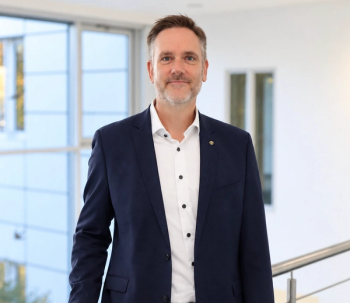
Florian Geistmann succeeded retiring Jürgen Semmler as Shimadzu Europa managing director on October 1.
Top articles published this week include an exclusive interview with Nicholas Snow of Seton Hall University and an article highlighting how LC–MS/MS is being used to assess oxysterol imbalances.
This past week, LCGC International published a variety of articles on hot topics in separation science. Nicholas H. Snow, who received the 2025 Eastern Analytical Symposium (EAS) Award for Outstanding Achievements in Separation Science, sat down with us for an exclusive interview, and we provide his insights here. Also, a roundtable discussion with three leading women in chromatography resulted in some valuable career advice being shared.
This is the Best of the Week.
Nicholas H. Snow, the 2025 EAS Award for Outstanding Achievements in Separation Science Winner, has dedicated more than 30 years to advancing gas chromatography (GC) and GC–mass spectrometry (MS). In this interview segment, Snow highlights the three major trends reshaping separation science in his view. These three trends include the rise of artificial intelligence (AI) for method optimization and spectral interpretation, the growing adoption of miniaturized systems to support greener and more efficient workflows, and the increased automation to improve throughput and reproducibility (1). Although the instrumentation continues to evolve, Snow emphasizes that GC’s core principles remain unchanged and believes the field’s future lies in combining strong fundamentals with smarter, smaller, and more automated technologies (1).
A roundtable discussion with leading women in chromatography—Daniela Held, Susanne Boye, and Claudia Zielke—highlighted the role of curiosity, resilience, and community in building a successful scientific career. Each panelist described discovering chromatography through unexpected opportunities and developing leadership skills by stepping outside their comfort zones, cultivating curiosity, and building strong professional networks (2). They emphasized the importance of pursuing work that inspires genuine interest, seizing opportunities, and supporting peers to foster collaboration (2). The panelists also addressed challenges faced by women in STEM, including career–family balance and subtle bias, underscoring the need for confidence, persistence, and community-driven support (2).
LCGC International interviewed Ivan Aloisi of Wageningen Food Safety Research about the creation of the WFSR Food Safety Mass Spectral Library, the first open-access liquid chromatography–high-resolution tandem mass spectrometry (LC–HRMS/MS) spectral library dedicated specifically to food toxicants. The library includes 1001 toxicants and nearly 7000 spectra across multiple collision energies, improving confidence in compound annotation for untargeted and suspect screening (3). Designed to accelerate accurate identification in complex food matrices, its rich metadata and retention time information help overcome gaps in existing repositories (3). Integration with computational tools and machine learning (ML) is expected to enhance high-throughput screening, structural analogue detection, and future advancements in food safety monitoring.
In another segment of our conversation with Nicholas Snow, he discusses the current limitations when it comes to training younger chromatographers. He notes a growing industry demand for skilled analytical chemists but a limited U.S. academic pipeline, as many experienced chromatographers move to industry rather than teaching roles (4). As a result, students often receive only basic GC training without deep hands-on expertise. Snow stresses the need for more trained chromatographers in academia and highlights conferences and short courses, such as EAS, Pittcon, and ACS events, as vital avenues for developing advanced GC skills and staying current with automation, miniaturization, and AI-driven workflows (4).
A recent study published in the Journal of Clinical Practice and Research examined whether disruptions in cholesterol metabolism contribute to autism spectrum disorder (ASD) by measuring central and peripheral oxysterol levels in children. Using LC–MS/MS, researchers compared 42 children with ASD to 38 typically developing peers and found significantly elevated 24-hydroxycholesterol and 25-hydroxycholesterol levels and decreased 27-hydroxycholesterol in the ASD group (5). The ratio of 24- to 27-hydroxycholesterol showed statistically significant diagnostic potential (5). The authors suggest that altered oxysterol metabolism may serve as a biomarker for ASD, while calling for larger studies to validate these findings and clarify underlying mechanisms (5).
References
(1) Hroncich, C. How AI, Miniaturization, and Automation Are Reshaping Gas Chromatography. LCGC International. Available at:
(2) Jones, K. Charting a Career in Chromatography with Advice from Leading Scientists. LCGC International. Available at:
(3) Chasse, J. Accelerating Food Safety Analysis with an Open-Access LC–HRMS/MS Spectral Library. LCGC International. Available at:
(4) Hroncich, C. Training the Next Generation of Chromatographers. LCGC International. Available at:
(5) Chasse, J. LC–MS/MS–Based Chromatographic Assessment of Oxysterol Imbalances in Autism Spectrum Disorder. LCGC International. Available at: