Liquid chromatography-tandem mass spectrometry (LC-MS/MS) identifies blood metabolite patterns tied to children's diets.
The path to a successful leadership career in science is fueled by curiosity, resilience, and the support of a strong community.
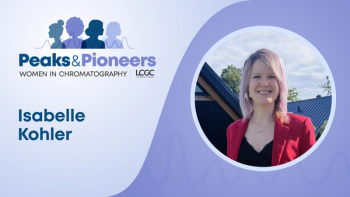
In a revealing roundtable discussion, three leading women in chromatography shared their personal journeys and professional strategies for navigating this dynamic field. The panel featured Daniela Held, a seasoned leader in the analytical sciences, Susanne Boye, deputy head of the Department of Advanced Macromolecular Structure Analysis at the Leibniz-Institut für Polymerforschung Dresden (IPF), and Claudia Zielke, a research scientist at Vaxcyte. Their conversation offered insights into career development, from discovering a passion for separation science to building the networks and skills necessary to lead and innovate.
This article delves into their insights on finding inspiration, advancing professionally, and overcoming the challenges faced by women in STEM.
For the panelists, chromatography was not a predetermined destination but a field discovered through openness to opportunity. Boye and Held both found their calling during their postgraduate studies.
"I realized that I was not interested in doing synthesis; the chromatography was much more interesting," Boye recalled. Held had a similar experience, falling in love with the steep learning curve and hands-on challenge of size-exclusion chromatography (SEC) during her PhD.
For Zielke, the attraction started with a fulfilling internship using high performance liquid chromatography (HPLC). Her path through physical chemistry and analytical chemistry solidified her desire for analytical work. The universality of chromatography appealed to her. As she explained, "It's just intriguing how you can figure out the structure and the size and specific characteristics of a molecule."
The transition from student to leader requires intentional habit-building. The panelists highlighted courage, curiosity, and connection as their key strategies.
Step Out of Your Comfort Zone: Boye emphasized that overcoming shyness was critical. Being sent to conferences by her mentor built the self-confidence and visibility necessary for advancement. This helped her to find more self-confidence and also to present herself in a much better way.
Cultivate Curiosity and Active Listening: Held cited natural curiosity about applications and active listening as essential. Understanding colleagues' goals and sharing experiences effectively fosters collaboration and trust.
Network Intentionally: Zielke stressed that networking is a learned skill. She highlighted the value of peer support groups, like the Allies of Women in STEM program, and the power of platforms like LinkedIn. She shared an anecdote about connecting with someone whose job she wanted, which years later led to a familiar face in a high-stakes interview.
Identifying the right projects requires self-awareness. Zielke advised that genuine interest is crucial because it fuels the extra effort often required.
"If something is really of interest to you, you're also willing to invest the extra time and effort," she noted. Held recommended regularly checking in with one's own priorities and understanding what you want at that time.
A powerful example of seizing an opportunity came from Boye and Zielke themselves. Concerned about the visibility of field-flow fractionation (FFF), they founded a group for young scientists. This initiative has since grown into an active community that collaborates on research and supports newcomers, demonstrating how a simple idea can foster meaningful professional networks.
The panelists acknowledged that while the lab may not feel male-dominated, systemic challenges persist. A primary issue is balancing a career with family. Boye pointed to the publication gaps that can exist and the lack of flexibility that can disadvantage mothers, underscoring the need for supportive mentors and policies.
Held and Zielke addressed more subtle biases. Held observed that women often don't get the benefit of the doubt, with success being downplayed or failure being expected. Zielke labeled this the "prove it again" bias. Their collective advice was to cultivate self-confidence, persist, and support one another to normalize women's presence in science. "It's nothing better, it's nothing worse, it's just normal," Held concluded.