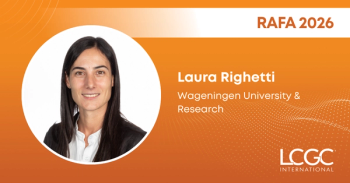
Laura Righetti explains why quantification, not instrumentation, still keeps mass spectrometry imaging (MSI) out of routine food safety testing.
This week, LCGC International published a variety of articles on hot topics in separation science. From talks with the president of Shimadzu Europa on the corporation’s 150th anniversary, to volatile organic compound research. Below, we’ve highlighted some of the most popular articles that were published this week.
Lucy Hearn, Rebecca Cole
The flavors and aromas of food and drink are determined by the presence of the volatile organic compounds (VOCs) they contain. The differences in VOC profiles can have a huge influence on consumer preference and can significantly affect the perception of freshness, quality, and sensory experience—even when present at extremely low levels. Analysis of VOCs is essential to maintain product consistency by detecting whether growing, refining, and production processes have an impact on the smell and taste of the product or whether a product has been tampered with.
Caroline Hroncich
Founded in 1875, Shimadzu Corporation is celebrating its 150th anniversary this year—a milestone that reflects a long‑standing legacy of innovation and cross-disciplinary work in analytical chemistry. In honor of the occasion, Yoshiaki Hirao, president of Shimadzu Europa GmbH, spoke with LCGC International to reflect on the company’s journey, offer his top career advice, and share insights into what’s ahead for the next chapter.
Alasdair Matheson
Supercritical fluid chromatography (SFC) has evolved significantly since its inception, emerging as a versatile and efficient separation technique. Despite its growing use, several misconceptions persist, particularly regarding its operational limits and applications. In this interview, Caroline West, professor at the University of Orléans and an active member of LCGC International’s editorial advisory board, discusses current perspectives on the fundamentals of SFC. She also addresses how expanding beyond the classical supercritical domain may influence the technique’s applicability.
Alasdair Matheson
LCGC International recently spoke with Kevin Schug, a long-standing and active member of the LCGC International Editorial Advisory Board. Schug is professor and the Shimadzu distinguished professor of analytical chemistry in the Department of Chemistry and Biochemistry at The University of Texas at Arlington (UTA), in Texas, USA. In part one of the interview, Schug discusses the application and benefits of vacuum ultraviolet (VUV) detection in gas chromatography (GC) and how advanced modern machine learning approaches can be implemented. The discussion also explores novel molecular descriptors, such as ABOCH features, developed to more effectively represent spectral-relevant characteristics like aromaticity and halogenation.
Aaron Acevedo
Polycyclic aromatic hydrocarbons (PAHs) are pollutants that come naturally from coal, crude oil, and gasoline. Human exposure to PAHs can occur through skin contact, food ingestion, and inhalation, after which these substances are transported to tissues and organs via the bloodstream. While the health effects from PAH exposure is currently unknown, several PAHs and certain PAH mixtures are considered cancer-causing chemicals. Further, PAH metabolites in the form of hydroxy derivatives (OH-PAHs) can be excreted from the body, which can potentially be more harmful to living organisms than parent compounds. However, there is limited research on OH-PAHs occurrence in the environment, especially its presence in wastewater. Researchers from the Cracow University of Technology, Jagiellonian University Medical College, and the AGH University of Krakow investigated new means of analyzing PAHs and OH-PAHs, in hopes of understanding their impact on aquatic ecosystems.