Gas chromatography-mass spectrometry (GC-MS) coupled with headspace solid-phase microextraction )HS-SPME) links cocoa variety to chocolate aroma and flavor profiles.
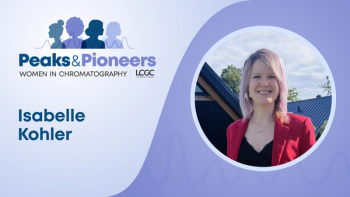
A recent roundtable with Giorgia Purcaro, Ilaria Belluomo, and Katelyn Perrault Uptmor explored challenges and opportunities for women in chromatography, sharing personal journeys, career barriers, and advice for future separation scientists.
The field of chromatography is a dynamic and essential branch of analytical science, but building a long-term career within it presents unique challenges, particularly for women.
A recent roundtable discussion featuring three leading experts in the field—Giorgia Purcaro, Ilaria Belluomo, and Katelyn Perrault Uptmor—shed light on the personal journeys, barriers, and strategies for success. Purcaro is a full professor of analytical chemistry at the University of Liège, Belgium. Belluomo is a research fellow at Imperial College London and an emerging leader fellow of the Epilepsy Research Institute UK; she is also the founder of the Academic Women Association at Imperial. Perrault Uptmor is an assistant professor of chemistry at William & Mary, Williamsburg, Virginia, USA, and principal investigator of the non-targeted separations laboratory. Together, they explored the realities of building a life and a career at the cutting-edge of separation science, offering invaluable advice for the next generation.
The panelists’ paths to working in chromatography are as unique as their research specialties. For Belluomo, it was love at first sight during her master's studies.
"I was fascinated from the beginning," she recalled. "The possibility to understand what something is made of by separating its single components...I felt like I had to learn this."
Her career began by literally unpacking a new liquid chromatography–mass spectrometry (LC–MS) instrument with fellow students, an experience that launched her into a PhD and a postdoctoral pivot into the novel field of breath analysis.
Purcaro’s path into separation science began unexpectedly. During her master’s studies in analytical chemistry, a professor—who was not a chromatographer—presented syringe use with an analogy that emphasized its misuse rather than its scientific applications, offering a perspective far removed from the technique’s actual potential. It wasn’t until a passionate food chemistry professor demonstrated chromatography’s power that she felt its pull, ultimately leading her toward a PhD. The defining spark came later, at a conference, when she witnessed comprehensive two-dimensional gas chromatography (GC×GC) in action for the very first time.
"I really fell in love," she said. "I was like, I have to do this." This passion led her to Australia to train with Philip Marriott at RMIT University in Melbourne, where she learned the technique, setting the course for her career.
Perrault entered through the world of forensic science. An early internship in a forensic biology lab doing DNA analysis showed her that her passion lay in research-driven problem-solving. "I got really excited about this idea of solving problems through separations," she explained. A project using chromatography to study decomposition compounds combined her interests in biology and chemistry, demonstrating the power of the technique to answer complex, real-world questions.
All three scientists highlighted the immense challenge of balancing demanding research with caregiving responsibilities, a burden that still falls disproportionately on women. In 2023, 748 million people worldwide were out of the labor force due to care responsibilities, making up one-third of all working-age non-participants. Of these, 708 million were women and only 40 million were men, according to ILO data from 125 countries (1). The estimates show that caregiving is the leading barrier to women’s workforce participation, while men more often cite education or health as reasons for being out of the labor force. The COVID-19 pandemic has only deepened this inequality. Since the pandemic, women’s childcare time rose from 26 to 31 hours per week (+5.2 hours), while men’s increased from 20 to 24 hours (+3.5 hours). Although both saw a similar percentage rise (women +20%, men +18%), women still shoulder significantly more hours overall (2).
Belluomo noted that chromatography, with its long, uninterrupted method development runs and extensive travel for conferences, can be particularly difficult to juggle with family life. This, in turn, limits crucial networking and professional development opportunities.
Perrault Uptmor framed this as a "leaky pipeline" issue. While entry into science, technology, engineering, and mathematics (STEM) fields has improved, retaining women through critical life stages remains a challenge. The lack of visible women role models in leadership positions, both in academia and the instrument industry, was cited as a major barrier. "For young scientists," Belluomo said, "this doesn't present you with the example that you can actually arrive there."
Unanimously, mentorship and networking were championed as the most powerful tools for career advancement. Belluomo credited a mentor with providing a practical "checklist" for career development, including don’t compare yourself to others, that completely changed her approach. Purcaro emphasized learning from multiple mentors, even indirectly, to gain the hints and inspiration that can steer a career.
Perrault Uptmor stressed the importance of building a global network and maintaining those connections proactively.
"I think people underestimate the power that a strong network can have on your career," she advised, encouraging young scientists to attend conferences, make connections at all levels, and use digital tools to stay engaged. She also highlighted the duty to "pay it forward," by becoming a mentor to early-career scientists.
Offering advice to the next generation, Belluomo urged young women to "be brave," challenging the notion that women are raised to be perfect rather than to take risks. "Don't be scared of anything... never say I'm not enough for something. Just go for it."
Purcaro advised a deep study of the fundamentals and history of a technique. This foundational knowledge, she argued, is the only way to truly think outside the box, avoid past errors, and become a genuine innovator.
Perrault Uptmor returned to the core of what makes a fulfilling career: passion for a problem. "Find a problem that intrigues you and holds your interest," she said, "because that makes it so much more interesting and fun to work on." For her, that problem-solving passion, rooted in forensic science, continues to drive her work and success.
(1) International Labour Organization, The Impact of Care Responsibilities on Women’s Labour Force Participation;
(2) UN Women, The COVID-19 Pandemic has Increased the Care Burden, But by How Much?