|Articles|December 1, 2017
- The Application Notebook-12-01-2017
- Volume 30
- Issue 4
Determination of Chloramphenicol in Honey with Automated Solid-Phase Extraction and HPLC–MS/MS Detection
A sensitive determination method with automated solid‑phase extraction (SPE) is presented and the recovery rates are compared with manual extraction. The automated extraction was developed with the SPE robot FREESTYLETM SPE module (LCTech GmbH). According to the European Regulation (EC) No 470/2009, CHROMABOND® HLB was applied for SPE (1). A high performance liquid chromatography tandem mass spectrometry (HPLC–MS/MS) method with the biphenyl phase NUCLEODUR® π2 was used for the subsequent analysis.
MACHEREY-NAGEL GmbH & Co. KG
Neumann-Neander-Str. 6 – 8, 52355 Düren, Germany
Tel.: +49 24 21 969 0 Fax: +49 24 21 969 199
E-mail:
Articles in this issue
Related to this article

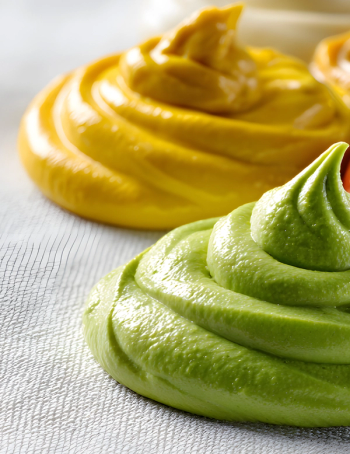
Gas chromatography–mass spectrometry (GC–MS) and ion chromatography profile wasabi and mustard heat and acidity.

How feasible is it to integrate this Bayesian graph-theory methodology into existing commercial chromatography software workflows for semi-automated data curation in routine analytical laboratories?

Reversed-phase high-performance liquid chromatography (RP-HPLC) and liquid chromatography-tandem mass spectrometry (LC-MS/MS) show frequent milking alters cobra venom toxin makeup.

Gabriel Vivó-Truyols outlines the benefits and challenges of combining graph theory with Bayesian statistics to automate peak assignment and alignment.

This week, Chromatography Online’s coverage spanned lipidomics-based early cancer detection, career paths in separation science, machine learning and uncertainty-driven approaches to LC method development, new EU wastewater rules for pharmaceutical micropollutants, automated Separation Quality Factor (SQF) evaluation in chromatography data systems, and solutions to GLP-1 peptide analysis challenges.

Gabriel Vivó-Truyols from the Spanish Council for Scientific Research, Madrid, Spain. discusses his work on using graph theory and Bayesian statistics for peak assignment and chromatographic alignment.
Trending on LCGC International
1
GC–MS Probes Acidity and Heat in Wasabi, Mustard
2
AI/ML Now: Uncertainty-Driven Model-Based Search Methods for Method Development in Liquid Chromatography (Part Two)
3
HPLC–DAD Method Tracks Semaglutide and Tirzepatide Stability
4
Implementation of the Separation Quality Factor (SQF) in Chromatography Data Systems for Automated Method Evaluation
5