


|Podcasts|December 1, 2021
Developing Technologies for High Impact Proteomics and Protein Chemistry Research
Author(s)Thermo Fisher Scientific
In the final episode of this six-part podcast, Robert Moritz, a professor at the Institute for Systems Biology, discusses major challenges that still exist with liquid chromatography and mass spectrometry, liquid chromatography’s role in LC-MS proteomics, and where this field is headed in the next few years and beyond.
Advertisement
Episodes in this series


Advertisement
Related to this article

High-performance liquid chromatography (HPLC) confirms safe blood levels of slow-release bupivacaine nanoparticles.

Nano-liquid chromatography-high-resolution tandem mass spectrometry (nano-LC-HRMS/MS) reveals saliva protein shifts before and after multiple sclerosis therapy.

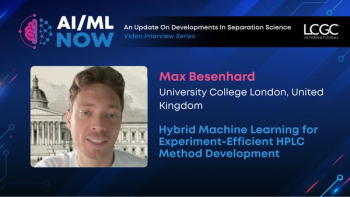
Max Besenhard explains how hybrid mechanistic and machine learning models can make HPLC method development quicker, more robust and ready for autonomous digital twins.
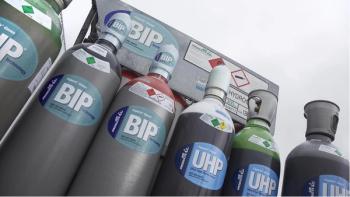
Ultra-high purity BIP® cylinders aim to give analytical laboratories cleaner baselines and lower detection limits

Polymer sorbent and dual microextraction boost gas chromatography with flame ionization detection (GC-FID) pesticide analysis.

Untargeted liquid chromatography–mass spectrometry (LC–MS) ties job stress in workers to plasma lipid changes.

Ultrahigh-pressure liquid chromatography–quadrupole time-of-flight mass spectrometry (UHPLC–QTOF MS) shows diet shapes honeybee metabolic responses to heat.
Advertisement
Advertisement
Trending on LCGC International
1
Fast Low-Pressure Chiral GC for Pesticides in Wine
2
Industry Roundup: Air Products Advances Gas Chromatography Performance
3
AI/ML Now: Hybrid Machine Learning for Experiment-Efficient HPLC
4
AI/ML Now: Bringing Autonomous Digital Twin Workflows Into the Laboratory
5