Flavoring materials from biological samples often come from complex natural matrices, where target compounds may be present alongside pigments, lipids, proteins, and other interfering components. This application note presents a fast liquid-liquid chromatography workflow for purifying flavoring-related compounds from a biological sample. Using centrifugal partition chromatography, the method demonstrates how support-free separation can help isolate valuable compounds from natural sources without relying on a solid stationary phase.
Gas chromatography– (GC) and liquid chromatography–high-resolution mass spectrometry (LC–HRMS) reveal which laboratory consumables leach most plastic additives.
This week's Chromatography Online stories cover the promise and hurdles of sub-1 µm LC columns, Vanessa Abercrombie's career lessons, chemometric studies of mead, USP <665> extractables for antibody–drug conjugates, and new LC–MS and HPLC work on hydrogen peroxide, cancer proteomics, atropine contact lenses, and stevia.
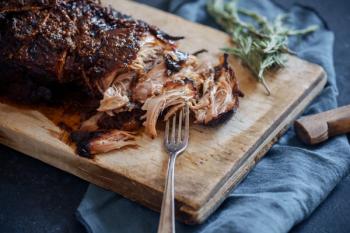
Gas chromatography–mass spectrometry (GC–MS) and high-performance liquid chromatography (HPLC) show native Chinese pork has richer flavor, healthier fats.
Bin Sun of Cytiva explains his study testing whether USP <665> 50% ethanol extractables data covers DMA and DMSO in antibody–drug conjugate processing.