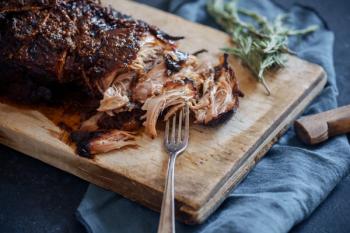
Gas chromatography–mass spectrometry (GC–MS) and high-performance liquid chromatography (HPLC) show native Chinese pork has richer flavor, healthier fats.
This week's Chromatography Online stories cover the promise and hurdles of sub-1 µm LC columns, Vanessa Abercrombie's career lessons, chemometric studies of mead, USP <665> extractables for antibody–drug conjugates, and new LC–MS and HPLC work on hydrogen peroxide, cancer proteomics, atropine contact lenses, and stevia.
How small can LC particles get? Commercial particle sizes haven't shrunk in nearly 20 years. In this week's Chromatography Online articles, Hanrong Wen, Ken Broeckhoven, and Sebastiaan Eeltink of Vrije Universiteit Brussel (VUB) explain how columns packed with sub-1 µm particles could speed up LC separations, and why pressure limits, extra-column dispersion, and packing problems still stand in the way.
“Our latest Peaks & Pioneers” profile features Vanessa Abercrombie of Thermo Fisher Scientific. Her career has run from war-zone forensics to IC–MS, and she shares what each role taught her about troubleshooting, throughput, and teaching the "why" behind chromatography.
Chemometrics gets attention this week too. In two articles, Sarah Foster of William & Mary looks at mead. In the first, meads made with Abbaye yeast formed their own group in principal component analysis (PCA) and hierarchical cluster analysis (HCA), driven by key volatile compounds. In the second, her PCA of fermentation kinetics found that Brix drove the separation and that mean centering was the best preprocessing step. On the biopharmaceutical side, Bin Sun of Cytiva explains his study testing whether USP <665> 50% ethanol extractables data also cover the DMA and DMSO solvents used to make antibody–drug conjugates.
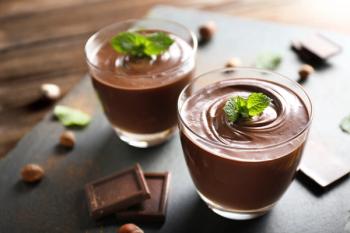
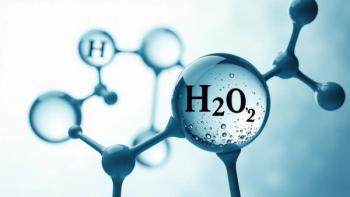
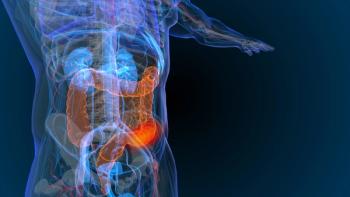
This week’s news features include a derivatization-based LC–MS/MS method keeps the O–O bond intact, so it can specifically detect hydrogen peroxide, an illustration of how LC–MS proteomics shows how spreading colorectal and pancreatic tumors differ, and a demonstration of how HPLC shows that atropine in myopia contact lenses stays stable for a year. Finally, “for dessert” we present research where HPLC links the makeup of stevia sweeteners to how sweet and bitter chocolate mousse tastes.
This is the Best of the Week.
Hanrong Wen, Ken Broeckhoven, and Sebastiaan Eeltink of VUB discuss how sub-1 µm particle columns could boost LC performance, and the hurdles to adoption.1
From war-zone forensics to IC–MS, Vanessa Abercrombie of Thermo Fisher Scientific shares what each role taught her about troubleshooting, throughput, and teaching the “why.”2
Sarah Foster of William & Mary found Abbaye yeast meads clustered apart in PCA and HCA, driven by furfural, ethyl octanoate, ethyl decanoate, and furan-2,5-dicarbaldehyde.3
In
Bin Sun of Cytiva explains his study testing whether USP <665> 50% ethanol extractables data cover DMA and DMSO in antibody–drug conjugate processing.5
Derivatization-based liquid chromatography–tandem mass spectrometry (LC–MS/MS) preserves the O–O bond for specific hydrogen peroxide detection.6
Liquid chromatography–mass spectrometry (LC–MS) proteomics shows spreading colorectal and pancreatic tumors differ.7
High-performance liquid chromatography (HPLC) shows atropine for myopia contact lenses stays stable for a year.8
High-performance liquid chromatography (HPLC) links stevia sweeteners’ makeup to sweetness and bitterness in chocolate mousse.9
References