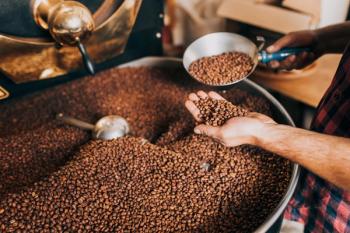
Liquid chromatography–tandem mass spectrometry (LC–MS/MS) finds low glyphosate residues of the weedkiller glyphosate in coffee beans.
Gas chromatography-tandem mass spectrometry (GC-MS/MS) analysis maps PAH, PCB, and OCP pollution in Strasbourg, France.
Long-lasting chemical pollutants in the air are useful for tracking pollution because they stick around for a long time, come from many different sources, and can travel across whole regions. To find out how these pollutants change by location and season, scientists studied three types of them— polycyclic aromatic hydrocarbons (PAHs), polychlorinated biphenyls (PCBs) and organochlorine pesticides (OCPs)—in northeastern France. They placed special air-sampling devices at six sites (in city, suburban, and rural areas) around the city of Strasbourg between 2018 and 2020, then used gas chromatography-tandem mass spectrometry (GC-MS/MS) to measure exactly how much of each pollutant was present. A paper based on their efforts was published in the journal Environment International.1
Why Does Studying This Pollution Matter?
Air pollution from long-lasting, semi-volatile chemicals is still a big environmental worry, because these compounds can linger in the atmosphere for a long time, travel long distances on air currents, and come from both pollution happening right now and pollution left over from the past.2,3According to the authors of the Environment International paper,1 one of the key traits of these long-lasting, semi-volatile air pollutants is that their levels shift depending on where and when you measure them. This is mainly driven by a handful of factors: how much pollution is being released in an area, how temperature affects whether these chemicals stay as a gas or stick to particles, how winds and air movement spread them around, how the layer of air close to the ground behaves, and how quickly the chemicals break down over time.4However, exactly how much pollution comes from local sources, blows in from other regions, or gets released back into the air after settling elsewhere really depends on the specific location. For proper understanding, multiple chemicals need to be tracked across multiple sites at the same time, rather than looking at just one place or one pollutant. In Europe, and especially in France, researchers have studied these airborne chemicals using different methods and sample types. PAHs, for instance, have been examined in both the air itself and in airborne particles, with traffic and home heating showing up as the main sources, and their levels clearly rising and falling with the seasons.5,6
What’s Already Known About This Pollution, and What's Missing from Prior Research?
The authors of the Environmental International paper point to earlier research that mostly looked at one specific type of chemical or one part of the atmosphere at a time in the Strasbourg and Alsace areas of France — for example, studies on phenolic compounds in the air, or pesticides and phenolic compounds found in fog.1 While this earlier work helped explain how these chemicals move through the atmosphere, get washed out by rain or fog, and build up differently depending on conditions, it had some gaps, tending to focus on just a few target chemicals, only looked at the water-based part of the atmosphere (like fog), or only captured short, one-off snapshots in time. Because of these limitations, the authors argue that previous research does not give a complete, long-term picture of how PAHs, PCBs, and OCPs are distributed in the air across different types of land use (whether urban, rural, or industrial) using one consistent monitoring approach over time.1
What Organic Pollutants Were Found in Strasbourg, and What Do Their Patterns Reveal About Where the Contamination is Coming From?
The scientists measured 22 pesticide-related chemicals (OCPs), 16 PAHs, and 22 PCBs using the combined chromatography/spectrometry technique. PAHs showed the clearest patterns tied to location and season, with levels found to be higher in cities and tending to spike in colder months or fall, depending on where the samples were taken. Naphthalene was the most common PAH found, and the mix of compounds pointed mainly to burning sources such as vehicle exhaust, home heating, and burning wood or other solid fuels.1
PCBs did not vary as much between locations, showing up in similar amounts everywhere. The types found were mostly the heavier, more chlorinated kinds, suggesting they were leftover contamination spread out over a wide area, possibly from old PCB-containing products, industrial zones, or chemicals drifting and resettling across the region.1
OCPs were mainly leftover DDT-related compounds and a pesticide group called HCH isomers, which points to old contamination still lingering in the environment and slowly releasing back into the air or water from polluted soil, water, or sediment.1
“These findings,” write the authors of the paper,1 “highlight the combined influence of current urban emissions, persistent legacy reservoirs, secondary re-emissions and regional atmospheric transport on organic contaminant distributions in northeastern France.”
Read More on Similar Topics
References