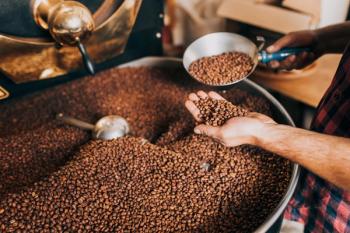
Liquid chromatography–tandem mass spectrometry (LC–MS/MS) finds low glyphosate residues of the weedkiller glyphosate in coffee beans.
Heart-cut gas chromatography links volatile organic compound (VOC) shifts to bacterial spoilage in meatballs.
A team of researchers looked at whether tracking the smells given off by refrigerated cooked meatballs (made from beef and pork) could help predict when they're about to spoil due to bacteria growth. To test this, researchers prepared fresh meatball samples, sealed them in air-tight glass containers, and stored them in the fridge at 6 °C. At set time points, they checked for bacterial growth using standard lab culturing methods and analyzed the gases released by the meatballs using a technique called thermal desorption heart-cut gas chromatography, paired with two types of detectors (flame ionization and mass spectrometry) to identify the specific compounds present. A paper based on their research was published in Food Research International.1
Why Do Refrigerated Cooked Leftovers Spoil, and Why Is Spoilage Hard for Consumers to Judge Accurately?
People often toss out refrigerated leftovers just because they assume they have gone bad, not because there is any real proof that they have.2Even though cooking kills off most of the bacteria in food, it does not guarantee food stays germ-free afterward. Once it has been cooked, things like slicing, portioning, and moving it into storage containers can reintroduce bacteria. In addition, if the food was not cooked thoroughly enough, or if it comes into contact with raw ingredients, kitchen surfaces, utensils, or people's hands, that can also add bacteria back into the mix.3,4Even in refrigeration, certain bacteria that can handle cold temperatures can keep growing.5This eventually causes food to lose nutrients, taste worse, and spoil faster. Experts recommend keeping refrigerators below 5 °C to safely store perishable food. But a recent study across 16 European countries found that home fridges run at an average of 6.4 °C, and that temperature varies a lot from household to household. The study also found that a lot of home fridges run warmer than the recommended safe range, mainly because people open the door too often, cram in too much food, setting the thermostat incorrectly, or just not handling food storage the best way.6,7“Such deviations from ideal refrigeration conditions,” write the authors of the paper,1 “can accelerate microbial proliferation and spoilage progression in refrigerated foods.”
How Do Bacterial Growth and Volatile Organic Compounds (VOC) Profiles Shift as Meatballs Spoil, and Which VOCs Signal It?
Using standard bacteria-counting methods, the researchers sorted the meatball samples into three quality stages: good (low bacteria levels), still okay (moderate levels), and spoiled (high levels). All the samples stayed in good shape for the first three days, slipped into the "still okay" zone by days four and five, and were officially spoiled by the sixth day. The overall bacteria count tracked closely with pretty much every type of microbe they measured.1
When it came to smell, fresh meatballs were dominated by aldehydes, compounds naturally produced during cooking. But as the meatballs started to spoil, the smell profile shifted toward compounds made by bacteria: alcohols, acetals, esters, and sulfur-containing compounds. One compound, 1,1-diethoxyethane, tracked closely with overall bacteria levels as well as several specific microbe types, while other compounds, like 1-hexanol, 2,3-butanediol, and various sulfides, were more closely tied to one specific type of spoilage bacteria called Pseudomonas.1
The researchers also found that certain ratios between compounds, specifically aldehydes compared to 1,1-diethoxyethane, and aldehydes compared to 2,3-butanediol, shifted dramatically between the third and sixth days. That makes them promising early-warning signs that spoilage is about to happen. Meanwhile, a different ratio (hexanal to 1-hexanol) proved more useful later, helping track how spoilage progressed between days 9 and 12.1
“This study,” write the authors of the paper,1 “highlights the potential of VOCs to indicate changes in the microbiological quality of cooked meatballs stored under realistic household refrigeration temperature. These preliminary findings,” they continue, “are based on a single production batch and therefore require further validation using additional production batches, different meatball formulations, and different storage conditions. Such validation will support the integration of VOC ratios into smart sensing systems for food freshness monitoring.”
Read More on Similar Topics
References