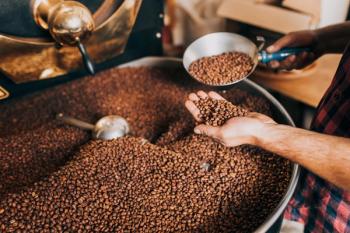
Liquid chromatography–tandem mass spectrometry (LC–MS/MS) finds low glyphosate residues of the weedkiller glyphosate in coffee beans.
Size-exclusion high-performance liquid chromatography with fluorescence detection (HPLC-SEC-FLD) and attenuated total reflectance Fourier-transform infrared spectroscopy (ATR-FTIR) trace carbon nanodot glow to beer roasting process.
Tiny particles called carbon nanodots (CNDs) can form during the beer-brewing process, and they might be part of the reason some fermented drinks glow or fluoresce under certain light. However,scientists do not yet know much about how common these particles are in beer or how they behave. To find out, researchers at the University of Debrecen in Hungary studied a variety of commercial beers, using attenuated total reflectance Fourier-transform infrared spectroscopy (ATR-FTIR) and size-exclusion high-performance liquid chromatography with fluorescence detection (HPLC-SEC-FLD) to detect and measure this glowing effect. A paper based on this research was published in the journal Frontiers in Nutrition.1
What Are Carbon Nanodots (CNDs)?
CNDs are tiny carbon-based particles that can naturally form in complex mixtures of organic material, including in food and drinks. They're usually roundish, extremely small (about 1 to 10 nanometers across, way too small to see even under a regular microscope), and made of a carbon core surrounded by chemical groups that contain oxygen and nitrogen on their surface.2,3 Because of the way they're built, these particles dissolve easily in water, don't fade or break down easily when exposed to light, and glow in different colors depending on the type of light used to excite them. These traits make it possible to detect even tiny, trace amounts of them, even when they're mixed in with lots of other complex substances.4In drinks like coffee, tea, wine, and beer, these carbon particles are thought to form from carbon-rich building blocks like sugars, amino acids, and polyphenols (a type of plant compound). When these ingredients are exposed to heat during processes like roasting, fermenting, or brewing, they can chemically combine and bond together, eventually forming these tiny carbon particles.5-8
How Much CND Fluorescence Is Present in Different Types of Commercial Beer, and What Causes It?
For this study, the researchers looked at five different store-bought beers (including dark stouts, abbey ales, dark lagers, and pale lagers) to see how much of this CND glow each one had. To measure this accurately, they created a reference standard made from glycine so they could compare all the beers against a known baseline.1
The testing method turned out to work well and could reliably detect glowing particles even in very small amounts. The particles responsible for most of the glow were large and heavy, more like clusters or clumps rather than simple, tiny molecules, similar to what would be expected from tiny carbon-based nanoparticles. Darker beers, like stouts and dark lagers, showed noticeably more of this glowing effect than pale lagers. Interestingly, when the researchers adjusted for the beers' sugar content, they found that how dark or roasted the malt was, and the specific brewing process used, mattered much more than just how much sugar or dissolved solid content was in the beer.1
Finally, the chemical analysis backed this up, showing signs of compounds formed by heat, roasting, and browning reactions (the same kinds of reactions responsible for browning in toasted bread), supporting the idea that these fluorescent particles form from roasting and brewing, not simply from sugar content.1
“These findings,” write the authors of the paper,1 “indicate that CNDs-related fluorescent species in beer originate primarily from Maillard-driven thermal processing during brewing rather than from raw material solids content. The combined fluorometric and chromatographic framework developed here provides a reproducible approach for assessing CNDs in fermented beverages, with potential applications in quality control and process monitoring across beverage types.”
Read More on Similar Topics
References