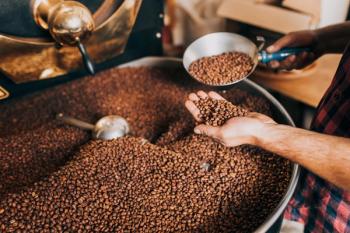
Liquid chromatography–tandem mass spectrometry (LC–MS/MS) finds low glyphosate residues of the weedkiller glyphosate in coffee beans.
Using high-resolution gas chromatography coupled with high-resolution mass spectrometry (HRGC-HRMS) finds only trace dioxin, PCB levels in wild edible land snails.
Land snails are known to be useful indicators of pollution in the environment, and since some species are eaten by people, they could also be a way that harmful, long-lasting chemicals end up in our diets. However, there is not much existing research on certain toxic chemical groups such as dioxins, furans, and polychlorinated biphenyls (PCBs) in edible land snails specifically. This influenced researchers at Poland’s University of Life Sciences in Lublin, and National Veterinary Research Institute to investigate levels of these pollutants in two different tissues (the muscular "foot" that the snail uses to move, and an internal organ called the hepatopancreas, which handles digestion and toxin processing) in wild Roman snails (Helix pomatia) collected from two locations in Poland. Using high-resolution gas chromatography coupled with high-resolution mass spectrometry (HRGC-HRMS), the team measured 35 different chemical variants of these pollutants. A paper based on their work was published in the journal Toxics.1
Why Is It Important to Understand Where and How Much Contaminants Build Up in Snail Tissues?
In many parts of the world, eating land snails raises questions about whether they could expose people to harmful environmental pollutants. In some studies, the levels of lead and cadmium found in edible snail tissue were similar to (or even higher than) the levels found in animal-based foods that are already regulated by European Union food safety laws, including sea-dwelling shellfish, which are allowed some of the highest contaminant limits of any food category.2-4
It also matters where in the snail's body these pollutants end up. The foot muscle is the part people actually eat, so it is the tissue that matters most for figuring out how much of these chemicals someone might be exposed to through their diet.5 The hepatopancreas, on the other hand, is an organ that's heavily involved in processing and breaking down toxins, which means pollutants tend to build up there instead. This difference is even recognized in EU food safety law, which requires that the hepatopancreas be removed from snails before they're sold if it could pose a health risk.6
That said, land snails aren't currently treated as their own specific food category under EU regulations, and there are no official safety limits set for dioxins, furans, or PCBs in these animals.7 Because there are no clear legal limits, not much existing data, and people in several European countries - including Poland - continue to eat land snails regularly, it's important to keep gathering information on these contaminants. This matters both for monitoring environmental pollution and for ensuring food safety, especially as more people look toward alternative, sustainable sources of protein like snails.1
How Much Dioxin and PCB Contamination Was Found in the Snails, and Is It Enough to Be a Concern?
A total of 48 snails were studied (24) from each region, and the samples were grouped into three combined batches per tissue type for each location. Overall, only very small, trace-level amounts of a few specific pollutants were found, and only in the hepatopancreas tissue (not in the foot muscle). Among the furan-type chemicals tested, only two specific forms were detected in measurable amounts, and among the PCB-type chemicals, only one specific form showed up at measurable levels. All the dioxin-type chemicals and the other PCBs tested were present in amounts too low to accurately measure. When the researchers calculated overall toxicity levels using standard international guidelines, the results were very low across all samples, even when using the most cautious, worst-case estimation method.1
“The preferential detection of contaminants in the hepatopancreas was consistent with the higher lipid content of this tissue,” write the authors of the paper.1 “The results indicate very low contamination of H. pomatia with dioxins and PCBs and low toxicological relevance under the investigated conditions.”
Read More on Similar Topics
References