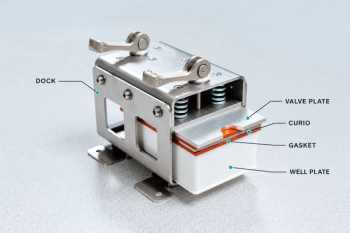
Five years after its founding, the Hungarian developer of centrifugal partition chromatography is making the case that liquid–liquid separation belongs on the analytical bench as well as the production floor.
Liquid chromatography-high resolution mass spectrometry (LC-HRMS) identifies over 700 contaminants and antimicrobial resistance (AMR) risks in Indian hospital wastewater.
Wastewater from hospitals is a major source of harmful pollutants, including contaminants of growing concern (CECs), bacteria that have become resistant to antibiotic resident bacteria (ARB) and genes (ARGs) that make them resistant. This makes hospital wastewater (HWW) a key hotspot for helping antimicrobial resistance (AMR) spread more widely. Despite how important this issue is, there is still very little data on what is present in hospital wastewater in India, especially when it comes to two specific types of substances: contrast agents (used in medical imaging) and parabens (preservatives found in many products).
A study by researchers at the Indian Institute of Technology Delhi is the first of its kind to couple non-targeted analysis (NTA) with liquid chromatography-high resolution mass spectrometry (LC-HRMS) to identify a wide range of concerning chemical pollutants in wastewater from three hospitals in the Delhi area. A paper based on this work was published in the journal Water Research.1
Wastewater that flows out of hospitals is a major source of concerning chemical pollutants—including antibiotics, dyes used in X-ray imaging, painkillers, hormones, antidepressants, and various other harmful substances and disease-causing microbes.2-5This makes hospital wastewater much more chemically varied—and 5 to 15 times more toxic to the environment—than the wastewater that typically comes from cities and towns.6Hospital wastewater poses serious risks to the environment, yet only a handful of studies have looked closely at what specific pollutants it contains and how risky they are, especially in developing countries like India. In addition, hospital wastewater can serve as a breeding ground for antibiotic-resistant bacteria and the genes that make them resistant, which means it can play a real role in helping antibiotic resistance spread more widely.4,7
Researchers tentatively identified 728 CECs and were able to confirm the exact structure of 38 of them, ultimately measuring precise concentrations for 23. Pharmaceuticals made up the bulk of these pollutants, with antibiotics being the most common type, found at concentrations ranging from 44 to 3,509 nanograms per liter. One substance, a contrast agent called iohexol (used in medical imaging), was found at a notably high level of 80 micrograms per liter, and the researchers also identified toxic transformation products (TPs) that this chemical breaks down into during wastewater treatment.
The hospitals' wastewater treatment systems were not effective at removing these pollutants, including antibiotics, which raised concerns that this could help spread antibiotic resistance. Three specific antibiotics (amoxicillin, levofloxacin, and azithromycin), along with their breakdown products, were found at levels high enough to pose a real risk of contributing to antibiotic resistance. On top of that, several harmful bacteria flagged as high-priority by the World Health Organization—including strains known for being especially difficult to treat—were detected in the treated wastewater that gets released into the environment after effluent treatment plants (ETPs) supposedly cleaned the water and removed chemicals.1
The researchers also found 51 different antibiotic-resistance genes, 14 of which work by helping bacteria pump antibiotics out of their cells, making the drugs ineffective. Since this hospital wastewater flows directly into city sewer systems, there is a real risk that it could overwhelm urban treatment plants and further fuel the spread of antibiotic resistance.1
“This study,” write the authors of the paper,1 “provides one of the most comprehensive datasets on CECs, their TPs, ARBs and ARGs in Indian HWW and underscores the urgent need of upgradation of existing ETPs and integrated AMR surveillance.”
Read More on Similar Topics
References