|Articles|March 7, 2013
- The Column-03-07-2013
- Volume 0
- Issue 4
Market Profile: Market Profile: Solid-Phase Extraction
Solid-phase extraction (SPE) has been commercially available for nearly 25 years and is still finding new applications. Growth of this technique appears to be largely a function of the vendors' capability to provide specific application support, especially in clinical sciences, pharmaceuticals, toxicology, pesticides and residues analysis.
Advertisement
Solid-phase extraction (SPE) has been commercially available for nearly 25 years and is still finding new applications. Growth of this technique appears to be largely a function of the vendors’ capability to provide specific application support, especially in clinical sciences, pharmaceuticals, toxicology, pesticides and residues analysis.
Articles in this issue
over 13 years ago
Thin layer chromatography detects substandard TB drugsover 13 years ago
Pittcon 2013 Previewover 13 years ago
APIX goes miniatureAdvertisement
Related to this article

Tuned liquid chromatography–tandem mass spectrometry (LC–MS/MS) separation beats brain matrix effects to quantify psilocin.

LCGC International spoke to participants in a study using theoretical modeling to explore how much better chromatography columns packed with ultra-small (sub-1 micrometer) particles could perform under current and future high-pressure instruments, while weighing the practical challenges that have so far kept them from widespread use.

From war-zone forensics to IC–MS, Vanessa Abercrombie shares what each role taught her about troubleshooting, throughput, and teaching the “why.”

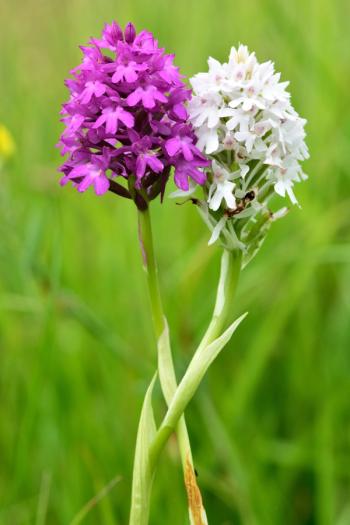
Gas chromatography–mass spectrometry (GC–MS) shows white and pink pyramidal orchids differ in key scent compounds.

Sarah Foster shows how GC×GC–TOF-MS resolves co-eluting mead volatiles, with flame ionization detection flagging trace peaks and system leaks.

Liquid chromatography–mass spectrometry (LC–MS) finds cord blood fat profiles differ after suspected preterm labor.

This week, Chromatography Online’s coverage includes a magnetic aerogel for pesticide testing, food aging and aroma studies, forensic alcohol analysis, Diego Rivera’s mural materials, and metabolic and anesthetic research, plus David S. Bell’s 2026 EAS Award in Separation Science.
Advertisement
Advertisement
Trending on LCGC International
1
Can Tinier Particles Make Better LC Columns?
2
Peaks & Pioneers: Vanessa Abercrombie on Learning Chromatography’s “Why”
3
Effective Strageties for the capture and separation of volatile PFAS
4
Comprehensive Screening of Airborne Microplastics and Persistent Organic Pollutants
5