Magic mushrooms, once taboo, have recently experienced a renaissance. This new awakening is partially due to new findings that indicate the effects of psilocybin, and its dephosphorylated cousin psilocin may produce long lasting results for patients who might be struggling with anxiety, depression, alcohol and drug abuse, and post-traumatic stress disorder. Hamilton Company has developed a methodology for the isolation and identification of 5 common psychedelic compounds used in the potential treatment of disease. The PRP-1 HPLC column resin remains stable in the harsh alkaline conditions ideal for better separations.
In this seventh part of " Conversations with Michael Dong," a series on fundamentals of HPLC in pharmaceutical analysis, LCGC International’s "Perspectives in HPLC" column editor explains why 2.1-mm i.d. columns are less preferred for pharmaceutical quality control.
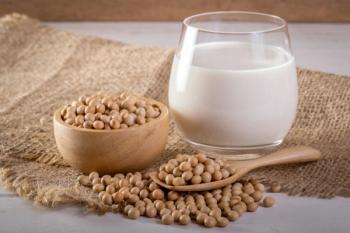
Ultrahigh-performance liquid chromatography–quadrupole time-of-flight mass spectrometry (UHPLC–QTOF-MS) shows how soaking and cooking break down soybean fats.
Nicolai Zederkopff explores chromatography’s role to help implement the maximum tolerable level (MTL) framework for food adulteration to translate analytical results into compliance decisions.
Franz Berthiller (BOKU University, Austria) discusses a multilaboratory study that used retention index markers to align mycotoxin liquid chromatography–mass spectrometry (LC–MS) data.
A QuEChERS/ultrahigh-performance liquid chromatography and high-resolution mass spectrometry (UHPLC-HRMS) method tracks 23 plant toxins in cereals and spices. Michele Suman discusses the method with LCGC International.