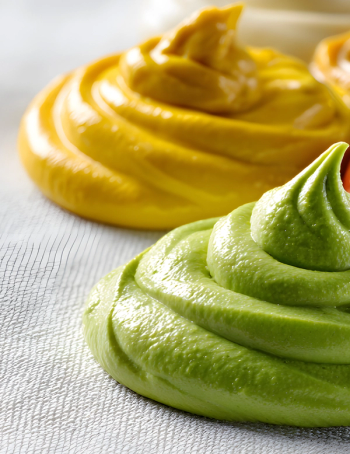
Gas chromatography–mass spectrometry (GC–MS) and ion chromatography profile wasabi and mustard heat and acidity.
LCGC Europe eNews
Shimadzu Scientific Instruments and Cerno Bioscience have announced that they will team up to offer Cerno's MS software on Shimadzu's LC–MS quadrupole systems.
Shimadzu Scientific Instruments and Cerno Bioscience have announced that they will team up to offer Cerno’s MS software on Shimadzu’s LC–MS quadrupole systems.
According to the companies, the combination will allows users to improve mass accuracy results by up to 100x while achieving spectral accuracy on unit mass resolution mass spectrometers such as single and triple quadrupole systems.
The software package opens and processes the data direct from the LC–MS workstation files, eliminating the need for importing or exporting MS data to the clipboard or using intermediate exchange formats. The companies claim that this saves time, reduces transcription errors, simplifies file management and saves substantial disk space. Additionally, as the software does not alter the original data, it assists compliance with common regulatory requirements such as GLP and the FDA’s 21 CFR Part 11.
“Our intention is to make our accurate mass and peak shape calibration technologies easily accessible to any user, regardless of the instrument type or manufacturer”, comments Dr Yongdong Wang, president of Cerno Bioscience in a statement.
The software also supports other MS vendor files, including those from Agilent, Thermo Scientific, Waters, PerkinElmer and Varian.
For more on the two companies visit
over 16 years ago
Collaborating with a mass spectrometry centre