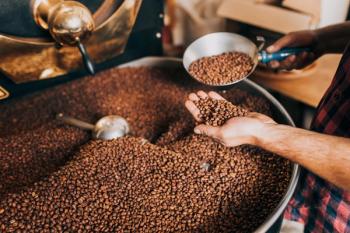
Liquid chromatography–tandem mass spectrometry (LC–MS/MS) finds low glyphosate residues of the weedkiller glyphosate in coffee beans.
Applying UHPLC–quadrupole-orbital trap MS–based untargeted metabolomics to evaluate psychrotrophic lactic acid bacteria as kimchi starters revealed strain-specific suppression of pathogen metabolic pathways, linking enhanced low-temperature antimicrobial performance to distinct metabolic inhibition mechanisms relevant for improving microbial safety in fermented foods.
Kimchi, despite its acidic environment, has sometimes been linked with foodborne pathogen contamination, a fact which stresses the necessity for the escalation of its microbial safety. While the fermentation of kimchi usually occurs at low temperatures, most of the previous studies on starter cultures have concentrated on mesophilic lactic acid bacteria (LAB). A joint study conducted by Chosun University and the World Institute of Kimchi (both in Gwangju, Republic of Korea) investigated the potential of psychrotrophic LAB as starter cultures for kimchi fermentation, with a special focus on their antimicrobial activity and metabolic characteristics. Untargeted metabolomics using ultrahigh-pressure liquid chromatography (UHPLC)-quadrupole-orbital trap mass spectrometry (MS) revealed strain-specific inhibition of metabolic pathways in foodborne pathogens. A paper based on this research was published in the International Journal of Food Microbiology. (1)
A traditional Korean fermented vegetable food, kimchi has attracted a great deal of attention due to its nutritional and functional properties, and especially in its potential for reducing obesity, lowering cholesterol, and stimulating the immune system. (2,3) Microbial contamination, especially due to acid-tolerant pathogens such as Escherichia coli, may occur in kimchi due to the food’s prolonged fermentation process, presence of diverse microbial communities, and its overall nutritional richness. (4) Starter cultures have gained attention as a promising strategy for erasing contamination, given their abilities to quicken the reduction of pH, stabilize the microbial community, and boost product safety, consistency, and sensory quality. (5)
The research revealed that two psychrotrophic strains, Dellaglioa algida and Leuconostoc gelidum subsp. aenigmaticum, were individually co-inoculated with pathogens including Escherichia coli O157:H7, Staphylococcus aureus, and Listeria monocytogenes in kimchi and fermented at 4 °C for 42 days. Their performance was compared by the research team with that of a mesophilic LAB strain, Leu. mesenteroides, through microbial, physicochemical, and metabolomics analyses. The psychrotrophic starters accelerated acidification, maintained high dominance, and effectively suppressed pathogens. Moreover, E. coli O157:H7 counts were 1.8-2.4 log CFU/mL lower, and S. aureus reached the limit of detection (1.0 log CFU/mL) 7 days earlier than the mesophilic starter. It was discovered that D. algida primarily suppressed nucleotide metabolism, whereas Leu. gelidum subsp. aenigmaticum strongly inhibited energy-related and stress defense pathways, which ultimately affected pathogen growth negatively. Conversely, Leu. mesenteroides exhibited limited metabolic inhibition in comparison. Finally, psychrotrophic LAB displayed broad-spectrum antimicrobial activity and strain-specific inhibition mechanisms, which, in the opinion of the research team, emphasize their ability to play the role of functional starters for heightening microbial safety and reliability in low-temperature fermented foods. (1)
“These findings,” write the authors of the study,(1)“highlight the potential of psychrotrophic LAB starters to enhance the microbial safety and stability in kimchi fermentation. Their stable performance at low temperatures supports their potential applicability in industrial-scale kimchi production and other cold-fermented foods.” The authors believe that “future studies exploring sensory attributes, safety aspects, and mixed-starter culture applications may further facilitate translation into practical and commercial use.” (1)
Read More on Similar Topics
References