Keeping your instrument at peak performance levels is the best way to prevent loss of productivity due to unscheduled downtime. Proactive replacement of certain instrument components, tailoring instrument service to meet your specific lab’s needs and upgrading your instruments with the latest technology is the best way to cost-effectively manage your laboratory’s assets. Waters offers flexible service plans to help with the challenges of costly unplanned downtime.
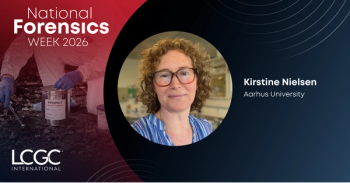
Kirstine Nielsen of Aarhus University (Denmark) discusses how targeted metabolomics ratios helped build a robust bloodstain time-since-deposition tool.
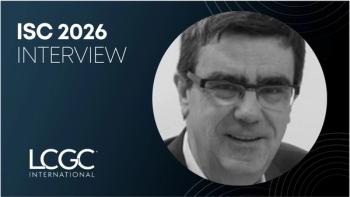
Gérard Hopfgartner explains how atmospheric pressure photoionization can generate radical cations in LC–MS, unlocking EI-style spectra and NIST's spectral library.
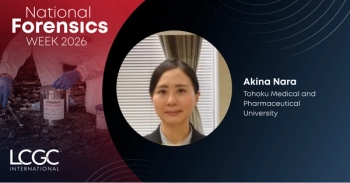
LCGC International spoke to Akina Nara of Japan’s Tohoku Medical and Pharmaceutical University about a new study which links a blood compound to how long a body has been dead.
A method coupling gas chromatography-tandem mass spectrometry (GC-MS/MS) and multiple reaction monitoring (MRM) tracks lipid markers of decomposition in commingled remains.
This week's top stories on the Chromatography Online website spotlight LCGC International's new SFC-focused interview series charting the technique's rise alongside LC and GC, complemented by a practical GC data-reporting refresher and a study using chromatography to detect trace pesticides in tap water.