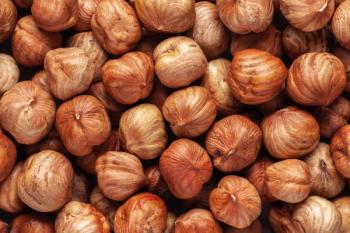
A two-dimensional gas chromatography (GC×GC) study of 43 volatiles shows hexanal alone cannot gauge hazelnut aging.
When I boarded a one-way flight from Lithuania to Malibu, California (USA) at 18, I thought I was chasing a chemistry degree and the dream of studying in the U.S. I didn’t realize I was also setting in motion a journey that would define the next decade of my life—and launch my career as a separation scientist.
I need to pause for a moment to mention that my love for chemistry began sometime during high school. I fondly remember my chemistry labs at my high school, Vilnius Lyceum, where, in the middle of winter, we wore coats in the lab so we wouldn’t freeze. But none of that mattered—I was attending the best school in Lithuania. The fantastic teachers and advisors there guided me through the U.S. college application process and ultimately helped me get into Pepperdine University. That is where my journey to becoming a separation scientist truly began.
If you’re not familiar, Pepperdine University is a primarily undergraduate institution (PUI) and a liberal arts school located in the most beautiful part of Malibu, California, overlooking the Pacific Ocean. This small school had what I would consider, and I’ll admit I’m incredibly biased, the most amazing chemistry department. When I say “small,” I mean that in my year, only five of us graduated with a B.Sc. in Chemistry. But that small size gave us incredible opportunities that are almost impossible to find at a larger school: American Chemical Society (ACS) national conferences, year-round research, genuine mentorship, and unwavering support for every student’s career.
When I began my major, I had no idea which area of chemistry I wanted to focus on. Fortunately, my academic advisor, David Green, was an analytical chemist who saw potential in me during my freshman year and invited me to help him and another student in his research lab. The work involved liquid chromatography (LC), a subject I knew nothing about at the time. But it didn’t take long to realize I enjoyed the technique, loved developing analytical methods, and was drawn to research overall. During some of my most difficult times at Pepperdine, I was always in the lab. It became my safe haven and my home away from home. To this day, whenever I visit, I check on my LC and the desk where I used to sit, even though it now belongs to the next generation. For me, that spot will always be where I transformed from a kid into a scientist.
I can’t emphasize enough how much being welcomed into a research environment so early in my undergraduate career contributed to my growth. By the time I finished my bachelor’s degree, I had attended four ACS national conferences, gained three and a half years of hands-on research experience (leading my own project as an undergraduate), and was about to have my first publication. Because I was already deeply engaged in research and loved it, I embraced my advisor’s suggestion to apply to graduate school. With his help, I applied to about 10 programs across the U.S. and was fortunate to be accepted into most of them, leading to the decision of which specific research area I wanted to pursue.
I met my Ph.D. advisor, Robert Synovec, during a visitation weekend at the University of Washington. That was the first time I heard about two-dimensional gas chromatography (GC×GC). While it seemed very complicated to me then, one thing stood out—the separations—and I was hooked. I went from a school with fewer than 10,000 students to a university with 50,000. One of the best pieces of advice I received when choosing a graduate school was to pick one that’s different from your undergraduate institution. I cannot emphasize enough how important it is to step out of your comfort zone. For me, that move also clarified that teaching wasn’t ultimately what I wanted to do.
I loved GC×GC from the day I started. It has become my favorite separation technique. Anyone who knows me knows I can talk for hours about GC×GC, F-ratio, and chemometrics. I’m glad I chose to focus on separations throughout graduate school. Research with Robert Synovec taught me that, as an undergrad, I had learned a skill, but in graduate school, I learned how to do research, ask the right questions, and challenge everything. I also learned that research becomes your life, you think about lab problems while eating dinner, walking home, and sometimes even dream about them. It consumes your thoughts—that’s part of what it means to become a scientist.
When thinking about life after graduate school, I knew one thing: I wanted to stay in separations. Still, I kept an open mind because finding a job right out of graduate school can be extremely challenging. I had spent much of my Ph.D. collaborating with David Bell from Restek, and I truly enjoyed working with a consumables manufacturer. So, when a job at Markes came along, it felt like a great fit. I knew nothing about thermal desorption before starting as an application chemist, but I knew GC and MS well. Since Markes’ sister company SepSolve also makes GC×GC and time-of-flight (TOF) instrumentation, I felt confident stepping into a role that would expand my technical knowledge rather than just keep me in familiar territory.
Transitioning from eight years of academia to industry was interesting, and at times challenging. But this environment suits me well. I love the fast pace. No day is the same. As an application chemist, I still get to do research, though now it’s more about helping customers solve problems. I rarely work on a project for more than a few weeks. That’s the biggest difference, letting go when things are good enough rather than perfect. At first, that was hard, but the satisfaction of helping customers makes up for it. My work now includes not only lab time but also meeting people from diverse backgrounds, seeing where the equipment ends up, and appreciating how much they accomplish with it.
I continue to learn and grow every day as a separation scientist, even in an industry setting. This environment isn’t for everyone, but I’m glad I’ve found my place. I hope my passion for separations inspires the next generation to try it out. I also hope that undergraduate advisors take a chance on freshmen, giving them the early opportunities that might spark a lifelong love for research. I know how much it shaped the path that led me to where I am today.
Lina Mikaliunaite is an application chemist at Markes International, where she supports customers across North America with thermal desorption, GC×GC, and data processing solutions. Lina earned her Ph.D. from Robert Synovec’s group at the University of Washington, where her research focused on advances in GC×GC instrumentation and developing chemometric workflows for complex datasets. She is also an alumnus of Pepperdine University, where she received her B.Sc. in Chemistry and first became interested in separations through her research on method development for LC.