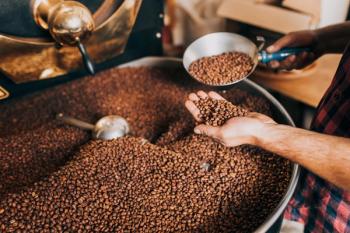
Liquid chromatography–tandem mass spectrometry (LC–MS/MS) finds low glyphosate residues of the weedkiller glyphosate in coffee beans.
Soil chromatography reveals how fluridone herbicide persists in cotton farmland.
Fluridone is a common weed killer used on cotton farms in Xinjiang, but not much is known about what happens to it once it ends up in the local soil. To fill that gap, Chinese researchers studied three typical types of soil found in Xinjiang's cotton fields (sandy, loamy, and clay soil) and tested how the chemical breaks down, sticks to soil particles, and moves through the ground over time, using a mix of laboratory-based methods designed to mimic real-world conditions, such as the batch equilibrium method, soil thin-layer chromatography, and laboratory-simulated soil column leaching experiments. A paper based on their efforts was published in the journal Ecotoxicology and Environmental Safety.1
What is Fluridone, and Why Does It Matter That It Stays in the Soil for a Long Time?
Fluridone is a very effective weed killer that's applied directly to soil, targets specific weeds without harming other plants, and keeps working for a long time after it's applied.2. Fluridone works well at controlling harmful weeds commonly found in cotton fields, including black nightshade, oak-leaved goosefoot, velvetleaf, and common reed. It's often used together with another herbicide called pendimethalin, and this combination is commonly applied on cotton farms in Xinjiang.3,4However, because fluridone lingers in the soil for so long, there's a real risk it could harm crops planted afterward in the same field, which is a growing concern for farmers. One study found that fluridone didn't cause any problems for seed pumpkins, seed watermelons, Hami melons, or oil sunflowers, but it did cause mild damage to corn, wheat, and tomato plants grown afterward.5
How Does Fluridone Behave in Xinjiang's Cotton Field Soils, and What Does That Mean for Environmental and Crop Safety?
The researchers report that the results of their study showed that fluridone breaks down in all three soil types at a steady, predictable rate, taking anywhere from about 110 to 161 days to lose half its strength, meaning that it sticks around in soil for a moderately long time. How fast it breaks down depended on temperature, how moist the soil was, how much organic material was in it, and especially on soil microbes; when researchers sterilized the soil to kill off those microbes, the chemical took much longer to break down (about 267 days), showing that microbes play the biggest role in getting rid of it naturally.1
In terms of movement, fluridone barely moved sideways through any of the three soils, meaning it tends to stay put rather than spread out. When it came to moving straight down through the soil (which matters for the risk of it reaching groundwater), it only showed up in small amounts in the sandy soil's runoff water and didn't show up at all in the loamy or clay soil. This suggests sandy soil carries a higher risk of the chemical leaching downward and potentially contaminating water sources.1
The researchers also found that fluridone reaches a steady, "stuck" state in soil within about a day, and how strongly it sticks depends on the soil type, clinging most tightly to clay soil, followed by loamy soil, and least to sandy soil. This pattern lines up with how much clay and organic matter each soil type contains, since more of both means the chemical sticks more firmly.1
To summarize, the findings suggest that fluridone breaks down slowly in Xinjiang's cotton field soils, sticks more strongly to soil with more clay and organic matter, and doesn't tend to spread very far, except in sandy soil, where it has a greater chance of leaching down and potentially reaching groundwater.1
“This study,” the authors of the paper write,1 “provides key theoretical support for the environmental risk assessment of fluridone, the safe planting of subsequent crops, and the scientific and rational application of fluridone in Xinjiang cotton fields.”
Read More on Similar Topics
References