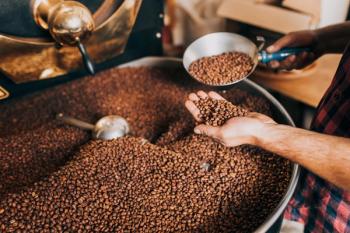
Liquid chromatography–tandem mass spectrometry (LC–MS/MS) finds low glyphosate residues of the weedkiller glyphosate in coffee beans.
Chromatography reveals most International Space Station medications retain potency in orbit.
Scientists worry that spending time in space might make medications break down faster than normal, which could be a real problem for astronauts on long missions where they cannot easily get fresh supplies. A recent study looked at how well a batch of medications held up after being flown to the International Space Station, comparing their strength to matching samples that stayed on Earth (made from the same manufacturing batch, so they would be as similar as possible going in). Both the space-exposed medications and the Earth-based ones were tested using ultrahigh-performance liquid chromatography with tandem mass spectrometry (UHPLC-MS/MS) to measure the exact chemical makeup of each sample. The research was published in the journal Wilderness & Environmental Medicine.1
Why Might the Space Environment Threaten Medication Stability Aboard the ISS?
The Health Maintenance System (HMS) on the International Space Station (ISS) represents the most robust low-Earth-orbit medical capability in use to date.2,3 The HMS contains a selection of up to 190 pharmaceuticals that are regularly used, with >500 doses of at least 30 pharmaceuticals deployed across 33 ISS missions.4,5 Providing medical care in space faces unique challenges compared with other analogues and austere locations. Although the ISS is a carefully controlled spacecraft environment, medications in the HMS are exposed to high ambient carbon dioxide levels, continuous solar and galactic cosmic radiation exposures, and microgravity.6 The study's authors point to earlier research suggesting that the unusual conditions found in space, like radiation and other environmental factors, might cause medications to break down faster than they would on Earth.1 But so far, scientists still do not have a clear picture of exactly how fast this breakdown happens or what's actually causing it.6
Does Spaceflight Cause Medications to Lose Potency Faster Than They Would on the Ground?
By the time researchers ran their tests, all the medications had already passed their expiration dates, since they'd been sitting in storage for a long time before laboratory testing could happen. The medications tested included caffeine, diazepam (a sedative), diphenhydramine (an antihistamine), epinephrine, ketamine, lidocaine (a numbing agent), naloxone (used to reverse opioid overdoses), and promethazine (used for nausea and allergies), in both pill and liquid form. Researchers compared how strong each medication was in space-exposed samples versus ground-based control samples, checking whether they fell within a strict potency range (95–105% of full strength) or a looser one (80–120%). They also looked at whether potency changes were linked to how long the drugs had been expired or how long they'd spent in space.1
Most samples from both the space group and the ground group fell outside the stricter potency range. But over 90% still fell within the wider, more forgiving range. On average, the difference in potency between the space-exposed and ground-based samples was small, generally within about 5%, suggesting spaceflight didn't make much difference on its own. Epinephrine stood out as the exception, consistently losing more strength, averaging about 10% weaker than the ground samples. While some medications showed patterns connected to how long they'd been expired or how long they were in space, there was no clear, consistent trend showing that spaceflight itself was the main cause of potency loss.1
“Within the limitations of this lot-matched, post-storage comparison,” wrote the authors of the paper,1 “International Space Station exposure was not associated with large relative potency changes for most medications studied. Epinephrine represented the clearest exception and may require medication-specific stabilization strategies for long-duration space exploration missions.”
Read More on Similar Topics
References