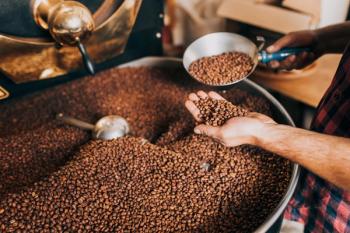
Liquid chromatography–tandem mass spectrometry (LC–MS/MS) finds low glyphosate residues of the weedkiller glyphosate in coffee beans.
Ultrahigh-performance liquid chromatography-quadrupole time-of-flight mass spectrometry (UHPLC-QTOF-MS) links fungal disease-driven chlorosis to chlorophyll breakdown in apple tree leaves.
Plants break down chlorophyll, the green pigment that helps them capture sunlight for energy, through a specific chemical pathway that produces byproducts called phyllobilins. This normally happens as leaves naturally age and die off, but it can also happen when certain plant pathogens, like phytoplasmas (a type of bacteria), infect a plant. Since leaves turning yellow is a telltale sign of fungal disease in apple trees and many other plants, researchers wanted to find out whether this same chlorophyll-breakdown process is behind the yellowing seen in fungal infections too. A team from the Laimburg Research Centre and the Free University of Bozen-Bolzano, both in Italy, teamed up to study this question. They looked at four different fungal diseases and used ultrahigh-performance liquid chromatography-quadrupole time-of-flight mass spectrometry (UHPLC-QTOF-MS) to check whether phyllobilins were being produced in infected leaves, and to see how widespread this chlorophyll-breakdown pathway might be across different types of fungal infections. A paper based on their efforts was published in the journal Frontiers in Plant Science.1
How Significant is Apple Production Globally, and What Are the Major Fungal Diseases Threatening It?
Apples are one of the most widely grown fruits on the planet; in 2019 alone, farmers around the world produced more than 87 million metric tons of them.2Apple growers face a real economic threat from several fungal diseases, which can significantly cut into how much fruit they harvest and hurt the overall quality of what they do manage to grow. These include:
Apple blotch, which mainly shows up on older leaves, often close to harvest time.3
Leaf blotch, which causes brown spots on leaves, mostly appearing in spring and early summer.4-6
Apple scab, which shows up as scattered olive-green or yellowish spots on the leaf surface, and beyond just changing how the leaves look, it also interferes with the leaf's ability to photosynthesize.7,8
Powdery mildew, which usually appears on the underside of leaves, causing them to curl lengthwise and develop a fuzzy white coating made up of fungal growth and spores; like apple scab, it also reduces the leaf's ability to photosynthesize.9,10
Does Chlorophyll Breakdown from Fungal Infection Resemble Natural Leaf Aging?
The researchers used UHPLC-QTOF-MS to search for 79 known and suspected phyllobilins in apple leaves. They compared four groups: healthy leaves, leaves that had naturally aged and yellowed on their own, and leaves showing disease symptoms from four different fungal infections (Diplocarpon coronariae, Alternaria alternata, Venturia inaequalis, or Podosphaera leucotricha). For each group, they tested five separate leaf samples to make sure their results were solid and repeatable. To check whether chlorophyll levels differed meaningfully between these groups, they used standard statistical tests designed to compare multiple groups at once and pinpoint exactly which groups differed from each other.1
Using this technique, the researchers were able to detect 36 different phyllobilins, 11 of which had never been previously identified before (including one with a completely new chemical modification never seen in this type of compound before).1
Interestingly, the four fungal diseases didn't affect leaves all in the same way. One disease, caused by the fungus D. coronariae, triggered widespread yellowing and produced a chlorophyll breakdown pattern that closely resembled what happens during natural leaf aging. But the other three diseases did not significantly increase either the variety or the amount of these breakdown products, even though these fungi do affect the leaf tissue responsible for photosynthesis.1
These findings lined up closely with how much chlorophyll was present in the leaves. In leaves infected with D. coronariae, chlorophyll levels dropped dramatically (from about 62 units in healthy leaves down to about 12 units in diseased leaves, a highly significant and meaningful decrease)which explains why the chlorophyll breakdown pattern looked so similar to natural aging. On the other hand, leaves infected with P. leucotricha or A. alternata showed no meaningful drop in chlorophyll levels at all, even though the diversity of chlorophyll breakdown products increased in a few cases.1
“Our findings,” write the authors of the paper,1 “indicate that engagement of the PaO/PB pathway in apple leaves is strongly associated with chlorosis, whether induced by natural senescence or specific pathogens, suggesting a general role of this catabolic route in chlorotic infections.”
Read More on Similar Topics
References