

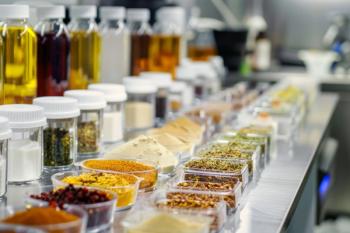
A session focusing on chemometrics for food quality control and authentication will take place on March 25, 2026, from 15:00 to 17:00 at ICM Saal 4b as part of analytica 2026.
Alasdair Matheson Is Executive Editor on LCGC International and has worked in science publishing for thirty years. He has a Masters Degree in Instrumental Methods of Analysis from Strathclyde University, Glasgow, UK and a Postgraduate Diploma in Marine Pollution Chemistry from Liverpool University, Liverpool UK. He also worked as an environmental research scientist at the Torry Research Centre in Aberdeen and as an industrial research scientists at the ICI Wilton Research Centre in Wilton.
A session focusing on chemometrics for food quality control and authentication will take place on March 25, 2026, from 15:00 to 17:00 at ICM Saal 4b as part of analytica 2026.
Two true pioneers who have, without a doubt, evolved the science and reputation of separation science globally, Pat Sandra and Luigi Mondello, spoke to LCGC International about the dynamics behind this essential event in the chromatography calendar: the ISCC and GC×GC Symposium. The 44th International Symposium on Capillary Chromatography and 21st GC×GC symposium (Riva 2026), which will take place from 17–22 May 2026 at the Congress Centre, Riva Del Garda, Italy.
LCGC International’s interview series on the evolving role of artificial intelligence (AI)/machine learning (ML) in separation science continues with Boudewijn Hollebrands from Unilever Foods R&D, Wageningen, Netherlands, discussing deep learning models to predict food peptide retention times.

Oliver Jones and Navneet Singh from RMIT University, Melbourne, Australia discuss a recent study they conducted to investigate the relationship between tidal cycles and PFAS concentrations in estuarine systems, and offer practical advice on the sample preparation and LC–MS/MS techniques they used to achieve the best results.
In the first instalment of LCGC International's interview series exploring how artificial intelligence(AI)/machine learning (ML) is being used in separation science, we interviewed Emery Bosten from KU Leuven, Belgium, on the role of assisted active learning (AAL) for method development in liquid chromatography (LC).

The Pittsburgh Conference on Analytical Chemistry and Applied Spectroscopy (Pittcon) has served as a major international meeting for analytical scientists across academia, industry, and government laboratories for more than 75 years. Pittcon 2026 will take place March 7–11, 2026, at the Henry B. González Convention Center in San Antonio, Texas, under the conference theme The Scientific Frontier.
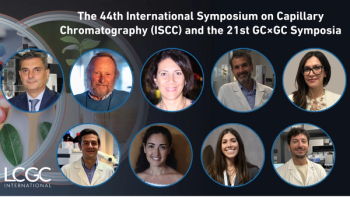
Luigi Mondello and leading lights from the organizing team spoke with LCGC International about the return of the 44th International Symposium on Capillary Chromatography (ISCC) and the 21st GC×GC Symposium, to be held May 17–22, 2026, at the Conference Centre in Riva del Garda, Italy, and why this is an essential event for the global separation science community.
The second edition of the Green Analytical Chemistry Workshop promises to be an important event to promote sustainable analytical sciences. Initially launched in 2011 as the International SBSE Workshop, this biennial gathering has evolved significantly, broadening its scope and establishing itself as a key platform within the international scientific community.

A review of some of the content highlights from LCGC International in 2025.
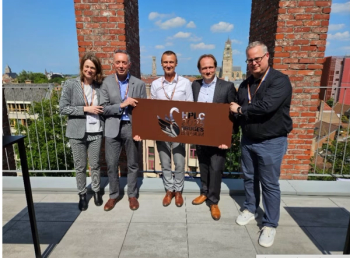
The second part of the end-of-the-year review of LCGC International’s editorial coverage of HPLC 2025, which took place in Bruges June 19–23, 2025.
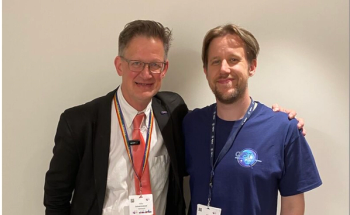
The first part of an end-of-the-year review of LCGC International’s editorial coverage of HPLC 2025, which took place in Bruges from 19–23 June 2025 .
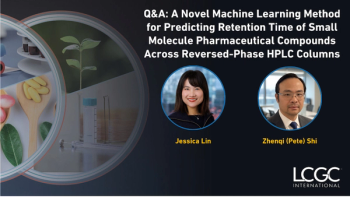
Jessica Lin and Zhenqi (Pete) Shi from Genentech describe a novel machine learning approach to predicting retention times for small molecule pharmaceutical compounds across reversed-phase high performance liquid chromatography (HPLC) columns.

Discover the 2026 HTC Innovation Award, recognizing groundbreaking contributions in separation science and hyphenated techniques by emerging scientists.
Laura Carbonell-Rozas, a post-doctoral researcher at the University of Granada (Granada, Spain), discusses the potential of natural deep eutectic solvents (NADES) in food analysis as sustainable solvents in sample preparation.

LCGC International and the HTC-19 Scientific Committee celebrate innovation in separation science with the 2026 HTC Innovation Award. Previous winners include Bob Pirok, Szabolcs Fekete, Ryan Kelly and Caroline Huhn.

Torgny Fornstedt, Jörgen Samuelsson, and Martin Enmark discuss a novel machine learning workflow for oligonucleotide analysis that is helping to enhance method development and impurity profiling efficiency.
Discover innovative LC–HRMS methods for analyzing RNA-based therapeutics, enhancing biopharma development and regulatory compliance in drug characterization.

Recent developments in lipidomics and metabolomics have highlighted persistent challenges in data processing, statistical analysis, and visualization—areas that often hinder reproducibility, transparency, and accessibility within the field. A newly published guideline addresses these issues by presenting a comprehensive, code-based framework for the statistical treatment and graphical representation of omics data using R and Python. LCGC International spoke to Michal Holcapek and Jakub Idkowiak about the rationale behind this research and the benefits it offers separation scientists.

A global team led by Michal Holčapek, professor of analytical chemistry at the Faculty of Chemical Technology, UPCE, Pardubice (Czech Republic), and Jakub Idkowiak, a research associate from KU Leuven (Belgium), has unveiled a powerful R and Python-based toolkit for tackling the complexities of lipidomics and metabolomics data, offering researchers a new approach for “omics” analysis.
Joachim Weiss is a pioneer in the true meaning of the word in the world of ion chromatography (IC). In this in-depth interview, Joachim offers his insights into the past, present, and future of the technique.
Joachim Weiss is a pioneer in the true meaning of the word in the world of ion chromatography (IC). In this in-depth interview, Joachim offers his insights into the past, present, and future of the technique.

Brett Paull, a recognized expert in the field of ion chromatography (IC) discusses the past, present, and future of the technique, and questions some misconceptions about the compatibility of IC with mass spectrometry.

Chris Pohl, a recognized and respected contributor to the evolution of ion chromatography and recipient of LGCC International’s Lifetime Achievement Award, discusses the past, present, and future of ion chromatography (IC).
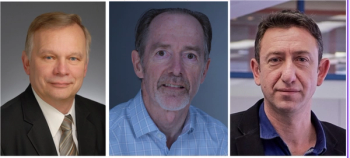
In the first in a series of interviews to celebrate the 50-year anniversary of ion chromatography (IC), Joachim Weiss, Chris Pohl, and Brett Paul offer advice to chromatographers who want to specialize in this branch of separation science.
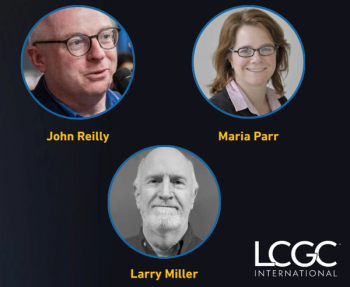
SFC Europe 2025—the 19th International Conference on Packed Column Supercritical Fluid Chromatography and Related Techniques—will be held in Basel, Switzerland, on October 5–7, 2025. LCGC International spoke to John Reilly, Maria Kristina Parr, and Larry Miller about the application of supercritical fluid chromatography (SFC) outside the life sciences, and the sustainability credentials of the technique.
SFC Europe 2025—the 19th International Conference on Packed Column Supercritical Fluid Chromatography and Related Techniques—will be held in Basel, Switzerland, on October 5–7, 2025. LCGC International spoke to John Reilly, Maria Kristina Parr, and Larry Miller about the important role that SFC now plays in life science analysis
SFC Europe 2025—the 19th International Conference on Packed Column Supercritical Fluid Chromatography and Related Techniques—will be held in Basel, Switzerland, on October 5–7, 2025. LCGC International spoke to John Reilly, Maria Kristina Parr, and Larry Miller about the evolution of supercritical fluid chromatography (SFC) in terms of technology and applications.
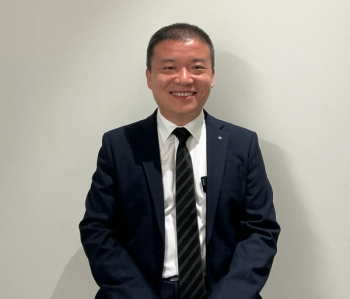
LCGC International spoke to Bo Zhang from Xiamen University in China about the advantages of stereolithographically printed 3D-printed columns that offer scope for negligible scaling-up costs, and the future opportunities and challenges for this novel technology
LCGC International spoke to Bo Zhang from Xiamen University in China about the evolution of 3D-printed column technology that could offer a new, engineered pathway for column manufacturing beyond conventional slurry packing or casting.
LCGC International spoke to Bo Zhang from Xiamen University in China about the evolution of 3D-printed column technology that could offer a new, engineered pathway for column manufacturing beyond conventional slurry packing or casting.