

Tony Edge explains how SPE optimization improves oligonucleotide LC–MS data.
Alasdair Matheson Is Executive Editor on LCGC International and has worked in science publishing for thirty years. He has a Masters Degree in Instrumental Methods of Analysis from Strathclyde University, Glasgow, UK and a Postgraduate Diploma in Marine Pollution Chemistry from Liverpool University, Liverpool UK. He also worked as an environmental research scientist at the Torry Research Centre in Aberdeen and as an industrial research scientists at the ICI Wilton Research Centre in Wilton.
Tony Edge explains how SPE optimization improves oligonucleotide LC–MS data.
Perfusion chromatography offers improved separation of oligonucleotide biotherapeutics at ultra-high velocities.
Steven Ray Wilson's AFFL LC–MS system runs thousands of injections per column, but he calls validation and standardization the field's real barrier.
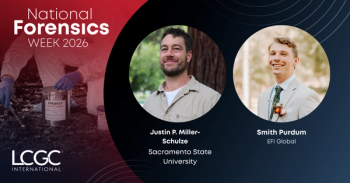
Justin Miller-Schulze and Smith Purdum explain how machine learning and chemometrics can improve fire debris classification in forensic science applications.

As PFAS analysis pushes into trace-level territory, laboratories face a fast-moving mix of vast chemical scope, method fragmentation, and background contamination.
Steven Ray Wilson defines organ-on-a-chip as organoids on microfluidic devices, tracing their small, complex samples to the case for automated online LC–MS.
Lorna Nisbet from the Leverhulme Research Centre for Forensic Science, discusses a GC–MS. technique developed to detect anabolic-androgenic steroids in e-cigarettes seized from Scottish prisons.
Gérard Hopfgartner explains why pairing SFC with dopant-assisted APPI can match, or even beat, electrospray sensitivity, even at microflow LC rates.
Emma Macturk from LECO Corporation explains which forensic applications benefit from GC×GC’s greater peak capacity, and when the additional separation power may only provide limited benefits.
Gérard Hopfgartner explains how atmospheric pressure photoionization can generate radical cations in LC–MS, unlocking EI-style spectra and NIST's spectral library.
A new “one-shot” strategy for preparative chiral supercritical fluid chromatography (SFC) offers fast and effective approach to obtain and characterize individual enantiomers.
SFC delivers measurable cycle-time and solvent-use gains beyond chiral work, spanning biopharma and anti-doping applications, experts say.
Kevin Schug explains how surrogate optimization streamlines SFE–SFC–MS method development, achieving R² values up to 0.97 while boosting sensitivity by 15%
In preparative chiral supercritical fluid chromatography (SFC), adding 2.5–5% water cuts retention times and narrows collection windows, boosting throughput.
Caroline West on supercritical fluid chromatography's advances, pharmaceutical applications, and sustainability.

At ISC 2026, a tailored C4 stationary phase resolved over 30 of 64 possible siRNA diastereomers, aiding characterization of oligonucleotide conjugates.
At ISC 2026, a 20-minute IP-RPLC–UV assay distinguished mRNA capping variants without mass spectrometry, matching a UHPLC–MS reference method.
At ISC 2026, separation science advances included a MEMS gas chromatography column for space missions that raised measured efficiency by up to 74%
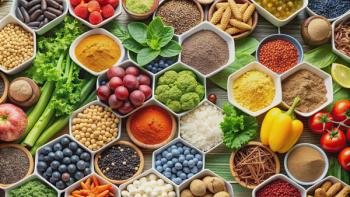
At ISC 2026, food and natural matrix research showed shea kernel processing history shapes chemistry more than geographic origin, aiding quality control.
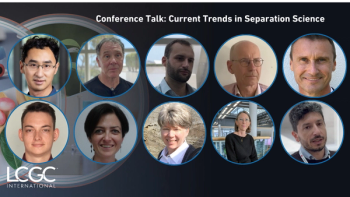
Summary: A preview of 2026 separation science trends, from PFAS and SFC to metabolomics, next-generation HPLC columns, oligonucleotides, and ADC analysis.
Hans-Gerd Janssen explores the industry's shift from fully integrated online systems to at-line approaches.
Gaëlle Spileers from the Separation Science Group in the Department of Organic and Macromolecular Chemistry at Ghent University, Belgium discusses developments in high performance liquid chromatography (HPLC–XRF) for the analysis of brominated flame retardants and other pollutants.
Gaëlle Spileers from the Separation Science Group in the Department of Organic and Macromolecular Chemistry at Ghent University, Belgium discusses developments in high performance liquid chromatography (HPLC–XRF) for the analysis of brominated flame retardants and other pollutants.
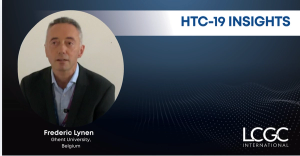
Frederic Lynen from the Separation Science Group in the Department of Organic and Macromolecular Chemistry at Ghent University, Belgium discusses why he worked with Gaëlle Spileers to develop a high performance liquid chromatography X-ray fluorescence (HPLC–XRF) technique to analyze brominated flame retardants and other pollutants.
Melissa Dunkle, senior research scientist at Dow Benelux BV, The Netherlands, explores practical aspects of using multidimensional pyrolysis gas chromatography (Pyr-GCxGC) to investigate fluoropolymer degradation.
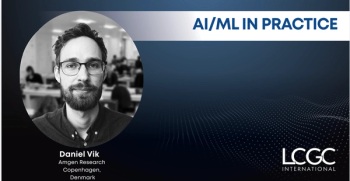
Daniel Vik from Amgen Research Copenhagen, Denmark discusses the motivation behind applying machine learning to chromatographic retention time prediction and its growing importance in modern pharmaceutical research. He shares insights into the challenges of developing robust predictive models, their role in supporting high-throughput drug discovery workflows, and the potential of artificial intelligence to make analytical chemistry more efficient and scalable.
Melissa Dunkle, senior research scientist at Dow Benelux BV, The Netherlands, discusses the revival of interest in pyrolysis gas chromatography.
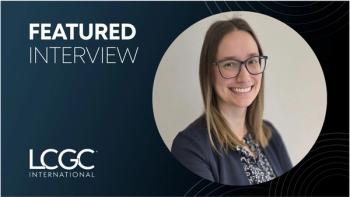
Andrea Hochegger from Graz University of Technology, Austria describes the benefits that comprehensive two-dimensional GC (GC×GC–MS) offers over conventional GC–MS to resolve complex mixtures from recycled packaging materials.
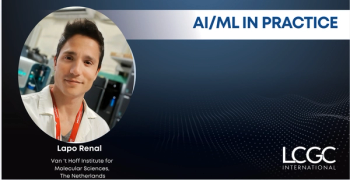
Lapo Renai from the Van 't Hoff Institute for Molecular Sciences, The Netherlands discusses a novel prediction model for estimating chemical space coverage for non-targeted LC–ESI–HRMS workflows.
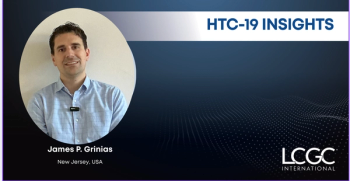
James Grinias from Rowan University, New Jersey, USA, discusses sustainability and modern capillary LC systems.
Published: July 16th 2026 | Updated: July 15th 2027

October 8th 2024

June 16th 2025

January 15th 2024
January 1st 2021
