Bethany Degg

LCGC Associate Editor

Articles by Bethany Degg

MDMA-846107-1408521831362.jpg

Profiling impurities in MDMA (also known as ecstasy) is essential to forensic science as different profiles can provide clues about the source. Two researchers from Michigan State University (Michigan, USA) investigated the effect of liquid–liquid extraction (LLE), headspace solid-phase microextraction (HS–SPME), and different gas chromatography temperature programmes highlighting the need for standardized procedures.

Adenovirus-846609-1408521423290.jpg

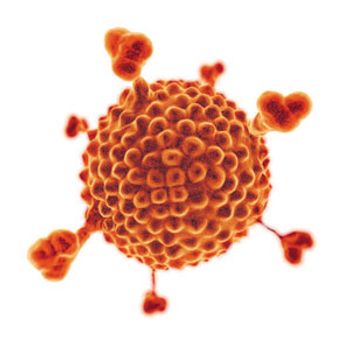
A new method for the purification of adenovirus serotype 5 (Ad5) by two-column, size-exclusion simulated countercurrent chromatography (SEC) has been published in the Journal of Chromatography A.

Researchers at the Universite de Montreal in Canada have developed and validated a new liquid chromatography tandem mass spectrometry (LC–MS–MS) method to identify compounds present in suspected counterfeit or even adulterated erectile dysfunction drugs. According to the study published in the Journal of Chromatography A, the method has now been introduced to the Inspectorate Laboratory Programme at Health Canada (Canada).

459711541_World-844390-1408520730273.jpg

Scientists at the University of Cambridge (Cambridge, UK) have reconstructed the early conditions of the Earth?s oceans to find that spontaneous chemical reactions could have generated the first biological molecules, before the evolution of organisms or the existence of enzymes.1 The study published in the journal Molecular Systems Biology presents data collected from liquid chromatography?triple quadrupole mass spectrometry (LC–QTOF–MS) suggesting that reactions central to our core metabolism could have spontaneously occurred.

168836206-844391-1408520726420.jpg

Over the last 30 years, the occurrence of head and neck cancer in Spain has been increasing, and now accounts for between 5–10% of malignant tumours diagnosed each year.1 In a new study published in the journal Chromatographia, solid-phase microextraction (SPME) with gas chromatography coupled to mass spectrometry (GC–MS) has been performed to identify two potential biomarkers of epidermoid laryngeal cancer, that could be used in non-invasive diagnostic testing.

A study published in the journal Environmental Science and Technology suggests a strong link between oil and gas emissions and the high production of ozone in the atmosphere during the winter months in the Uintah Basin in Utah, USA.1 Scientists from the Institute of Arctic and Alpine Research (INSTAAR) at the University of Colorado in the USA performed continuous measurements of ozone, methane, and a suite of nonmethane hydrocarbons (NMHCs) above the basin between January and February in 2012 and 2013.

Steroid testing is commonly associated with sports doping testing to monitor athletes for performance-enhancing compounds, but it also important in the food industry for consumer safety. A new method using high-temperature liquid chromatography with photodiode detection and isotope ratio mass spectrometry (HT?LC?PDA?IRMS) that does not require sample derivatization and uses water as the eluent has been developed by scientists at the University of Duisberg-Essen in Essen, Germany.1

i4-843234-1408521653223.jpg

Mohamed Abdel-Rehim, professor of analytical chemistry at Stockholm University in Stockholm, Sweden, spoke to Bethany Degg of The Column about a novel approach to determine drug intake using saliva samples.

A new approach for the analysis of water in solid pharmaceutical products using headspace gas chromatography (HSGC) with an ionic liquid (IL)-based open tubular capillary GC column has been proposed by scientists at the University of Texas at Arlington (Texas, USA). Published in the Journal of Pharmaceutical and Biomedical Analysis, the study states that the sensitivity of the method is 100 times that of the commonly used volumetric Karl Fischer Titration (KFT) (1).

GasCan-840014-1408526883841.jpg

Four new ozone-depleting substances (ODSs) - CFC–1121, CFC–112a, CFC–113a, and HCF–133a - have been detected and identified in the Earth's atmosphere using gas chromatography–mass spectrometry (GC–MS).1 The research published in Nature Geoscience compared samples collected between 1978 and 2012 to establish a clear increase in the emissions of these gases, even though CFC production has been banned globally since 1987.

BMS-840015-1408526882148.jpg

Scientists from Bristol-Myers Squibb Company have developed a novel approach for the simultaneous quantitation of neutralizing antibodies, residual drug, and human Immunoglobulin G (IgG) in immunogenicity assay development using liquid chromatography–tandem mass spectrometry (LC–MS–MS). This work published in Analytical Chemistry presents a new approach that aids the refinement of therapeutic protein neutralizing antibody assays in drug development

Silicone wristbands promoting charitable organizations and which are popular throughout the world as a fashion statement can be used to monitor exposure of individuals to contaminants in their local environment, according to a study published in the journal Environmental Science and Technology.1 The authors of the study propose silicone bands as passive samplers that can give a temporal and spatial picture of human contaminant exposure.

The efficiency of protein separation by ion-exchange chromatography could be increased by up to a factor of 5 according to a new study, potentially speeding up biopharmaceutical production.1 Christy Landes of Rice University in Texas (USA) and her team performed the first molecular-scale investigation into protein ion-exchange chromatography by using direct super-resolution techniques and the stochastic theory.

A team of researchers from the University of California Davis (California, USA) in collaboration with scientists in Mexico and South Korea have performed liquid chromatography–mass spectrometry (LC–MS) to find that sugars added to proteins could be an indicator of gastric cancer.

A new proteogenomics method using high-resolution isoelectric focusing together with liquid chromatography?mass spectrometry (HiRIEF LC–MS) developed by researchers from Karolinska Institute and Science for Life Laboratory (SciLifeLab) in Sweden has been published in the journal Nature Methods.1

A study published in the Journal of Proteome Research has uncovered some of the proteins responsible for the characteristic aroma and taste of the black P?rigord truffle (Tuber melanosporum Vittad.), using a combined approach of bioinformatics and proteomic analysis.1

Greenhouse-833000-1408530933783.jpg

Researchers at the University of Toronto (Toronto, Canada), funded by the Natural Sciences and Engineering Research Council of Canada, have discovered a potential long-lived greenhouse gas, perfluorotributylamine (PFTBA), that could be a contributing factor towards global climate change.1 Published in the journal Geophysical Research Letters, the study performed gas chromatography–mass spectrometry (GC–MS) and spectroscopic techniques to suggest that PFTBA can have a bigger impact on climate than carbon dioxide.

Residues of chili pepper (Capsicum) have been found on pottery dating back 2000 years in southern Mexico, according to a study published in PLOS ONE.1 The New World Archeological Foundation (NWAF) first excavated the pottery (thought to date from 400 BCE–300 CE) from Chiapa de Corzo between 1955 and 1963.

Staphylococcus aureus (S. aureus) evades clearance by the immune system by hijacking the very traps it produces, transforming these same traps into a toxic compound according to a paper published in Science.1 Scientists from the University of Chicago (Chicago, USA) used high performance liquid chromatography coupled to mass spectrometry (HPLC–MS) to identify the toxin as 2"-deoxyadenosine (dAdo).

Scientists from San Pablo CEU University (Madrid, Spain) have developed a non-targeted global fingerprinting approach for lung tissue samples by performing three analytical methods ? liquid chromatography coupled to mass spectrometry (LC–MS), gas chromatography coupled to MS (GC?MS), and capillary electrophoresis coupled to MS (CE–MS). Published in the journal Analytical Chemistry, the study details the development and validation of the multi-platform approach using 20 mg of lung tissue.1

Eye-829309-1408531396146.jpg

Scientists from the Duke Medical Center (North Carolina, USA) and the Bascom Palmer Eye Institute at the University of Miami (Florida, USA) have performed liquid chromatography coupled to mass spectrometry (LC?MS) to identify a new diagnostic marker of Retinitis pigmentosa (RP) in patient urine samples.1 RP is a disease of the eye that causes retina degradation and can result in blindness. Often inherited, it has multiple contributing genetic mutations and there is no treatment available.

Potentially dangerous levels of the methamphetamine analogue, N, ??diethyl?phenylethylamine (N, ? -DEPEA), have been detected in a widely available dietary supplement using ultrahigh-pressure liquid chromatography coupled to mass spectrometry (UHPLC–MS). The supplement, Craze, can be bought in the USA and from on-line retailers. The findings have been published in the journal Drug Testing and Analysis by a team of scientists from Harvard Medical School (Massachusetts, USA), NSF International (Missouri, USA), and the National Institute for Public Health and the Environment Health Protection Center (Bilthoven, The Netherlands).1

Engineered nanoparticles released into the environment may affect the growth of agriculturally important crops, according to a new study published in the journal of Environmental Science and Technology.1 Scientists from The Connecticut Agricultural Experiment Station (Connecticut, USA) investigated the effect of multiwalled carbon nanotubes (MWCNTs) and C60 fullerenes on plant growth. The investigation was part of a larger project funded by the US Department of Agriculture to look at the impact of nanoparticles on agriculture. The team used gas chromatography coupled with mass spectrometry (GC?MS) in this study.

TC18_SpiderNews-824726-1408533390789.jpg

A novel orally active insecticidal peptide (OAIP-1) has been isolated from the venom of one of Australia's largest spiders, the Australian tarantula (Selenotypus plumipes) using reversed-phase liquid chromatography (reversed-phase LC) coupled with mass spectrometry (MS). The study was recently published in the journal PLOS ONE.1

TC18_news-824727-1408533388756.jpg

The Urine Metabolome Database (UMDB) (www.urinemetabolome.ca) containing detailed information on over 3000 metabolites has been launched following the comprehensive quantitative metabolome characterization of urine by scientists at the University of Alberta, Canada.1 The project is part of the on-going Human Metabolome Project launched in 2005 by Genome Canada and Genome Alberta, and has so far received $600 million in funding from the Canadian government.