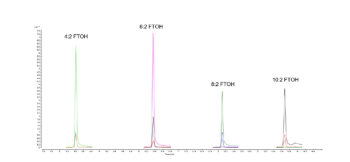
Learn how TD–GC–MS tracks volatile PFAS in air and emissions, meeting OTM-50 and ASTM D8591 limits for safer compliance.

Caroline Widdowson is a specialist in the sampling and analysis of trace-level volatile and semi-volatile organic compounds in solids, liquids, and gases. She holds a Ph.D. in organic chemistry and an MBA. She is currently director of scientific affairs at Markes, an advanced analytical instrument manufacturer.
Widdowson works closely with international standards organizations, regulators, and scientific groups, supporting countries in the development of practical and reliable sampling and analytical methods. She is chair of the UK national standards committee (BSI) for Indoor Air Quality and Convenor of ISO committee working groups, which develop international standards for the measurement of VOCs in ambient, indoor, and emitted from materials.
Learn how TD–GC–MS tracks volatile PFAS in air and emissions, meeting OTM-50 and ASTM D8591 limits for safer compliance.

The Column
The migration of chemicals through polymeric materials is difficult or impossible to model theoretically, placing an emphasis on experimental assessment to provide reliable empirical data. This article describes an investigation into the permeation of volatile chemicals through thin polymer membranes based on dynamic headspace, and how the information generated may be of value industrially - specifically in the fields of food packaging and personal protective equipment.

The Application Notebook
This study describes a simple, quick approach for the sampling and analysis of nicotine, impurities, and flavour compounds in e-cigarette vapours. Combining thermal desorption (TD) with gas chromatography–mass spectrometry (GC–MS) analysis results in a versatile screening method for tackling the challenge of regulatory compliance and quality control in this rapidly expanding industry.

The Application Notebook
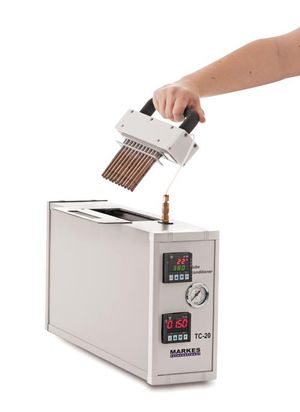
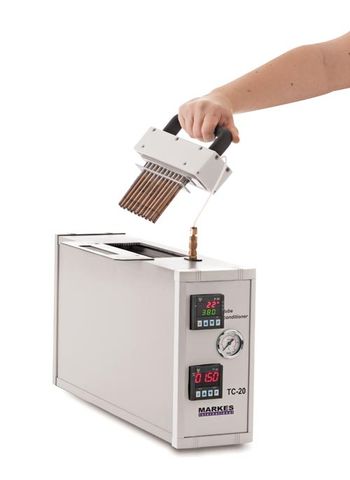
Rigorous conditioning of sorbent tubes is an essential part of any sampling and analysis protocol. This application note will explore the cost savings and productivity enhancements that can be made by off-line conditioning, rather than on‑line with the thermal desorber itself. In particular, we will focus on the revenue resulting from running more analytical samples, the cost-effectiveness of increasing sample capacity by this approach, and the benefits that stem from using nitrogen rather than helium.

The Column
This article describes sampling methodology for thermal desorption–gas chromatography (TD–GC) that can extend the compatible analyte range of tests used to determine chemicals released from materials, as well as associated indoor air quality measurements.

The Application Notebook
The release of certain chemicals from building products is of increasing concern due to their potentially detrimental effect on human health and the environment; therefore, new regulations requiring the production of low emission materials are currently being implemented. Novel sampling technology has been developed to help building product manufacturers obtain informative emissions data to develop compliant products and maintain product quality on a routine basis.

October 24th 2016

September 1st 2016