The Column
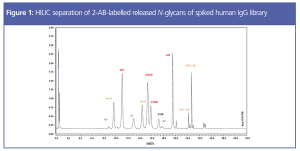
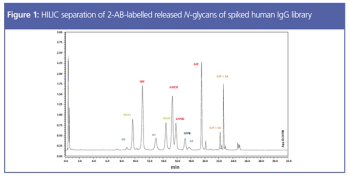
Post-translational modifications are potential critical quality attributes (pCQAs) routinely assessed in biotherapeutic development. Glycosylation is one of the most important attributes to assess because it affects protein function as well as antigen receptor binding. N-glycosylation of asparagine residues is the most common pCQA assessed during monoclonal antibody (mAb) therapeutic development. There are a few protocols to assess and quantitate N-glycans, but the most common approach is through an enzymatic release and labelling procedure, followed by separation and detection. This article demonstrates the method development considerations for sample preparation and chromatographic analysis of N-glycans of therapeutic mAbs.