

The Column
Agilent Technologies has acquired 20 acres of land in Weld County, Colorado, USA, on which to build a pharmaceutical manufacturing facility.
The Column
Agilent Technologies has acquired 20 acres of land in Weld County, Colorado, USA, on which to build a pharmaceutical manufacturing facility.
The Column
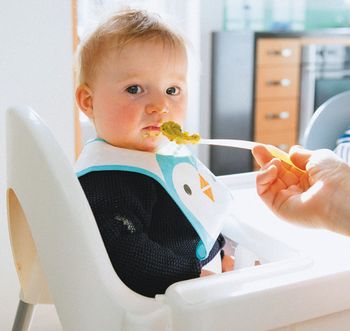
Babies and infants experience rapid growth within a short timeframe and the nutrition that they absorb is therefore of the utmost importance. María Mateos-Vivas from the Department of Analytical Chemistry, Nutrition, and Food Science at the University of Salamanca, Spain, has used hydrophilic interaction liquid chromatography (HILIC) coupled to tandem mass spectrometry (MS/MS) to investigate the role of nucleotides on infant health. She recently spoke to The Column about this research.
The Column
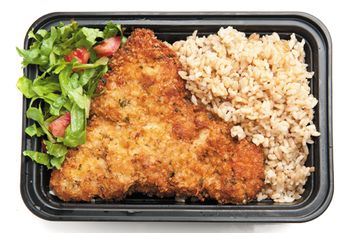
A group of researchers has studied the migration of monomers and plastic additives from plastic food packaging in microwave heated homemade food and packed liquid food using QuEChERS and gas chromatography coupled to mass spectrometry.
Babies and infants experience rapid growth within a short timeframe and the nutrition that they absorb is therefore of the utmost importance. María Mateos-Vivas from the Department of Analytical Chemistry, Nutrition, and Food Science at the University of Salamanca, Spain, has used hydrophilic interaction liquid chromatography (HILIC) coupled to tandem mass spectrometry (MS/MS) to investigate the role of nucleotides on infant health. She recently spoke to us about this research.
The Column
Ira Lurie describes the role of supercritical fluid chromatography (SFC) in forensic analysis and why the technique has not become a recognized technique for the analysis of seized drugs.
The Column
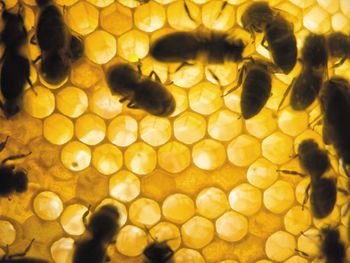
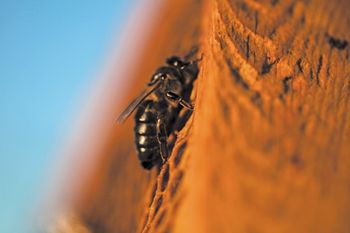
Liquid chromatography coupled to tandem mass spectrometry alongside gas chromatography tandem mass spectrometry has been used to analyze 200 pesticides and pesticide metabolites in honeybees.
E-Separation Solutions
Liquid chromatography coupled to tandem mass spectrometry (LC–MS–MS) alongside gas chromatography tandem mass spectrometry (GC–MS–MS) has been used to analyze 200 pesticides and pesticide metabolites in honeybees.

The Column
A team of researchers from the State Laboratory of Chemo/Biosensing and Chemometrics in China has developed a novel high performance liquid chromatography-diode array detection (HPLC–DAD) method for the identification of six synthetic colours in five beverages.

E-Separation Solutions
Wine can be a very complex matrix to analyze. LCGC spoke to Alexandre Pons from Seguin-Moreau in Cognac, France, about his work analyzing volatile compounds in wine and why gas chromatography coupled to tandem mass spectrometry (GC–MS–MS) is his method of choice.

The Column
A team of researchers has developed a high‑throughput analysis method for 192 diverse pesticides and 51 environmental contaminants in cattle, swine, and poultry meats. The team used a combination of low-pressure gas chromatography coupled to tandem mass spectrometry (LP)GC–MS–MS and ultrahigh-pressure liquid chromatography coupled to tandem MS in the analysis.
The Column
Analyzing Antarctic Ice Cores using Capillary Ion Chromatography

The Column
A team of researchers from China and the USA has developed a LC–MS–MS method for quantifying methylergonovine, a semi-synthetic ergot alkaloid used for the treatment and prevention of postpartum haemorrhage in human plasma.

The Column
The characterization of transcripts, proteins, peptides, and metabolites in cells is important to study disease mechanisms and develop novel therapeutics. Peter Nemes - from the George Washington University, Washington, USA - spoke to The Column about the important role of capillary electrophoresis–electrospray ionization (CE–ESI) and time-of-flight mass spectrometry (TOF-MS) in this area of research.
The Column
Sciex has announced it is teaming up with the Children’s Medical Research Institute to help equip The Australian Cancer Research Foundation International Centre for the Proteome of Cancer facility with tools to advance its large‑scale proteomic profiling studies.

The Column
A team of researchers based in France has examined the consequences of microwave and electron-beam treatments on food and its packaging using high performance liquid chromatography (HPLC) and gas chromatography (GC)

The Column
With the ever-growing market for new drugs to enhance performance of horses, analysts are continually battling to develop new analytical methods to beat doping. LCGC spoke to Karen Y. Kwok from The Hong Kong Jockey Club in Hong Kong, China, about her work in this area.

The Column
Characterizing Cancer Tumours using HILIC–MS

The Column
A new method for the simultaneous determination of emerging and persistent organic pollutants (POPs) in fish bile samples has been developed using gas chromatography–mass spectrometry (GC–MS).
The Column

The Column
A team of scientists has analyzed and evaluated the impact of salt weathering on an historical house using a combination of ion chromatography (IC), chemometrics, and thermodynamic chemical modelling.

The Column
Three-Dimensional Thinking

The Column
A team of researchers in Spain has examined the use of commercial yeast products in the production of white and rosé sparkling wines.

The Column
A new study hopes to highlight that poison was used as far back as 30,000 years ago. Dr Valentina Borgia, a specialist in Palaeolithic hunting weapons and Marie Curie Fellow at the McDonald Institute for Archaeological Research at the University of Cambridge, is using liquid chromatography combined with mass spectrometry (LC–MS) to analyze prehistoric weaponry.

The Column
Beer from a 1840s shipwreck in the Baltic Sea has been analyzed by a team of scientists at the VTT Technical Research Centre in Finland. Using a variety of chromatography techniques - including gas chromatography coupled to mass spectrometry (GC–MS) and high-performance anion-exchange chromatography (HPAEC) coupled to MS - the team compared the beer with modern-day varieties and found they were not too dissimilar.
The Column
Scientists at Duke University in Durham, North Carolina, USA, have discovered that olfactory cues can indicate pregnancy and foetal sex in the ring-tailed lemur (Lemur catta). Using gas chromatography coupled to mass spectrometry (GC–MS), the team found that lemurs carrying male offspring exhibited a different volatile chemical profile to those carrying a female.

The Column
Paralytic shellfish toxins (PSTs) are naturally occurring toxins produced by some species of microscopic algae that can accumulate in filter feeding shellfish. These toxins are a threat to shellfish aquaculture and pose a serious hazard to public health when ingested. A group of scientists has developed a method using hydrophilic interaction liquid chromatography coupled to ultrahigh?performance LC tandem mass spectrometry (HILIC UHPLC–MS–MS) to determine PSTs in a variety of shellfish species as part of the Safe New Zealand Seafood Research programme.

The Column
Kate Mosford of The Column spoke to Miguel Herrero of the Institute of Food Science Research (CIAL-CSIC) at the Spanish National Research Council, in Madrid, Spain, about his research in foodomics-based approaches, the evolution of food analysis, and the benefits of 2D LC in this application.

The Column
Kate Mosford of The Column spoke to Rosa Perestrelo of Centro de Química da Madeira located in Madeira University, Portugal, about wine analysis. She reveals the science behind winemaking and offers her tips for selecting the best analytical method.
The Column
A QuEChERS-based ultrahigh-performance liquid chromatography triple quadrupole tandem mass spectrometry (UHPLC–QqQ–MS–MS) method was used to determine pesticides in nutraceutical products from green tea (Camellia sinensis),

The Column
A simple and rapid ultrahigh-performance liquid chromatography tandem mass spectrometry (UHPLC–MS–MS) method to identify new psychoactive substances (NPS) in hair has been published.