


The Chromatographic Society have announced the winners of their 2020 ‘Martin Medal’ and ‘Jubilee Medal’ as Professor Gert Desmet, Vrije Universiteit Brussel (VUB), Belgium and Professor Deidre Cabooter, University of Leuven, Belgium, respectively.
The Chromatographic Society have announced the winners of their 2020 ‘Martin Medal’ and ‘Jubilee Medal’ as Professor Gert Desmet, Vrije Universiteit Brussel (VUB), Belgium and Professor Deidre Cabooter, University of Leuven, Belgium, respectively.
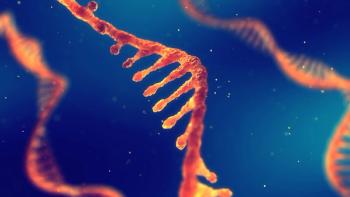
A new methodology for the characterization of synthetic oligonucleotides has been developed by researchers from the University of Tübingen, Germany.

Researchers have developed an off‑line pyrolysis GC–MS method to study the accumulation of polystyrene microparticles in filter-feeding organisms.

Microplastic pollution in the environment is a major concern for governments and companies worldwide attempting to understand and reduce the damage they cause. As well as the direct damage these plastic pellets can also act as chemical reservoirs that leach chemical contaminants into the environment and further damage ecosystems. The Column spoke to Manuel Miró from the University of the Balearic Islands, Spain, about his research into the pollution caused by chemical leaching from microplastics.

The Column
The Column spoke to Carlos Calderón about his research project, investigating pharmacolipidomics analysis of betulin in human primary keratinocytes to monitor alterations in the lipid profiles induced by treatment with betulin.

The Column
Researchers from The Hong Kong Jockey Club, Sha Tin Racecourse, Hong Kong, China, have developed a comprehensive screening method for the detection of antipsychotics in horses, using LC–MS/MS.
The Column
Agilent Technologies Inc. has announced that biotech start-up Trilogy Sciences has been awarded an Agilent Golden Ticket at LabCentral, a leading biotech innovation hub based in Cambridge, Massachusetts,
The Column
Agilent Technologies, Inc. has become a sponsor of My Green Lab, a nonprofit organization dedicated to improving the sustainability of scientific research.

The Column
Biocompatible LC systems are generally regarded to be chemically more inert than conventional HPLC systems. However, a study into the chromatographic behaviour of some classes of compounds analysed on these iron-free HPLC systems revealed issues typically associated with metal contamination.
The Column
Thermo Fisher Scientific has announced a collaboration with NanoPin Technologies, Inc. to improve blood-based infectious disease detection technology through the development of highly sensitive LC–MS‑based workflows.

The Column
Researchers have developed an alternative method to reduce interferences for the analysis of N-nitrosamines using GC coupled to HR-QTOF-MS.
The Column
Eurofins | IPROMA has signed a collaboration agreement with Markes International to facilitate the development and validation of a method for the quantification of micro- and nano‑plastics up to 0.3 µm in size.
The Column
Thermo Fisher Scientific has received the CE mark in the European Union for its diagnostic test to detect nucleic acid from SARS-CoV-2, the virus that causes Covid-19.

The Column
Using GC–MS and light microscopy, researchers have investigated the dental calculus of a roman woman with coeliac disease and found she came into contact with gluten-rich cereals that would have been deleterious to her, and would likely have contributed to her premature death.
The Column
Researchers have developed a new liquid chromatography tandem mass spectrometry (LC–MS/MS) method for the simultaneous chromatographic separation and detection of anticoccidials, which are used as an agricultural animal treatment, in environmental waters.
The Column
Agilent Technology has announced a collaboration with researchers at the University of Sheffield and the University of Manchester to investigate the risk factors surrounding atopic eczema, a chronic skin condition that affects one in five children and one in 12 adults.

The Column
LCGC is proud to announce that Ryan T. Kelly is the winner of the 2020 HTC Innovation Award.

The Column
ChromSoc have announced the return of their popular “Grass Roots” event series, and a return to the subject of “Liquid Chromatography Fundamentals” following many requests for another iteration of the original 2016 course.
The Column
Knauer employees have used their annual “Social Day” to work with the Berlin City Mission and support the city’s homeless.
The Column
Waters Corporation has announced a series of biopharmaceutical events for 2020, beginning with the Biopharma Roadshow Series.
The Column
SepSolve Analytical Ltd has successfully relocated its headquarters to a new and larger premise in Peterborough, UK.

The Column
Researchers have developed a headspace gas chromatography-ion mobility spectrometry (HSGC–IMS) method to detect volatile organic compounds (VOCs) linked to Alzheimer’s disease in faeces and urine.

The Column
Food safety scientists have validated a new method to detect neurotoxins in seafood products using UHPLC–HILIC–MS/MS.

The Column
Researchers from the University of Leipzig have used gas chromatography–mass spectrometry (GC–MS) to study the fertility cues of non-human primates.
The Column
Thermo Fisher Scientific has announced a collaboration with Owlstone Medical to advance the early diagnosis of cancer and other diseases utilizing novel biomarkers and non-invasive breath sampling.
The Column
Agilent Technologies has announced the opening of a new state-of-the-art facility for spectroscopy research and development at the Harwell Science and Innovation Campus in Oxfordshire, UK.
The Column
SepSolve Analytical Ltd has opened a state‑of‑the-art laboratory and training facility in Waterloo, Canada, to improve its service to North American customers.
The Column
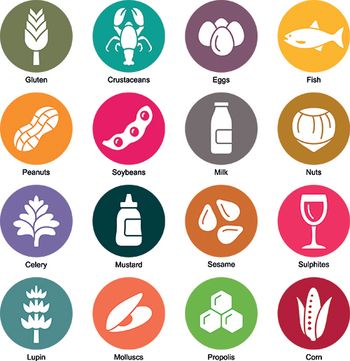
Researchers attempting to overcome complex matrix interference in commercial food analysis have developed a targeted LC–MS/MS method and open source analysis software capable of identifying allergens in complex food matrices.
The Column
Sartorius Stedim Biotech (SSB) has agreed to acquire parts of Danaher’s Life Science portfolio.

The Column
Researchers have developed two new methods for the analysis of MOAHs in highly purified mineral oil fractions (white oils) using comprehensive AgLC×GC, one method uses FID, while the other uses VUV.