Articles by Lewis Botcherby

High quality, low cost is a standard mantra within the pharmaceutical industry, but with increasing structural complexity of drugs and drug candidates maintaining the core value of this mantra is becoming more difficult. Kanta Horie from Eisai Co., Ltd., recently spoke to The Column about the development of an intelligent peak deconvolution technique using multivariate curve resolution-alternating least squares (MCR-ALS) that allows accurate quantitation of multiple components with different absorbing spectra even if the peaks are not completely separated.

hermo Fisher Scientific has announced its intention to buy Patheon NV.

A novel unit that integrates sampling and analysis for the determination of pest insect sexual pheromones in environmental air using fabric phase sorptive extraction (FPSE) and headspace gas chromatography coupled to mass spectrometry (HSGC–MS) has been developed at the University of Córdoba in Spain.
MilliporeSigma is now accepting entries for the Alfred R. Bader Award for Student Innovation.
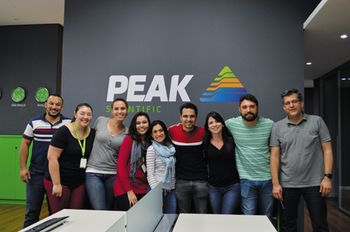
Peak Scientific has expanded its operations in Latin American (LATAM), moving to a new, larger premise with the aim of developing its support capabilities in the growing LATAM market.
Markes International has been awarded a European Product Design award for their recently re-designed “xr” series of thermal desorption (TD) products.

Researchers from Zhejiang University, China, have created a graphene-coated polymeric stationary phase and demonstrated its performance separating inorganic anions, organic acids, carbohydrates, and amino acids using anion exchange chromatography.
3M, the science-based technology company, has commissioned the National Institute for Bioprocessing Research and Training (NIBRT) to conduct in-depth research into their Emphaze AEX Hybrid Purifier, a single use plug and play filter matrix.

Agilent Technologies has awarded Dwight Stoll an Agilent Thought Leader Award in support of his research applying two‑dimensional liquid chromatography (2D‑LC) to biopharmaceutical analysis.
Antec announced last March the corporate name change to Antec Scientific. The name change comes along with a new Corporate Identity and the launch of an updated website later this month.

Researchers from the Technical University of Denmark (DTC) have used gas chromatography (GC) and high performance liquid chromatography–mass spectrometry (HPLC–MS) to investigate microalgae biomass as an alternative resource for fishmeal and fish oil in the production of fish feed.

Researchers from the Universidad Autónoma de Yucatán in Mexico, have used solid-phase extraction (SPE) and gas chromatography–electron capture detection (GC–ECD) to study the effects of organopesticides in the Yucatán region of Mexico.
Agilent Technologies have awarded Dwight Stoll with an Agilent Thought Leader Award in support of his research applying two-dimensional liquid chromatography (2D-LC) to biopharmaceutical analysis.

Separating and quantifying both volatile and nonvolatile compounds in complex mixtures is a costly and time-consuming process presenting significant technical challenges. Fabrice Gritti from the Instrument, Core Research, Fundamental Group at Waters Corporation discusses his team’s unique solution to this problem, combining high-vacuum technology and low-density fluid chromatography (LDFC) with carbon dioxide as a mobile phase for a rapid and complete baseline separation of both volatile and nonvolatile compounds on a single instrument, single column, and a single run without the associated loss of resolution.
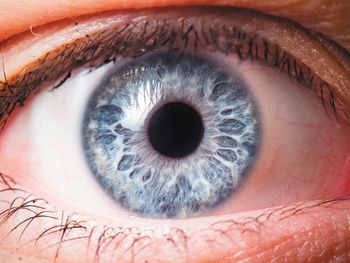
Researchers from the Medical University of Bialystok, Poland, have used metabolomics and liquid chromatography quadrupole time‑of‑flight mass spectrometry (LC–QTOF‑MS) to study human ocular fluids.
Waters Corporation has announced the opening of a new Solution Centre in Petaling Jaya, Selangor, Malaysia. The new facility is designed to advance liquid chromatography and mass spectrometry analytical capabilities, developing new applications and offering training to scientists within its demonstration and training facilities.
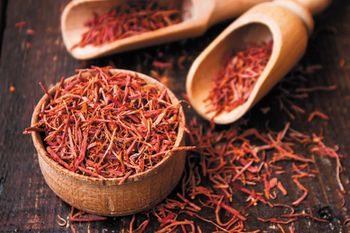
Researchers from the University of Chemistry and Technology in Prague, Czech Republic, have developed a saffron authentication process based on ultrahigh-performance liquid chromatography coupled to high resolution tandem mass spectrometry (UHPLC–HRMS/MS) and multivariate data analysis.
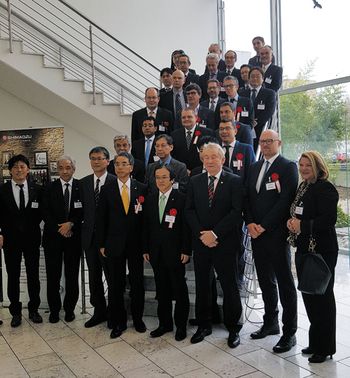
Shimadzu Corporation has opened a new European Innovation Center in Duisburg, Germany. The new facility will merge Shimadzu’s state-of-the-art analytical technologies with prominent topics, market expertise, and scientific research guided by some key opinion leaders.
Reach Separations is celebrating its 5th anniversary with a record year of growth.

Ellutia Chromatography Solutions has opened a new state‑of‑the-art facility in Ely, Cambridgeshire, UK, consolidating Ellutia’s offices, laboratories, production, and warehouse on one 15,000 sq. ft. site.

Deirdre Cabooter is an emerging leader in chromatography known for her work exploring the possibilities and limitations of the kinetic plot method for comparing the kinetic performance of chromatographic separation methods and columns. Joining the University of Leuven (KU Leuven) in 2011, where she is currently an associate professor, Cabooter has continued her stellar research and taken on responsibilities in the organization of the popular symposium series HTC. She recently spoke to LCGC about her career and work so far.
Researchers from the University of Chemistry and Technology in Prague, Czech Republic, have developed a saffron authentication process based on ultrahigh-performance liquid chromatography coupled to high resolution tandem mass spectrometry (UHPLC–HRMS/MS) and multivariate data analysis.
Can combining stir-bar sorptive extraction (SBSE) with molecularly imprinted polymers (MIPs) extend the practical applications of SBSE? The Column spoke to Antonio Martin-Esteban of the Department of Environment of the National Institute of Research and Technology in Agricultural and Food Science (INIA) in Madrid, Spain, to find out more.

PharmaFluidics has announced an additional 2.7 million Euros worth of funding to support its commercial launch and expand its analytical applications portfolio to biomarkers, diagnostics, and drug development.

Researchers from the National and Kapodistrian University of Athens have used liquid chromatography with tandem mass spectrometry (LC–MS/MS) to understand changes in licit and illicit drug consumption patterns following the major socioeconomic changes Greece has experienced.

Pat Sandra is known for his expansive knowledge across a wide spectrum of analytical techniques, blending the world of academia and private enterprise, and bringing separation science into the mainstream consciousness. Combining analytical excellence, innovation, and a unique gift for problem solving into a career which has lasted almost 50 years. Sandra recently spoke to LCGC about his career and work.
A decade of LCGC awards has seen some of chromatography’s modern icons and rising stars honoured. In this 10th year of the award, we are pleased to honour two superb separation scientists: Pat Sandra, the winner of the 2017 Lifetime Achievement in Chromatography Award, and Deirdre Cabooter, the 2017 Emerging Leader in Chromatography. For the third consecutive year, the LCGC awards will be presented at an oral symposium held at Pittcon 2017. This year’s session, which were held on Monday 6 March, featured talks by both award winners and Milos Novotny of Indiana University, Jim Jorgenson of the University of North Carolina at Chapel Hill, and Gert Desmet of the Free University of Brussels (Vrije Universiteit Brussel).
Non-targeted screening approaches are an essential element of food safety strategies, detecting novel or unexpected food contaminants and adulterants. However, the development and implementation of generalized and non-targeted screening workflows for food matrices is challenging. The inherent sample complexity and diversity as well as large analyte concentration ranges represent significant obstacles.

Few fruits are as notorious as the Durian fruit. Native to Southeast Asia but fast becoming available around the globe, these fruits hold the unsavoury title of “the world’s smelliest fruit”. The compounds responsible for such a complex and at times difficult to stomach aroma have intrigued scientists for decades, but until recently the data relating to those chemicals was inconsistent.
We explore the careers and achievements of the winners of LCGC’s 10th annual awards: Pat Sandra and Deirdre Cabooter.

