

The Column
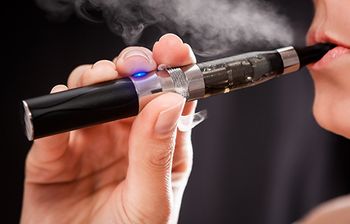
Researchers from Gdansk University of Technology, Poland, have investigated the flavour profiles of e-cigarette refill solutions using GC–MS/MS.
The Column
Researchers from Gdansk University of Technology, Poland, have investigated the flavour profiles of e-cigarette refill solutions using GC–MS/MS.

The Column
Postnova Analytics has announced a joint collaboration with the Department of Biosciences at the University of Helsinki in Finland, to use AF4 for the purification of halophilic viruses.

The Column
Restek has partnered with the Girl Scouts in the Heart of Pennsylvania to host three STEM expos with the aim of building basic science skills in girls.

The Column
Peak Scientific has given a guided tour of their manufacturing headquarters in Inchinnan, Scotland, to his Royal Highness The Duke of Gloucester to mark the company’s 20th anniversary

The Column
Researchers from the University of Almería, in Almería, Spain, have developed a nontargeted metabolomic approach to differentiate organic and non-organic tomato crops using HPLC–HRAMS.

The Column
Researchers from the Université de Pau et des Pays de l’Adour, in France, have developed a large volume injection method using a programmed temperature vaporization (PTV) injector for the simultaneous determination of mercury, tin, and lead at ultra-trace levels in natural waters using GC–ICP-MS.
The Column
Agilent Technologies Inc. and Imperial College London have signed a strategic scientific collaboration agreement that will see a broad range of Agilent instruments installed in a sponsored measurement suite to be housed within Imperial’s Molecular Sciences Research Hub.

The Column
Researchers from the University of Minnesota have investigated the salivary proteomics of healthy dogs using offline high pH reversed-phase LC fractionation and nano LC–MS/MS.

The Column
Researchers from the University of Gothenburg, in Gothenburg, Sweden, have investigated whether plasma amino acid levels differed among children with celiac disease using liquid chromatography–mass spectrometry (LC–MS) (1).
The Column
Agilent Technologies has announced a strategic scientific collaboration with the University of Southern California (USC) Michelson Center for Convergent Bioscience with the aim of creating an Agilent Center of Excellence (CoE) in biomolecular characterization.
The Column
Knauer (Berlin, Germany) has joined the United Nations Global Compact movement, underlining their commitment to responsible corporate governance on an international level.
The Column
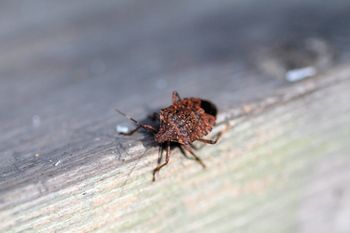
Researchers from Lincoln University, Lincoln, New Zealand, have investigated the potential of VOC analysis using GC–MS to identify the presence of the agricultural and urban pest the brown marmorated stink bug.
The Column
Waters Corporation and Malvern Panalytical have announced a co-marketing agreement to advance the analysis of polymers.

The Column
Researchers from the University of Seville have developed a method for the determination of pollutants in leafy and root vegetables using UAE, d-SPE, and LC–MS/MS.
The Column
PharmaFluidics has announced it has raised 7.3 million euros in its bid to expand commercialization of its novel micro-chip device.

The Column
A HILIC–MS/MS method to separate and quantify the polar bioactive molecules present in royal jelly has been developed by researchers from the Aristotle University of Thessaloniki, in Greece.
The Column
Eurofins Scientific has announced the acquisition of Tsing Hua Testing & Analysis Co., Ltd. (Tsing Hua), a leading environmental testing company in Taiwan.
The Column
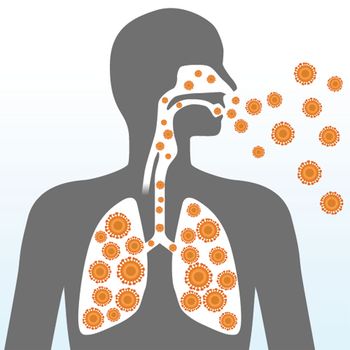
Researchers from the Liverpool School of Tropical Medicine and the University of Warwick have conducted a pilot study to assess the viability of a GC–IMS for the analysis of volatile organic compounds (VOCs) in exhaled breath for the diagnosis of bacterial respiratory tract infections (RTIs) in hospital patients.
The Column
Biotage AB (Uppsala, Sweden) has agreed a deal to purchase all outstanding shares in Horizon Technology Inc. for $18.4 million.

The Column
Researchers have developed a proteomics‑based approach, using liquid chromatography tandem mass spectrometry (LC–MS/MS), to identify the food sources of the Chagas disease vector Triatominae insects.
The Column
The LCGC Europe/HTC-15 Innovation Award was launched to celebrate the work of scientists who are innovatively evolving the field of hyphenated techniques.

The Column
The newly appointed Chromatographic Society Lecturer, Mel Euerby, visited the University of Sunderland in early November in the first official outing of the role.

The Column
Researchers from University College London have developed a novel method of characterizing the mechanical strength of agarose-based chromatography resins used in the manufacturing of biopharmaceuticals.
The Column
Avantor Inc. has completed the acquisition of VWR Corporation for an approximate amount of $6.5 billion.
The Column
Peak Scientific has created a new online calculation tool to help laboratories that use gas chromatography (GC) to quickly identify the ideal gas solution for their specific GC instrument.

The Column
The American Chemical Society has awarded Kevin Schug with the J. Calvin Giddings Award for Excellence in Education in recognition of his efforts to improve the educational experience of students in the field of analytical chemistry.

The Column
Dwight Stoll has been awarded the EAS Young Investigator Award at the recent Eastern Analytical Symposium held in Plainsboro, New Jersey on 15th November.

The Column
Sciex Diagnostics, the in vitro diagnostics (IVD) division of Sciex, has announced a joint venture with Zhejiang Dian Diagnostics (Dian).
The Column
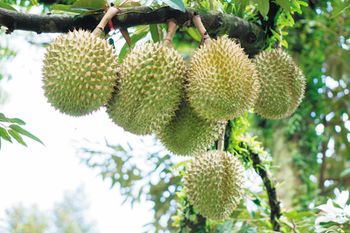
The durian fruit is notorious for its unpalatable aroma, and yet the fruit is incredibly popular throughout Southeast Asia and amongst travellers. Holding the title of “the world’s smelliest fruit” attracts attention including that of Martin Steinhaus from the Aroma Research Group at the Deutsche Forschungsanstalt für Lebensmittelchemie (German Research Center for Food Chemistry). He spoke to The Column about his group’s research into the compounds responsible for the fruit’s uniquely unpleasant aroma.
