


The Column
Eurofins Scientific has announced the purchase of Exova’s environment testing business located in Eastern Canada in a deal estimated to be worth $13 million CAD.
The Column
Eurofins Scientific has announced the purchase of Exova’s environment testing business located in Eastern Canada in a deal estimated to be worth $13 million CAD.
The Column
AOAC International are now accepting nominations for the Harvey W. Wiley and the Fellow of AOAC International awards.

The Column
Researchers investigating paper mill effluents and their impact on surface waters in Slovenia have identified endocrine disrupting compounds (EDCs) and their mutagenic and genotoxic properties using gas chromatography–mass spectrometry (GC–MS).
LCGC North America
Multidimensional liquid chromatography strategies are the most widely used method for increasing the number of spatially resolved components and reducing stress on mass spectrometric detection. However, the stress placed on a secondary dimension in a comprehensive on-line methodology is very high. An increasingly attractive approach is the coupling of high performance liquid chromatography (HPLC) with ion mobility spectrometry hyphenated to mass spectrometry (IMS-MS). Tim Causon and Stephan Hann of the University of Natural Resources and Life Sciences in Vienna, Austria, spoke to The Column about their work evaluating this approach and exploring its possibilities for metabolomics.
The Column
Nominations for the 3rd Annual Excellence Award from the North American Chemical Residue Workshop (NACRW) are now open.
The Column
Luis A. Colón and Purnendu (Sandy) Dasgupta have been honoured at the Eastern Analytical Symposium in Somerset, New Jersey, USA, for achievements in their respective fields.

The Column
Following their successful “Grass Roots” educational event held in the Lake District, The Chromatography Society (ChromSoc) has announced plans for further events in the same format for 2017.
The Column
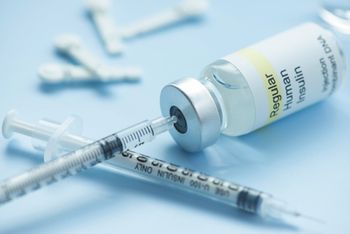
Researchers from the Scientific Institute of Public Health, in Brussels, Belgium, have devised a simple dilute and shoot methodology for the identification and quantification of illegal insulin (1).

The Column
Peak Scientific has been awarded the “Best New Exporter to China Award” at the British Business Awards, held in Shanghai by the British Chamber of Commerce.
Researchers investigating paper mill effluents and their impact on surface waters in Slovenia have identified endocrine disrupting compounds (EDCs) and their mutagenic and genotoxic properties using gas chromatography–mass spectrometry (GC–MS).

The Column
Research on nasal spray formulation has yielded an improved in vitro analytical test method utilizing thin layer chromatography (TLC). The research used simulated nasal mucus with varying properties and a TLC apparatus to assess the dripping behaviour of nasal formulations to improve the nasal spray development process.Nasal Spray Evaluation Using Thin Layer Chromatography
The Column
Rudolf Krska of the University of Natural Resources and Life Sciences (BOKU), in Vienna, Austria, has been awarded the biennial B.R.A.I.N award at the Biomin scientific conference held in Vancouver, Canada.
The Column
Phenomenex’s CEO Fasha Mahjoor has announced $12 million in bonuses for the company’s staff following the sale of Phenomenex Inc. to Danaher Corporation in October 2016.
The Column
Professor James Jorgenson of the University of North Carolina at Chapel Hill, in North Carolina, USA, has received the Csaba Horváth Medal and Scroll at the Csaba Horváth Memorial Award Symposium, Yale West Campus Conference Center.
The Column
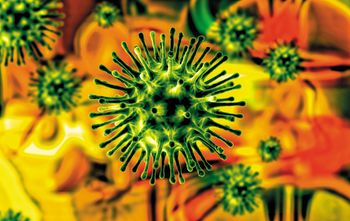
Researchers have investigated the use of size-exclusion chromatography (SEC) for size distribution analysis of influenza virus particles.
The Column
Agilent Technologies Inc. has named Roeland G.W. Verhaak, of the Jackson Laboratory (JAX), the winner of the company’s Early Career Professor Award. Verhaak was selected for his contributions to the implementation of transcriptomics, genomics, and big-data analysis to the classification and diagnosis of various cancer types.

The Column
Researchers from Postnova Analytics, Landsberg, Germany, have developed a quantitative method to detect traces of toxic metals in tattoo ink using asymmetrical flow field-flow fractionation in combination with inductively coupled plasma mass spectrometry (AF4-ICP-MS).
The Column
Phenomenex has announced that it will be acquired by Danaher Corporation, a Fortune 150 science and technology company. Phenomenex will continue to operate as a standalone company, and will retain the Phenomenex brand, its personnel, and site locations.

The Column
Researchers have developed a method to quantify concentrations of the pollutant tributyltin (TBT) in whole water bodies using species-specific isotope dilution (SSID) and gas chromatography with inductively coupled plasma mass spectrometry (GC–ICP-MS).
The Column
The Waters’ scientists responsible for the development of the QTOF mass spectrometer have been honoured at the annual Human Proteome Organization.
The Column
VUV Analytics has awarded Adam Hall their fall 2016 academic grant, providing Hall’s laboratory with VUV detectors to perform novel research in the field of forensic chemistry.

The Column
The ban on organotins has not led to a significant reduction in marine pollution according to research published by the Polish Academy of Sciences. Researchers found unacceptable levels of harmful organotins in the muscle and liver tissues of fish species collected in the southern Baltic Sea coastal zone, exceeding the good environmental status boundaries.
The Column
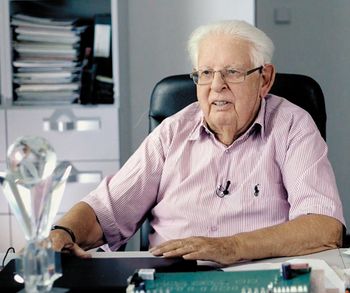
Dr. Herbert Knauer, found of Knauer Wissenschaftliche Geräte GmbH, celebrates his 85th birthday.
The ban on organotins has not led to a significant reduction in marine pollution according to research published by the Polish Academy of Sciences. Researchers found unacceptable levels of harmful organotins in the muscle and liver tissues of fish species collected in the Southern Baltic Sea coastal zone exceeding the good environmental status boundaries.

The Column
Biopharmaceutical purification techniques can be slow and cumbersome with poor scalability. A new device using laterally-fed membrane chromatography (LFMC) was developed to address these issues. Raja Ghosh from McMaster University in Hamilton, Ontario, Canada, spoke to The Column about this new device and its potential applications.
The Column
Biotage AB has announced the purchase of shares in the Danish biomolecule company Chreto Aps, representing a significant investment into the area of drug development.

The Column
What are the motivations and events that drive a successful separation scientist? This is the question that CASSS seeks to answer by documenting the lives and careers of the analytical chemists who have won their “Outstanding Achievements in Separation Science” Award.
The Column
Sciex has announced a collaboration with CW Analytical to develop fully validated standardized methods to measure pesticides and cannabinoids in cannabis and cannabis-related products.

The Column
Researchers from the University of Texas at Arlington (UTA) have developed a rapid, accurate, and precise method to quantify water content in solid pharmaceutical drugs using headspace gas chromatography (HSGC) (1).
The Column
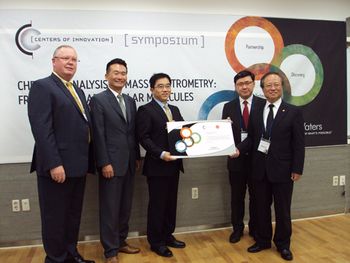
Waters Corporation has welcomed Dr. Sunghwan Kim of Kyungpook National University, Daegu, South Korea, into the Waters Centers of Innovation (COI) programme. Kim’s research focuses on polynuclear aromatic hydrocarbons (PAHs) in the environment, developing and applying analytical techniques to assess their impact.