


The Column
Trajan Scientific and Medical (Melbourne, Australia) has announced the acquisition of LEAP Technologies Inc. (Carrboro, North Carolina, USA).
The Column
Trajan Scientific and Medical (Melbourne, Australia) has announced the acquisition of LEAP Technologies Inc. (Carrboro, North Carolina, USA).

The Column
An Advanced Grant worth 2.5 million Euros has been awarded to Peter Schoenmakers of the University of Amsterdam (UvA) to develop new high-performance separation technology.

The Column
Researchers from Heilongjiang University of Chinese Medicine, China, have used ultrahigh-performance liquid chromatography coupled to mass spectrometry and metabolomics to investigate the metabolic networks of Alzheimer’s disease, identifying potential biomarkers and biochemical mechanisms.

The Column
A team of researchers has developed a high‑throughput analysis method for 192 diverse pesticides and 51 environmental contaminants in cattle, swine, and poultry meats. The team used a combination of low-pressure gas chromatography coupled to tandem mass spectrometry (LP)GC–MS–MS and ultrahigh-pressure liquid chromatography coupled to tandem MS in the analysis.

The Column
Researchers from the Joint Research Centre of the European Commission have published a case study detailing the characterization of new psychoactive substances using gas chromatography–mass spectrometry, nuclear magnetic resonance, high‑resolution tandem mass-spectrometry, and Raman spectroscopy.
Peter Schoenmakers of the University of Amsterdam has been awarded a prestigious grant worth 2.5 million Euros by the European Research Council to develop new high-performance separation technology. The grant will fund Schoenmakers’s research project “Separation Technology for A Million Peaks” (STAMP).
The Column
Dani Instruments SpA and Labindia Instruments Pvt Ltd have announced an exclusive distribution agreement.
The Column
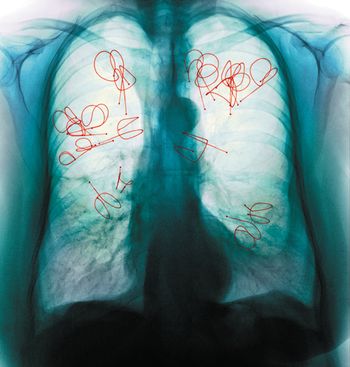
A new method for tuberculosis detection using gas chromatography–mass spectrometry has been developed.

The Column
Researchers from South Korea have investigated methods of reducing polycyclic aromatic hydrocarbons within cooked meat using gas chromatography–mass spectrometry.
The Satinder Ahuja Award for Young Investigator in Separation Sciences has been presented to Matthew Miller, Technical Leader at Dow Chemical in the Analytical Science Core R&D group, at Pittcon 2016.
The Column
Waters Corporation and BioCity have celebrated the opening of a new open access analytical laboratory located in the BioHub at Alderley Park, Cheshire, UK.
The Column
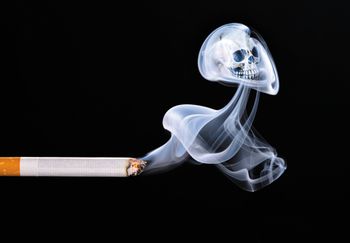
Researchers studying necrophargous blowflies for forensic investigations have developed a novel gas chromatography–mass spectrometry (GC–MS) method for the detection of nicotine. Nicotine has been attributed to a number of accidental or sudden, suicidal, and homicidal deaths.

The Column
The Norwegian Institute of Public Health conducted a study into the drug use habits of nightclubbers and arrested criminals in Oslo, Norway. The study used UHPLC–MS–MS to analyze the drug-use profiles of nightclubbers and criminals arrested while under the influence of drugs to develop an understanding of drug use patterns in these groups.
The Column
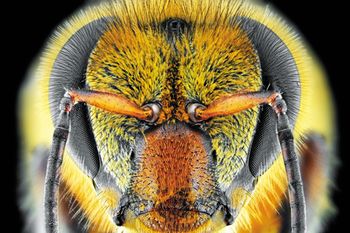
Research into honeybee venom is being performed to identify active proteins acting as allergens and toxins. Researchers combined LC–MALDI-TOF/TOF-MS–MS, LC–ESI-QTOF-MS–MS, and a combinatorial peptide ligand library enrichment method to detect 269 proteins.

E-Separation Solutions
Subcritical water chromatography (SBWC) is seen as an increasingly enticing prospect to replace high performance liquid chromatography (HPLC) in industrial settings because of its low costs and environmental impact. Yu Yang of East Carolina University, in Greenville, North Carolina, USA, has conducted research into this process for two decades. He recently spoke to LCGC about his work, why companies should consider SBWC, and its role in pharmaceutical analysis.
The Column
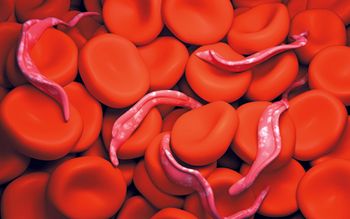
Researchers from Imperial College London and the University of Aberdeen have identified disease markers for Human African Trypanosomiasis (HAT), commonly known as “sleeping sickness”. Using reversed-phase ultrahigh‑performance liquid chromatography coupled to mass spectrometry (UHPLC–MS) and proton nuclear magnetic resonance (1H NMR) spectroscopy researchers found 53 discriminatory metabolite markers.
The Column
Sciex (Framingham, Massachusetts, USA) has announced a co‑marketing agreement with Pressure BioSciences, Inc. (South Easton, MA, USA), which aims to address the challenges arising in complex sample preparation.
The Column
Crawford Scientific (Strathaven, UK) has announced that it will become YMC Europe’s (Dinslaken, Germany) sole authorized distributor within the UK.

The Column
New research into flow modulation methods in valve-based two-dimensional gas chromatography (GC×GC) has produced an effective alternative to traditional pulse modulation.1 Described as “pattern modulation”, this new method increases effluent to the secondary column with flow rates compatible with most chromatographs and spectrometers.
The Column
Summary of the Eastern Analytical Symposium 2015.

The Column
A detection method for early-stage ovarian cancer has been developed using ultrahigh‑pressure liquid chromatography–high-resolution mass spectrometry (UHPLC–HRMS) in combination with tandem MS–MS.

E-Separation Solutions
Anti-histamines and compounds used to medicate anxiety and seizures were among those identified in grocery market fish fillets using a novel gas chromatography–mass spectrometry (GC–MS) technique.

The Column
A new liquid chromatography tandem mass spectrometry (LC-MS-MS) method has been developed to study besifloxacin, which is used to treat bacterial conjunctivitis.
The Column
LGC (London, UK) has announced its acquisition of Maine Standards Company (Cumberland Foreside, Maine, USA).

The Column
Anti-histamines and compounds used to medicate anxiety and seizures were among those identified in grocery market fish fillets using a novel gas chromatography–mass spectrometry (GC–MS) technique (1).

The Column
Researchers at Zhejiang University, China, have developed a new method combining liquid chromatography-mass spectrometry (LC-MS) and off-line nuclear magnetic resonance (NMR) to analyze the constituents within traditional Chinese medicines (TCMs).

The Column
A new screening procedure has been developed for the detection of common “non banned” drugs used by athletes. The method targets multiple pharmacologically active compounds by liquid chromatography-electrospray ionization coupled to tandem mass spectrometry (LC-ESI-MS-MS).

The Column
The characterization of paint in famous artworks is valuable for investigating the painting techniques used by artists, for conservation purposes and to help repair damaged paintings. By combining HPLC–ESI-QTOF-MS with traditional analytical techniques, researchers were able to clarify the composition of the oil components and hypothesize the botanical origin of the lipid materials used by Edvard Munch.