


In part three of this interview, they discussed the interactions between bacterial communities and replacement PFAS materials. Here's part three of our conversation with the Mead Group at UNC Wilmington.
In part three of this interview, they discussed the interactions between bacterial communities and replacement PFAS materials. Here's part three of our conversation with the Mead Group at UNC Wilmington.
In part 2, Ralph Mead and his team explain the challenges of characterizing and quantifying PFAS in environmental samples.
The Mead Group at UNC Wilmington studies the occurrence and transport PFAS in wet and dry depositions, tracing their sources to inform regulators. In the first part of our interview, we spoke with Mead and several members of his team about the work they do for the North Carolina PFAS Testing Network and learn more about the network.

In this interview, we spoke with Lee Ferguson of Duke University about his laboratory’s work accurately tracing these contaminants in complex environmental matrices.

In this video interview, Luo explains more about his laboratory group’s research, as well as provides an overview about what he talked about at Pittcon during his award symposium. And finally, Luo addresses some of the highlights of Pittcon and what winning the Pittcon Achievement Award means for his research.
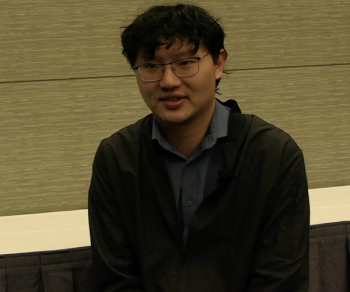
In this video interview with Xiao Su, he dives deeper into the research that he and his team are conducting with redox-active polymers and the applicability of electrochemical approaches in separation science.

In this video interview from Pittcon, we ask Christopher Palmer about developing novel polymeric materials for microscale liquid phase separations, as well as some of the current trends and challenges he is observing in chromatography.

In our interview with Kate Perrault Uptmor, we asked her about the resources available for those interested in learning more about multidimensional chromatography, and current trends happening in separation science that are of particular note.

As part of our series on how North Carolina researchers are helping to combat PFAS in the environment, we asked Mei Sun of the University of North Carolina, Charlotte, about her work with the North Carolina PFAS Testing Network, what strategies show the most promise for large-scale environmental cleanup, and how regulations on PFAS are influencing research priorities and mitigation technologies.

Because PFAS is a hot topic, LCGC International will be releasing a video series about it, which will feature numerous North Carolina researchers. We preview this video series here.

The conference theme this year focused on collaboration, connection, and cultivation of the next generation of researchers.

In this video interview from Pittcon, Elham "Elle" Akbari sat down with LCGC International to discuss her research, as well as the challenges of using liquid chromatography–mass spectrometry (LC–MS) and combustion ion chromatography (CIC) to characterize PFAS in environmental samples.

At Pittcon 2025, Long Luo of the University of Utah sat down with LCGC International to discuss his laboratory's tetrahedron approach to their research.
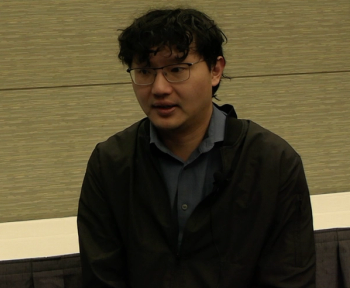
LCGC International sat down with Su to discuss what winning the Young Investigators in Separation Science Award means for him and his research. Su also passed along some advice for separation scientists and young professionals in this space.

In this interview segment, we sat down with Chris Palmer of the University of Montana to discuss his talk, as well as the evolving role of electrokinetic chromatography in applications areas such as environmental analysis.
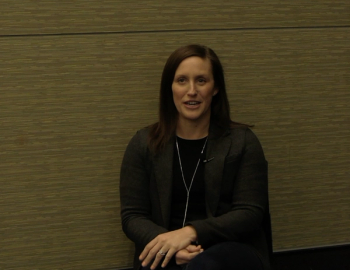
In this interview clip, Katelynn Perrault Uptmor, an assistant professor of chemistry at the College of William & Mary, in Williamsburg, Virginia, discusses winning the Emerging Leader in Chromatography Award and her upcoming talk tomorrow.
This morning at Pittcon, The Chromatography Forum of Delaware Valley (CFDV) held an award session for the late Terry Berger, who was this year’s recipient of the Del Nogare Award.

Cato T. Laurencin, MD, PhD, who is well-known as a scientist and entrepreneur with an extensive career in regenerative engineering, delivered the Wallace H. Coulter lecture yesterday. Here are some of the highlights from the talk.

Each year, LCGC International presents two awards at Pittcon to the winner of the Lifetime Achievement in Chromatography Award and the Emerging Leader in Chromatography Award. This year, Christopher Pohl is the recipient of the Lifetime Achievement Award and Katelynn Perrault Uptmor is the recipient of the Emerging Leader award. The award presentation, which will honor Pohl and Perrault Uptmor, will take place on Tuesday March 4th from 8:30–11:40 am.
Here, you’ll find an overview of some of the networking opportunities throughout the week that are available for attendees.

In this video interview, Emanuela Gionfriddo, Daniel Armstrong, and Nicholas Snow preview their talks at Pittcon, as well as give their opinions about what topics they hope to explore more at the conference.

In this Q&A interview, Samiksha Singh discusses her team’s latest research in microplastics research, which provided insight into how marine monitoring can improve mitigation of plastic pollution.
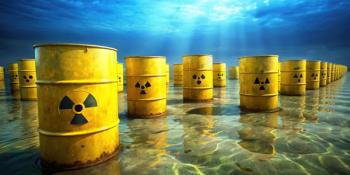
We recently published a three-part interview with Chris Reddy. Here, we provide the full text transcript of the conversation, which includes some additional insights not presented in the video interview.

In a continuation of our Inside the Laboratory interview with Chris Reddy, we asked him about the recent documentary, “Out of Plain Sight,” that featured him and his team’s research.
In the second part of this edition of “Inside the Laboratory,” Christopher Reddy of Wood Hole Oceanographic Institution discusses why comprehensive two-dimensional gas chromatography is the optimal technique for investigating complex mixtures of organic chemicals in the environment.
In this edition of “Inside the Laboratory,” Christopher Reddy of Wood Hole Oceanographic Institution discusses his laboratory’s work investigating oil spills and uncovering dichlorodiphenyltrichloroethane (DDT) deposits on the ocean floor. This interview is part one of three of our conversation with Reddy.
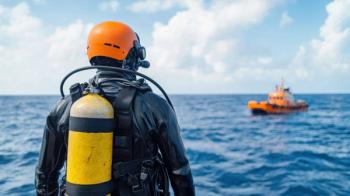
LCGC International sat down with Christopher “Chris” Reddy of Woods Hole Oceanographic Institution, whose research was the basis for a recently released documentary.

The American Chemical Society (ACS) released its new strategic plan, which reinforces the organization’s mission to improve lives through the power of chemistry.

Agilent Technologies recognized Professor Anders Bentien of Aarhus University, Professor Walter Gössler of the University of Graz, and Professor Gregory Offer of Imperial College London as their 2025 Solutions Innovation Research Award (SIRA) recipients.
Top articles published this week include the launch of our “From Lab to Table” content series, a Q&A interview about using liquid chromatography–high-resolution mass spectrometry (LC–HRMS) to assess chemical hazards in plastic bottles, and a piece recognizing Brett Paull for being named Tasmanian STEM Researcher of the Year.