


In celebration of Earth Day, we spotlight a few of our “Focus on Environmental Analysis” columns, which showcase how chromatography is being used in industry to bring about significant, positive change in environmental analysis and sustainability.
In celebration of Earth Day, we spotlight a few of our “Focus on Environmental Analysis” columns, which showcase how chromatography is being used in industry to bring about significant, positive change in environmental analysis and sustainability.

In this edition of “Inside the Laboratory,” Pascal Cardinael and Valérie Agasse of the University of Rouen in Mont‑Saint-Aignan, France, discuss their laboratory’s work with miniaturizing gas chromatography (GC) columns and systems to improve on-site air analysis of volatile organic compounds (VOCs).

LCGC International sat down with Katarina Marakova to discuss her group’s work in top-down analysis of proteins using capillary zone electrophoresis–mass spectrometry (CZE–MS).

At Analytica 2024 in Munich, Germany, LCGC International sat down with Sebastiaan Eeltink of Vrije Universiteit Brussel to talk about three-dimensional liquid chromatography (3D–LC) separations.

At Analytica 2024, an afternoon session on Wednesday April 10th focused on environmental analysis, addressing topics such as PFAS analysis, non-target screening, and anthropogenic compounds.

At Analytica 2024 in Munich, Germany, LCGC International sat down with Uwe Karst of the University of Münster to talk about the future of imaging, analytical chemistry trends, and more.

Researchers from the Massachusetts Institute of Technology (MIT) used three-dimensional printing to develop new electrospray emitters to improve medical diagnostics.

At Analytica 2024, four industry experts discussed the latest developments in foodomics, presenting their latest research in the field.

Rabi Ann Musah, PhD, a professor of chemistry at the University of Albany, State University of New York, is exploring ways to help protect seed viability through optimizing the isolation of specific compounds. We sat down with her to discuss her research and findings.

The discovery of a novel lipid not yet seen in plants was found in four herbal teas using multivariate principal component analysis.
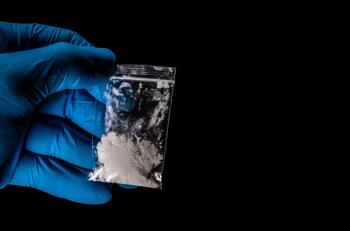
A recent study in the Journal of Forensic Science reveals a significant improvement in the identification of fentanyl-related substances by using GC–infrared (GC–IR) libraries to combat the opioid crisis.

A recent study out of Auburn University sought to further understand biological mechanisms at the molecular level using ion mobility spectrometry (IMS).

A recent review article highlights the current analytical techniques being used to detect illicit drug use in sports.

In this edition of “Inside the Laboratory,” Emanuela Gionfriddo, PhD, an associate professor of chemistry at the University at Buffalo, discusses her group’s current research endeavors, including using solid-phase microextraction (SPME) coupled to liquid chromatography (LC) and gas chromatography (GC) to further understand the chemical relationship between environmental exposure and disease and elucidate micropollutants fate in the environment and biological systems.

This upcoming, one-day online event will focus on the latest chromatographic research in environmental analysis and sustainability.

A recent article examines how the coupling of liquid or gas chromatography to mass spectrometry has advanced the development dielectric barrier discharge ion sources.
In this edition of “Inside the Laboratory,” Katelynn Perrault Uptmor, PhD, an assistant professor of chemistry at the College of William and Mary, discusses her group’s current research endeavors, including using complex comparative data obtained from chemical analysis to understand and solve challenges in forensic science and other life science applications.

This study explores the feasibility of using human skin volatile organic compounds (VOCs) analyzed through comprehensive gas chromatography–time of flight–mass spectrometry (GCxGC-TOF-MS) and chemometric techniques, to potentially serve as biomarkers for tuberculosis diagnosis.

In this edition of “Inside the Laboratory,” Kevin Schug, PhD, a full professor of chemistry at the University of Texas at Arlington, discusses his laboratory’s group work in environmental monitoring around water and soil quality near oil and gas extraction, using techniques such as liquid chromatography (LC), gas chromatography (GC), supercritical fluid chromatography (SFC), and coupling these techniques with mass spectrometry (MS).

A recent study examined using high performance liquid chromatography coupled to mass spectrometry (HPLC–MS/MS) to optimize this key class of drugs that are used for the treatment of the common cold and flu.
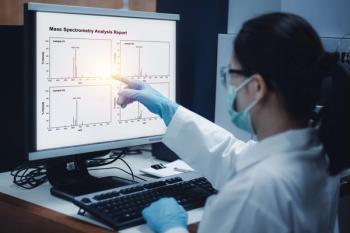
In this review article, we showcase some of LCGC International’s recent coverage of mass spectrometry.

Analytical chemists often aren’t recognized for their contributions to the scientific community, authors of a recent article argue.

A recent study explores the use of liquid–liquid extraction (LLE) and gas chromatography–mass spectrometry (GC–MS) to identify the compounds found in extractives of Alaska Yellow Cedar trees.

A recent study from the United Kingdom Centre for Ecology & Hydrology shows how gas chromatography–mass spectrometry can be used to detect 6PPD, a common additive used in the production of car tires, in water environments to combat environmental pollution.
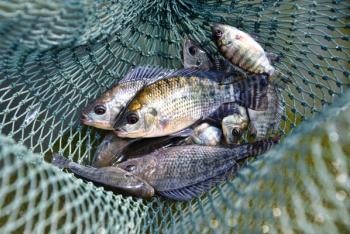
A research collaboration between researchers from Denmark and Brazil used gas chromatography–mass spectrometry (GC–MS) to determine levels of taste and odor compounds in Nile tilapia.

The laboratory is the birthplace of scientific innovation and its becoming even more important as scientists work to address some of the world’s most difficult problems.

We preview the "Advancing Agriculture for Future Generations" content series, which is set to launch on February 1st.

We preview the "Advancing Agriculture for Future Generations" content series, which is set to launch on February 1st.

In our second edition of “Inside the Laboratory,” Zhibo Yang, PhD, an associate professor of chemistry at the University of Oklahoma, discusses his group’s most recent work in single-cell mass spectrometry (MS) and MS tissue imaging.

Alena Kubatova, a professor in the Department of Chemistry at the University of North Dakota, in Grand Forks, North Dakota, is exploring new approaches in characterizing lignin, to understand its structural complexities and how these methods can help improve processing in biorefineries. LCGC spoke to Kubatova to discuss her recent research in understanding the chemistry of lignin.