
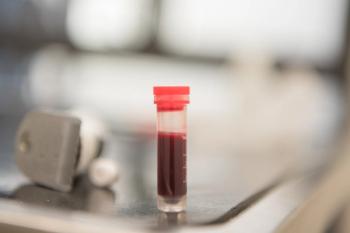
Guest author Reg Cross discusses strategies for collecting samples from large masses of material. He also describes the problems associated with acquiring truly representative samples for analysis.
Guest author Reg Cross discusses strategies for collecting samples from large masses of material. He also describes the problems associated with acquiring truly representative samples for analysis.

A scouting gradient is a separation run under a standardized set of conditions and can be used to determine the complexity of a sample and estimate the difficulty of the separation. John Dolan tells why he believes using a scouting gradient is the best way to begin method development.

John Hinshaw reviews the new gas chromatography instrumentation and accessories introduced at Pittcon this year.

This "Data File" column shows readers how to incorporate e-mail in chromatography data systems and suggests how other Internet technologies can improve modern laboratory practices.

During the past five years, many manufacturers of HPLC columns have focused on improving stationary phase stability and reproducibility. In this study, the authors use a variety of test solutes to compare the efficiency, selectivity, and hydrophobic retention mechanisms of five commercially available HPLC columns based silica, alumina, zirconia, and polystyrene cross-linked with divinylbenzene as the support.

The first two parts of this series covered the fundamentals of a system and the specification, evaluation, and selection of a chromatography data system. Part III discusses the validation work in parallel with progress through the life cycle of the project.