

All News
Advertisement

Knauer application note
Advertisement

The Column
The presence of an ?animal-only? pigment, bilirubin, has been confirmed in the Bird of Paradise flower.
Northern Ireland has implemented a Thermo Fisher SampleManager LIMS system across its laboratories as part of its focus on improving sample management and maintaining the highest quality water.
The Column
Waters and Hitachi High Technologies America have entered into a distribution agreement allowing HTA to sell Waters? sample preparation and liquid chromatography (LC) columns to users in North America.

E-Separation Solutions
Environmental testing incorporates a diverse range of applications from emissions and bioaccumulation to chemical exposure and human health.
Advertisement
Agilent Technologies and Strand Scientific Intelligence have announced that they will be teaming up to expand the scope of the Agilent GeneSpring bioinformatics system across multiple life-science disciplines, drive future innovation and deliver new channels for accessing the software and customer support.
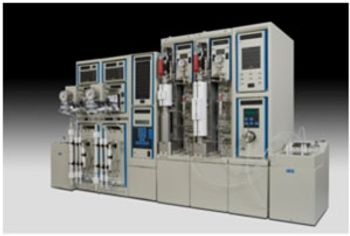
FMS introduces the first and only "Total Solution" Sample Prep system that combines three sample prep processes into one economical package.
The Column
The US Environmental Protection Agency (EPA) has published two rapid screening methods for chemical dispersants in sea waters using Waters ACQUITY UPLC/Quattro Premier XE (UPLC?MS?MS).

Advertisement
Dr Maria-Magdalena Titirici from The Max Planck Institute of Colloids and Interfaces has been awarded the 15th Desty Memorial award for her work on the use of thermo responsive polymers in reverse phase chromatography.

The Column
The accidental discovery of a new form of chlorophyll has challenged expert?s understanding of the limits of photosynthesis.
One in every five pounds in the UK economy is dependent on developments in chemistry research, according to a new report commissioned by the Royal Society of Chemistry and the Engineering and Physical Sciences Research Council.

The Application Notebook
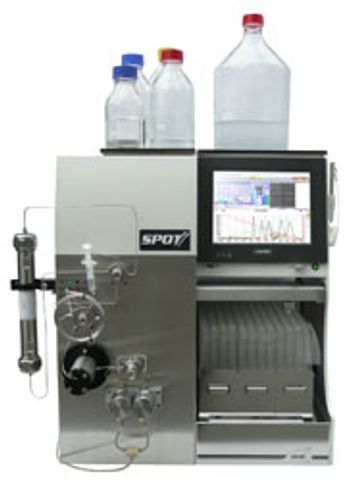
This note examines the benefits of using flash or HPLC for compound purification. Results show that flash is a viable alternative to HPLC.

The Application Notebook
In recent years water-soluble polymers are gaining more and more interest in different applications. The molecular weight distribution of polymers is usually characterized by size exclusion chromatography (SEC) coupled with refractive index, viscometric or laser light scattering detection. Recent advances in SEC comprise semi-micro SEC and the design of linear columns providing wide molecular weight separation ranges and near-linear calibrations. We describe the separation of water-soluble polymers with a new generation of linear, polymer-based, semi-micro SEC columns using the compact EcoSEC SEC system.

The Application Notebook
Phenomenex Application Note

The Application Notebook
Polymer Char Application Note

The Application Notebook
Burning mosquito coils is common in many countries, however, the emission of various, potentially toxic volatile organic compounds (VOCs) is cause for concern. Novel sampling equipment with TD-GC-MS is used to extract, concentrate and analyse the emissions of two burning coils and determine any potential impact on consumer health.


The Application Notebook
Metrohm Application Note

Special Issues
Analytical methods are developed at various stages of the drug develoment process for samples of varying complexity.

Special Issues
Pharmaceutical research and development (R&D) organizations were early adopters who recognized the many benefits of UltraPerformance LC? (UPLC?) Technology including resolution, sensitivity, throughput, and productivity as compared to HPLC.

Special Issues
Despite recent advances in column technology and stationary phase chemistry, challenges still remain for routine method development and LC/MS applications.

Special Issues
Method validation is a demanding activity. It requires a large investment in personnel, materials, instruments, supervision, and, most of all, time.
Following its premiere in 2009, it has been announced that the second analytica Vietnam will be held from 7?9 April 2011.

Special Issues
With recent research, the University of Oviedo's analytical spectrometry research group has taken a step closer to the absolute quantification of proteins. Quantification based upon isotope dilution mass spectrometry of sulfur is hampered by gas-based polyatomic interferences. By implementing a quadrupole inductively coupled mass spectrometer with collision/reaction cell technology, the group has been able to overcome the issues and has increased reliability while optimizing the efficiency of its analyses.

Special Issues
An effective metabolite identification study should ideally include both qualitative and quantitative information that for both identifying metabolites, and determining the rate of clearance and the metabolic routes of the parent drug. Liquid chromatography–mass spectrometry (LC–MS) is considered the standard analytical technique for metabolite identification studies. To date, however, qualitative and quantitative information has always been obtained from two separation platforms: quadrupole time-of-flight (QTof) MS for the exact mass full-scan qualitative study, and tandem quadrupole MS for the multiple reaction monitoring (MRM) quantitative study. With advancements to QTof instrumentation, specifically, recent improvements in sensitivity and dynamic range, it is now possible to perform both qualitative and quantitative experiments on a single QTof mass spectrometer. This article describes a workflow that allows simultaneous qualitative and quantitative metabolite identification studies to be..
Flash Directions

Special Issues
A new time-of-flight mass spectrometer was evaluated for performing simultaneous metabolic stability measurement and metabolite identification with ultrahigh-pressure liquid chromatography. Six representative compounds (clomipramine, diclofenac, imipramine, haloperidol, verapamil, and midazolam) were incubated in rat liver microsomes at a more physiologically relevant substrate concentration (1 ?M). High-resolution full-scan and product-ion spectra were acquired in a single injection using generic methodology. Quantitative clearance of the parent was measured using the full-scan data. Major metabolites were identified using the accurate mass product ion spectra. High scanning speed allowed for a sufficient number of data points to be collected across the chromatographic peak for quantitative analysis. Sensitivity was sufficient for obtaining meaningful kinetics with a 1 ?M initial substrate concentration.
Advertisement
Advertisement
Trending on LCGC International
1
GLP-1 Peptide Analysis: Challenges and Solutions
2
HPLC–DAD Method Tracks Semaglutide and Tirzepatide Stability
3
Industry Roundup: Waters Posts Strong Third Quarter as LC–MS and Chromatography Consumables Drive Growth, Acquires Ion Mobility Pioneer MOBILion
4
GC–MS Probes Acidity and Heat in Wasabi, Mustard
5